



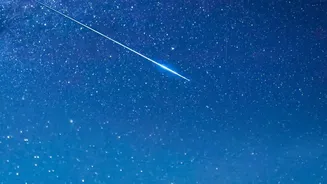
September Epsilon Perseids Meteor Shower
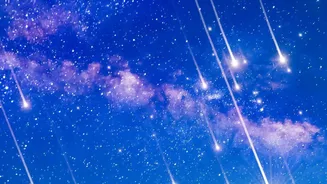
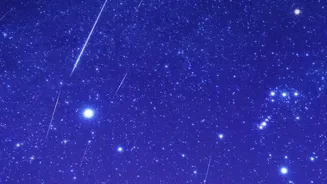
Kicking off the month's sky-watching opportunities is the September Epsilon Perseids meteor shower. While not as prolific as its famous August counterpart, this shower is active from September 5 to 21. It is expected to reach its peak on the night of September 9,
with the best viewing in the pre-dawn hours. With the shower's peak occurring close to the new moon, the sky will be dark, creating excellent conditions for spotting the handful of meteors it produces per hour. For the best chance to see these shooting stars, find a location away from city lights, lie back, and give your eyes at least 20 minutes to adjust to the darkness.
New Moon for Optimal Stargazing
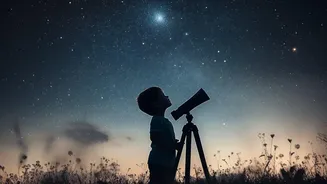
The new moon on September 11 presents the perfect opportunity for deep-sky observation. During this phase, the Moon is not visible in the night sky, meaning its light will not wash out fainter objects. This is the ideal time to try and spot distant star clusters, nebulae, or even the faint glow of the Milky Way galaxy. If you have a telescope or a good pair of binoculars, the nights surrounding the new moon are your best bet for exploring the cosmos without any lunar interference.
Venus at Its Brightest
The 'Evening Star' will be putting on a particularly dazzling show this month. Venus reaches its peak brilliance for the year on September 18, shining at a startling magnitude of -4.8. You can spot it low on the western horizon just after sunset. Interestingly, even though it is at its brightest, a telescope would reveal that Venus is actually a thin crescent at this time. Its brightness is a result of its relative closeness to Earth during this part of its orbit.
The Autumnal Equinox
On September 23, the autumnal equinox marks the official start of autumn in the Northern Hemisphere. On this day, the Sun shines directly on the equator, and the length of day and night is nearly equal across the globe. While not a viewing event in itself, the equinox is a significant marker of the changing seasons. For those in northern latitudes, the periods around the equinoxes can sometimes lead to an increase in the displays of the aurora borealis, or northern lights, due to favorable alignments in the Earth's and Sun's magnetic fields.
Neptune at Opposition
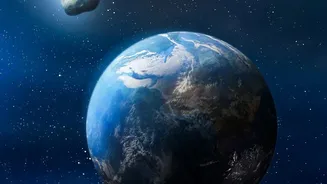
On the night of September 25-26, the distant ice giant Neptune will be at opposition. This means Earth is passing directly between Neptune and the Sun, placing the planet in the spot in the sky opposite the Sun. As a result, Neptune will be at its closest and brightest for the year. However, at 30 times Earth's distance from the sun, you won't be able to see it with the naked eye. You will need a good pair of binoculars or a small telescope to spot it as a tiny, blue-tinged point of light in the constellation Pisces.
The Harvest Moon
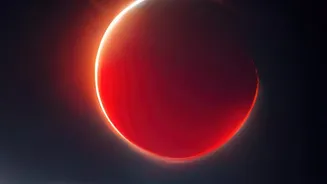
The month concludes with a spectacular full moon on September 26, known as the Harvest Moon. This is the name given to the full moon that occurs closest to the autumnal equinox. Historically, the bright light of the Harvest Moon, rising shortly after sunset for several consecutive evenings, gave farmers extra hours of light to bring in their crops. While the Moon will be technically full during the day for observers in North America, it will appear full to the naked eye on both the night of September 26 and 27, offering a beautiful sight to round out the month.