





From Afterthought to Asset
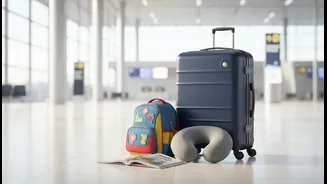
For decades, families were an overlooked demographic in airport design, often left to juggle luggage and tired children in spaces built for speed, not comfort. Children's amenities, if they existed, were often sad, forgotten corners. Today, that is changing
dramatically as airports recognise that families are a valuable market. A 2024 study on Istanbul Airport highlighted that designing for families is a key component of the passenger experience. This shift in thinking is turning family needs from a secondary concern into a primary design consideration, driven by both a desire for better service and a sound economic strategy. An IATA survey found that 68% of parents are more likely to spend money on food and retail if an airport provides good family facilities, showing a clear incentive for airports to invest.
Play Is the New Priority
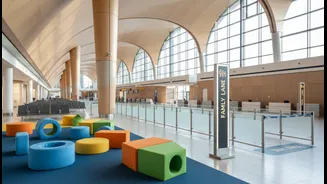
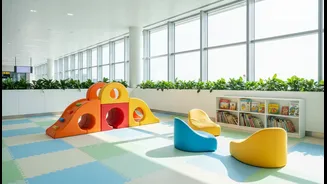
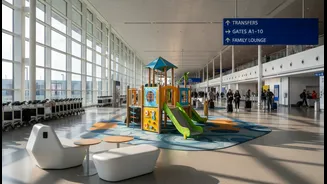
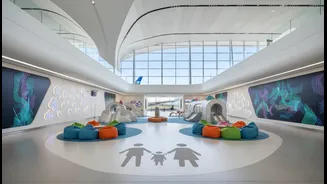
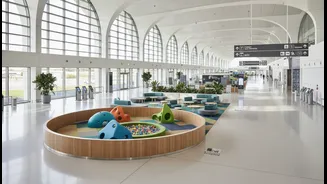
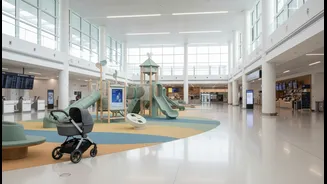
The new generation of family-friendly amenities goes far beyond a simple plastic slide. Airports are now creating engaging, educational, and, importantly, energy-burning experiences. Singapore's Changi Airport, often ranked among the world's best for families, features attractions like a butterfly garden, movie theatres, and a four-storey slide. In India, Bengaluru’s Kempegowda International Airport (KIA) and Hyderabad's Rajiv Gandhi International Airport (RGIA) were recently ranked third and fourth globally for family-friendliness, lauded for their play areas and robust passenger support. Delhi's Indira Gandhi International Airport has its own 'Family@DEL' initiative with play zones in Terminal 3. The goal is to turn dreaded layover time into an enjoyable part of the trip.
Beyond the Play Area
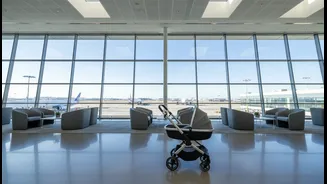
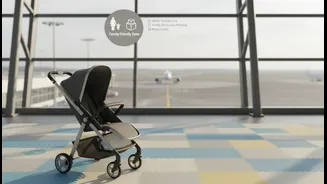
The transformation extends well beyond play zones. For parents with infants, dedicated nursing rooms and private 'Mamava' lactation pods are becoming standard, offering comfortable seating and changing stations. Many airports, including Delhi, provide complimentary strollers and dedicated fast-track lanes for families at security and immigration to reduce wait times. This focus on practical support acknowledges that the entire journey, from check-in to boarding, presents unique challenges for those with young children.
A Sanctuary for the Senses
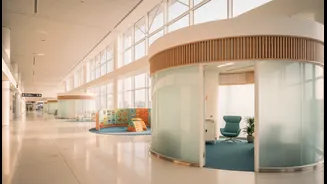
Perhaps one of the most thoughtful innovations is the introduction of sensory rooms. Recognising that the noise and crowds of an airport can be overwhelming for neurodivergent individuals, including children with autism, airports are creating quiet havens. These rooms feature calming elements like soft lighting, comfortable seating, bubble tubes, and tactile toys to help individuals decompress. Airports in Pittsburgh, Atlanta, and Birmingham have introduced these spaces. In a landmark move, Bengaluru's KIA became home to India's first airport sensory room. This demonstrates a deeper, more empathetic approach to passenger wellbeing.
A Strategic and Welcome Shift
This evolution isn't just about altruism; it's a strategic move. Well-designed play areas are often placed near retail and dining outlets to encourage spending. Federal funding is also accelerating the trend. In May 2026, the U.S. Transportation Secretary announced nearly $1 billion in grants for family-friendly projects, including play areas, nursing rooms, and sensory rooms. The trend signals a fundamental shift in how airports view their role: not just as functional transit hubs, but as holistic environments that cater to the diverse emotional and practical needs of all travellers. By making the journey less stressful for families, airports enhance the experience for everyone.