



Earth's Beating Magnetic Heart
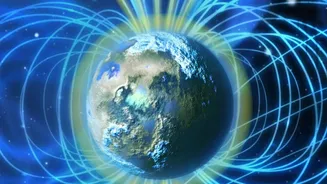
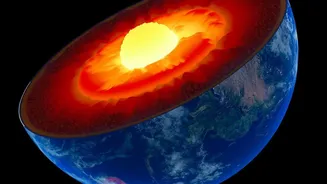
Deep beneath our feet, nearly 3,000 kilometres down, lies Earth's outer core—a massive ocean of molten iron. As our planet spins, this superheated, electrically conductive liquid churns and flows. This relentless motion, driven by heat escaping from the
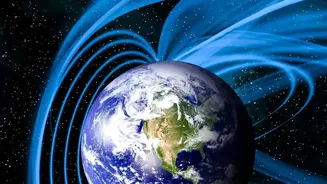
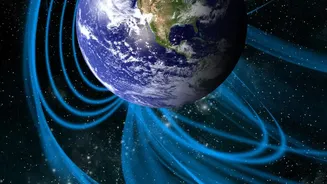
solid inner core, creates powerful electrical currents. According to dynamo theory, this process transforms the kinetic energy of the moving liquid into a vast magnetic field that envelops our entire planet. This isn't a static phenomenon; it's a dynamic, self-sustaining process that has operated for billions of years, creating what scientists call a magnetosphere. Think of it as a planetary-scale generator. This active, churning core is why we refer to Earth as having a 'living' magnetic field—it's the sign of a geologically active and evolving interior.
The Case of a Dead Core: Venus
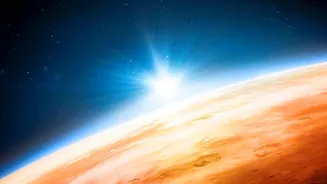
Venus is often called Earth's twin due to its similar size and composition, but when it comes to magnetic fields, they are worlds apart. Spacecraft measurements have confirmed that Venus has no significant, internally generated magnetic field—it's less than 1/8000th the strength of Earth's. Scientists believe its core is 'dead' or inactive. While it likely has a similar iron core, it's not generating a dynamo. The reasons are still debated, but leading theories point to two main culprits. First, Venus rotates incredibly slowly—one Venusian day lasts 243 Earth days—which may not provide the necessary rotational force to churn the core fluid effectively. Second, Venus lacks plate tectonics. On Earth, the movement of tectonic plates helps cool the mantle, which in turn draws heat from the core, driving the convection needed for the dynamo. Without this planetary heat-release valve, the Venusian mantle may be too hot to allow the core to cool and convect, essentially smothering any potential dynamo.
Life Under a Planetary Shield
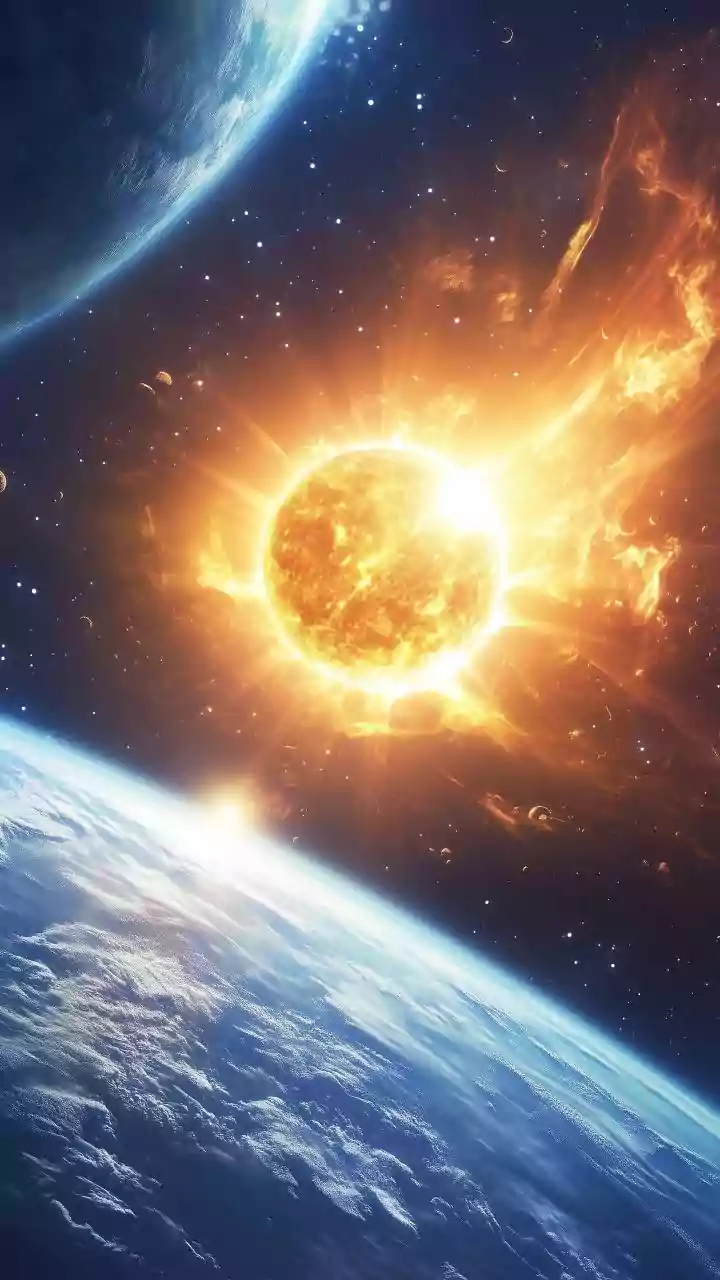
The difference between an active and a dead core isn't just an academic detail; it has profound consequences for life. Earth's magnetosphere acts as a crucial barrier, deflecting the solar wind—a constant stream of charged particles flowing from the Sun. Without this shield, the solar wind would slam directly into our upper atmosphere, stripping it away over millions of years. This is precisely what scientists believe happened to Venus and Mars. Data from missions like ESA's Venus Express show how the Sun's radiation splits water molecules in Venus's upper atmosphere into hydrogen and oxygen. Without a magnetic field to protect them, the lighter hydrogen atoms are blown away into space. This process is a key reason why Venus, which may have once had water, is now a scorching, dry wasteland. Our magnetic field protects our atmosphere and our water, making Earth a habitable oasis.
A Cautionary Tale From Mars
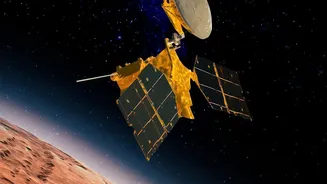
Venus isn't the only cautionary tale in our solar system; Mars provides another stark comparison. Today, Mars is a cold, arid planet with a very thin atmosphere, but evidence suggests it was once warmer and wetter, with rivers and lakes. Like Venus, Mars lacks a global magnetic field today, leaving it exposed to the solar wind. NASA's MAVEN mission has measured the rate at which the solar wind is currently stripping away what's left of the Martian atmosphere, finding that about 100 grams of gas are lost every second. Over billions of years, this atmospheric erosion, which would have been even more intense when the Sun was younger and more active, played a key role in transforming Mars into the desert world we see today. Unlike Venus, scientists believe Mars once had a magnetic field that died billions of years ago when its smaller core cooled and solidified. By studying these dead planetary cores, we get a clearer picture of the vital, life-sustaining role our own active core plays every second of every day.