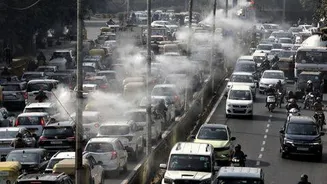










The City's Lingering Fever
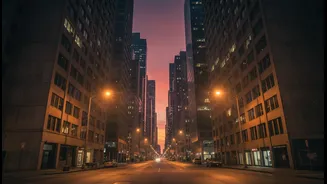
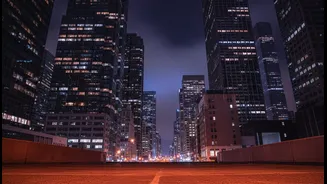
Most of us think of extreme heat as a daytime problem, peaking when the sun is at its highest. But a growing body of research is shifting focus to the hours after dark. Our cities, with their dense concentrations of concrete, asphalt, and buildings, absorb
huge amounts of solar radiation during the day. At night, while natural landscapes cool down, these urban materials slowly release the stored heat, creating what is known as the Urban Heat Island (UHI) effect. This phenomenon keeps urban areas significantly warmer than their rural surroundings, preventing the city and its residents from getting a crucial cool-down period. Studies show that this nighttime warming is becoming more intense, posing a silent but serious risk.
New Analysis Paints a Worrying Picture
Recent multi-city studies confirm that this nighttime heat is not just a nuisance; it's a public health emergency in the making. One analysis focusing on Chennai found that in many concrete homes, indoor temperatures actually peaked between 8 and 9 p.m., as the building materials continued to radiate stored heat. Another recent global report from Climate Central found that unusually high nighttime temperatures are causing significant sleep loss worldwide, with Indian cities being among the hardest hit. Residents in cities like Chennai, Mumbai, and Delhi are losing between 67 and 93 hours of sleep per year due to hot nights, a figure significantly higher than the global average. These studies highlight a major gap in public awareness and policy, which have historically focused almost exclusively on daytime heatwaves.
The Hidden Health Costs of Warm Nights
When the night brings no relief from the heat, the human body remains under continuous stress. This lack of recovery time is critical. The body is designed to cool down during sleep, a process that is essential for physiological recovery. Persistently high nighttime temperatures disrupt sleep and can lead to a 'cumulative heat burden'. This increases the risk of dehydration, heat stroke, and puts a significant strain on the cardiovascular system. Doctors warn that the heart has to work harder to pump blood to the skin to dissipate heat, which can be dangerous for the elderly, children, and people with pre-existing conditions like hypertension and diabetes.
From Concrete Jungles to Cooler Cities
The problem is rooted in how we build our cities, but so are the solutions. Experts point to a range of strategies to mitigate the urban heat island effect. One of the most effective approaches involves increasing the reflectivity of surfaces. Using 'cool roofs' with light-colored, reflective paint can lower indoor temperatures and reduce energy demand for air conditioning. Similarly, using reflective or permeable pavements instead of dark asphalt can reduce how much heat is absorbed by roads and parking lots. Expanding urban greenery is another crucial strategy. Planting more trees provides shade, which can dramatically lower surface temperatures, while parks and green spaces act as cooling corridors within dense neighbourhoods. Even adding water features like fountains can provide localized cooling through evaporation.