




The Quest for Absolute Zero
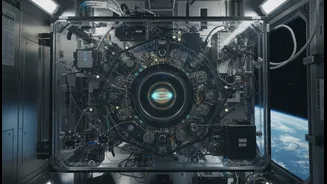
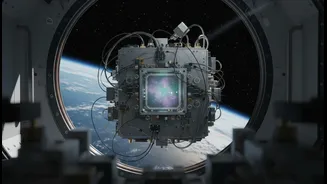
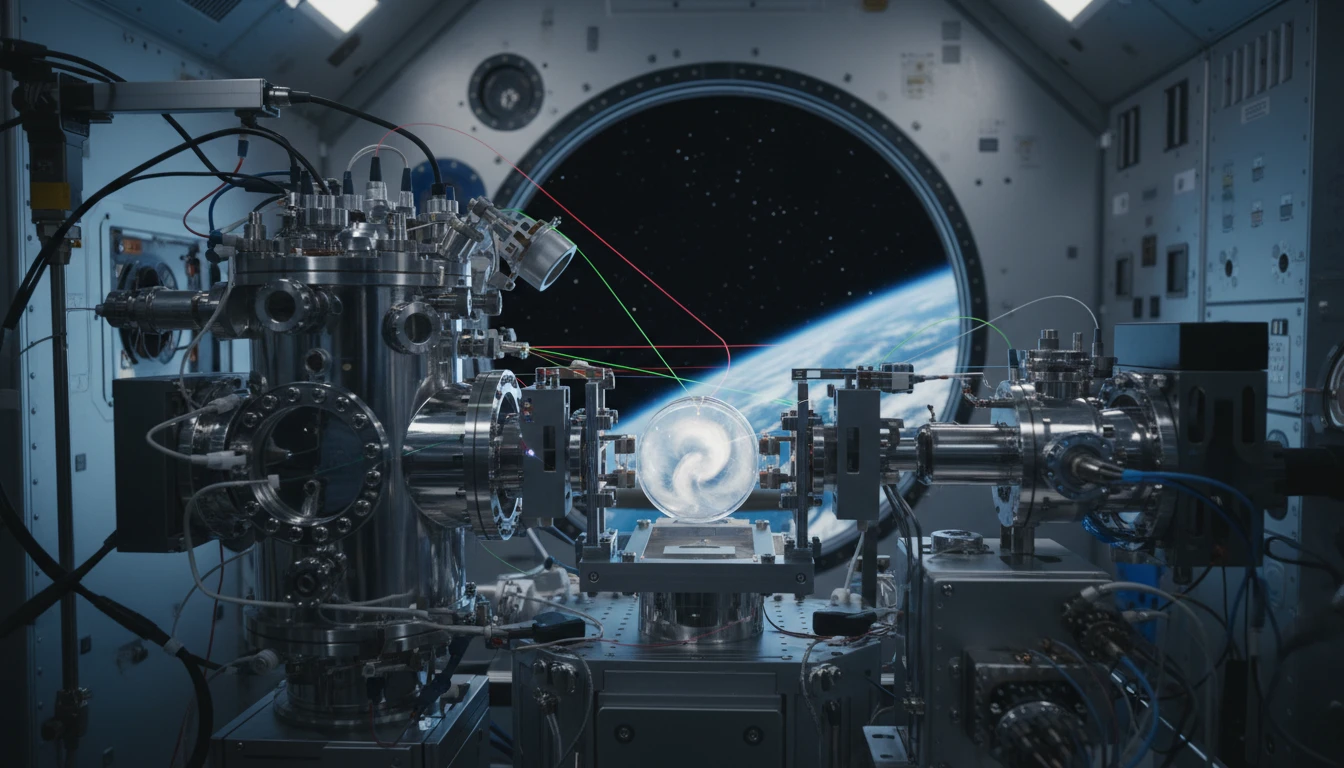
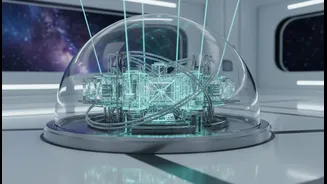
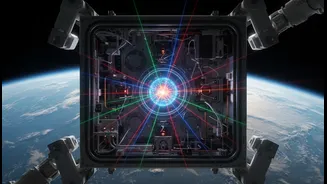
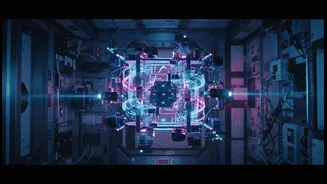
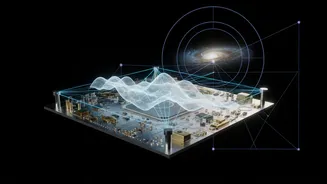
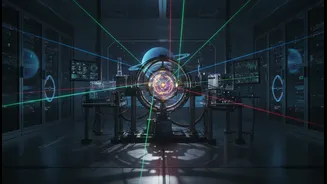
To understand the research, we first have to grasp extreme cold. The Cold Atom Lab (CAL) uses lasers and magnetic fields to slow down atoms like rubidium and potassium, chilling them to temperatures just a fraction of a degree above absolute zero. This
is the coldest temperature theoretically possible, where atoms almost stop moving entirely. At these frigid conditions, something remarkable happens: the atoms lose their individual identities and merge into a single, unified quantum object called a Bose-Einstein Condensate, or BEC. Often called the 'fifth state of matter,' a BEC allows scientists to observe quantum phenomena, which are usually confined to the subatomic scale, at a much larger, macroscopic level.
Why Space is the Perfect Laboratory
Creating a BEC on Earth is challenging because gravity gets in the way. Once atoms are cooled and released from their magnetic trap for observation, gravity pulls them down, limiting study time to mere fractions of a second. The microgravity environment of the International Space Station solves this problem. In constant freefall, the atoms float, allowing scientists to observe them for much longer periods—sometimes for over a second. This extended observation time enables more precise measurements and allows the condensates to cool to even lower temperatures than what's possible on the ground, opening up new frontiers for quantum physics.
Upgrades for Deeper Discovery
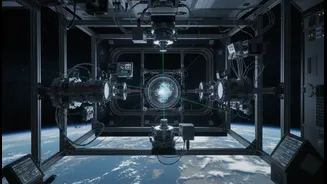
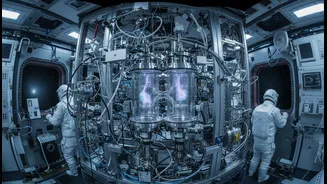
The research is not static. The Cold Atom Lab, first installed in 2018, has received several significant upgrades. The latest hardware, installed in the spring of 2026, makes the facility even more capable. These enhancements include a redesigned magnetic trap that offers greater flexibility to manipulate the shape of the quantum gases and improved atom sources. These upgrades allow scientists, who control the entire lab remotely from Earth, to perform a wider range of experiments. One major advance is the ability to create BECs using two different types of atoms simultaneously, which opens the door to studying quantum chemistry and how different atoms interact in this exotic state.
From Quantum Science to Future Technology
While this may sound like purely fundamental science, the applications are profound. The experiments being conducted on the Cold Atom Lab are laying the groundwork for 'quantum 2.0' technologies. This research could lead to the development of ultra-precise atomic clocks, which are crucial for everything from high-speed internet to GPS. It could also enable the creation of highly sensitive quantum sensors. Such sensors could be used to build gyroscopes for navigating in deep space without relying on GPS, map Earth's gravitational fields to monitor climate change, or even help in the search for mysterious dark energy. Essentially, by mastering the manipulation of atoms in space, we are developing tools that could revolutionise navigation, resource management, and our fundamental understanding of the universe.