


The Ancient Art of the Wooden Ghani
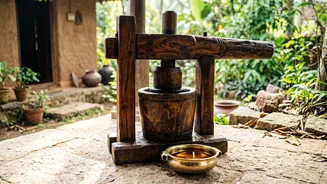
Long before industrial refineries, oil was extracted using a simple, powerful technology: the ghani. Known as 'marachekku' in Tamil Nadu, this traditional mill consists of a large wooden pestle that rotates slowly inside a wooden mortar, crushing seeds
to release their oil. Historically powered by bullocks and now often by a slow-moving motor, the process is defined by its gentle, low-heat nature. The key is that the wooden components absorb the friction-generated heat, ensuring the oil is never heated to high temperatures. This method, with roots tracing back thousands of years to the Indus Valley Civilization, stands in stark contrast to modern industrial processes that use high heat and chemical solvents like hexane to maximize yield, often at the expense of nutritional quality.
More Than Flavour: The Cold-Press Advantage
The primary benefit of the wooden-ghani method is that it produces true cold-pressed oil. By keeping temperatures low, this process preserves the natural integrity of the sesame seeds. The resulting oil retains its full spectrum of nutrients, including essential fatty acids, antioxidants like sesamol and sesaminol, and vitamins. These compounds, which are sensitive to heat, are often diminished or destroyed during industrial refining. Studies have shown that cold-pressed oils have a higher antioxidant capacity compared to refined oils. This means the oil not only has a richer, nuttier flavour and aroma but also offers greater health benefits, from supporting heart health with its profile of monounsaturated and polyunsaturated fats to providing anti-inflammatory properties.
A Lifeline for Artisanal Milling Communities
For generations, oil pressing was a respected craft integrated into the social and economic fabric of South Indian villages. Ghani operators were skilled artisans who understood the nuances of seed quality and extraction. However, the rise of cheaper, mass-produced refined oils from the mid-20th century onwards led to the rapid decline of these traditional mills. At the start of the 20th century, an estimated 500,000 ghanis operated across India; their numbers have since fallen dramatically. For the remaining artisanal families, continuing this craft is a struggle against the economic pressures of industrial scale. Choosing to buy wooden-ghani oil provides a direct and vital source of income, allowing these communities to sustain their livelihood and preserve a craft passed down through generations.
How This Choice Weaves a Sustainable Future
Supporting wooden-ghani millers is also an act of promoting environmental and economic sustainability. These traditional operations typically have a much smaller carbon footprint, using less energy than large industrial plants. They often source their sesame seeds from local farmers, strengthening the regional agricultural economy and reducing the need for long-distance transportation. This creates a virtuous cycle: local farmers have a reliable buyer, the millers have quality raw materials, and the wealth generated stays within the community. Furthermore, the by-product of the pressing—the dense cake of leftover seed meal—is a nutrient-rich and highly valued cattle feed, ensuring that nothing goes to waste. This circular, community-based model stands as a sustainable alternative to the globalized, import-dependent edible oil market that currently dominates.
Your Kitchen, Their Future
The shift back toward traditional oils is growing, driven by consumers seeking flavour, nutrition, and a connection to their food's origins. When you purchase a bottle of wooden-ghani sesame oil, you are doing more than just buying a cooking ingredient. You are casting a vote for a different kind of food system—one that values quality over quantity, tradition over industrial efficiency, and community well-being over mass-market economics. It's a small choice in the kitchen that sends a powerful message of support to the artisans of Tamil Nadu, Andhra Pradesh, and Karnataka, helping to ensure that the gentle creak of the marachekku continues to be heard in their villages for years to come. This simple act helps protect a rich part of India’s culinary and cultural heritage from disappearing.