




The Sun's Unseen Temper
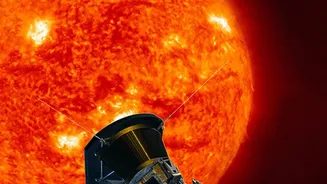
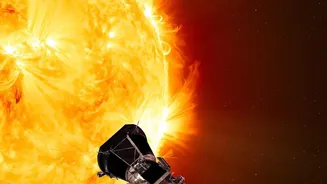
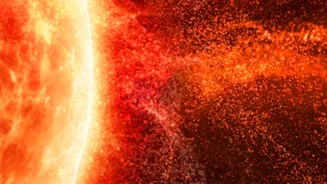
Space weather refers to the changing conditions in space driven by the sun's activity. The sun isn't just a steady source of light and heat; it has a dynamic and often violent temper. It periodically releases massive bursts of energy and matter in the form
of solar flares and coronal mass ejections (CMEs). A solar flare is an intense flash of radiation, while a CME is a colossal cloud of charged particles hurled into space. When Earth is in the path of these events, our planet's magnetic field and atmosphere bear the brunt of the impact, but our technology, especially in orbit, is left vulnerable.
Satellites in the Firing Line
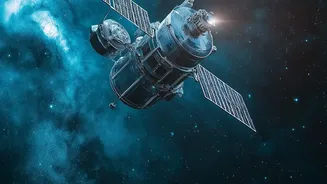
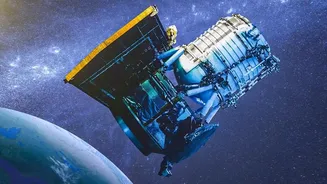
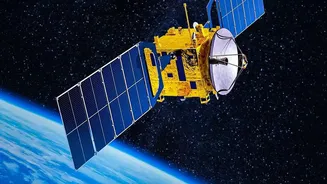
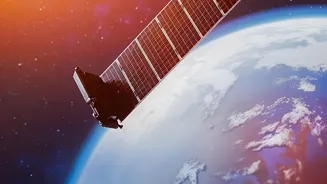
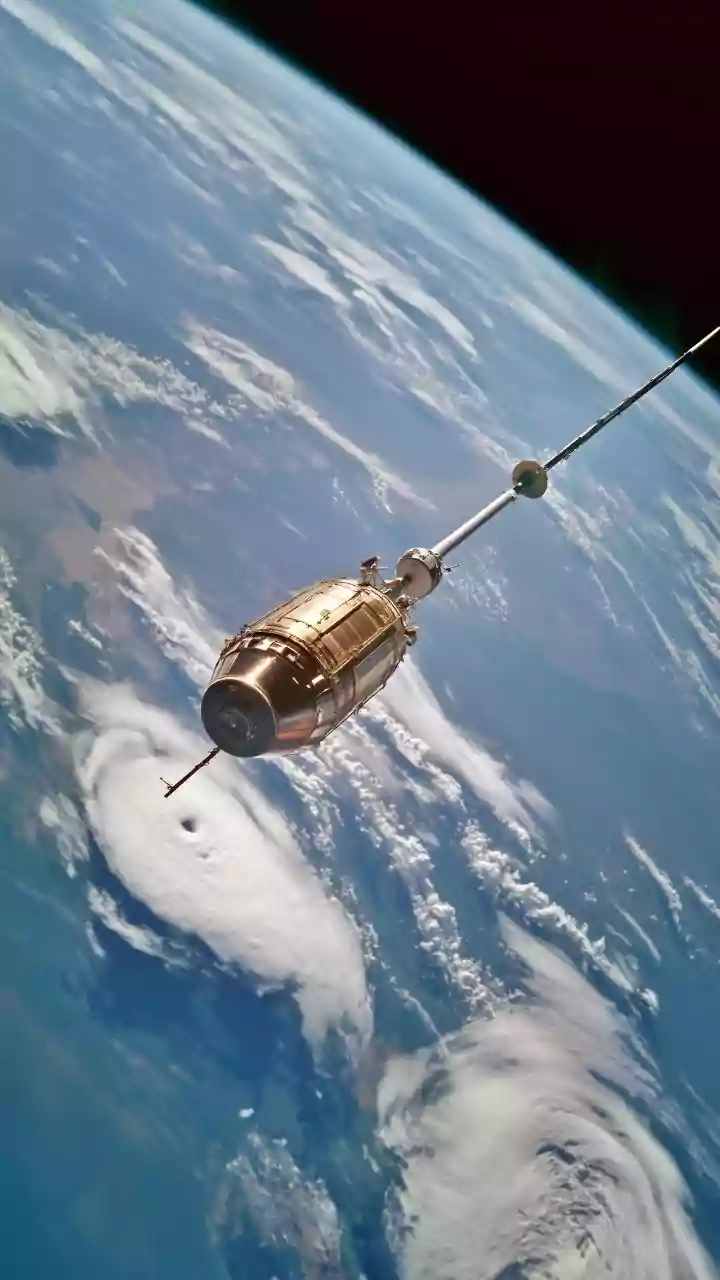
Commercial satellites, which are crucial for everything from GPS navigation and telecommunications to financial transactions and weather forecasting, are highly susceptible to damage from space weather. There are several ways a solar storm can harm a satellite. High-energy particles can penetrate a satellite's shielding and damage its sensitive electronics, causing malfunctions, data corruption, or complete failure. This is known as radiation damage. Another effect is atmospheric drag; solar storms heat and expand Earth's upper atmosphere, increasing the density. This extra drag can slow down satellites in low-Earth orbit, causing them to lose altitude and potentially re-enter the atmosphere prematurely, as famously happened to a batch of Starlink satellites in 2022.
Earth's Early Warning System
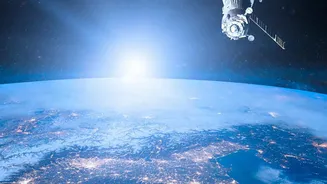
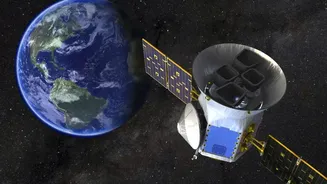
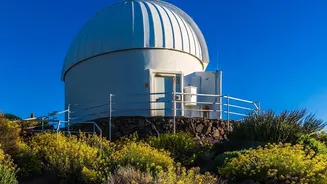
This is where ground stations become our first line of defense. While satellites in space, like the Deep Space Climate Observatory (DSCOVR), provide the very first warnings of an incoming CME, a global network of ground-based observatories plays a critical role in monitoring the sun and its effects on Earth's environment. These stations use instruments like magnetometers to detect fluctuations in Earth's magnetic field, which indicate a geomagnetic storm is underway. Others use specialized GPS receivers to measure ionospheric scintillation—rapid fluctuations in radio signals caused by space weather that can disrupt communication and navigation. This network acts as a planetary-scale sensor grid, providing detailed, real-time data on how a solar event is unfolding.
From Warning to Action
A forecast from an agency like NOAA's Space Weather Prediction Center (SWPC) gives satellite operators crucial time to act. With a warning in hand, operators can take preventative measures to protect their multi-million dollar assets. They might temporarily power down non-essential or particularly sensitive systems to prevent electrical damage from charged particles. In some cases, they can command the satellite to orient itself to better protect vulnerable components or even perform small orbital maneuvers to counteract the effects of increased atmospheric drag. For aviation, routes can be altered to avoid polar regions where communication blackouts and radiation exposure are more severe during a storm. These actions, prompted by data from both space- and ground-based assets, turn a potentially catastrophic event into a manageable operational challenge.
The Billion-Dollar Shield
The economic stakes are astronomical. The cost to replace a single failed communications satellite can be hundreds of millions of dollars. A 2017 report commissioned by NOAA highlighted the widespread economic damage that space weather disruptions could cause, affecting everything from supply chains to aviation safety. Some estimates suggest a severe geomagnetic storm could inflict daily economic losses in the tens of billions. In this context, the global network of ground stations and the forecasting services they enable are not just a scientific tool; they are an essential piece of economic infrastructure. They function as a billion-dollar shield, safeguarding the orbital assets that underpin a significant portion of the global economy.