






Lodhi Gardens: Where Dynasties Rest
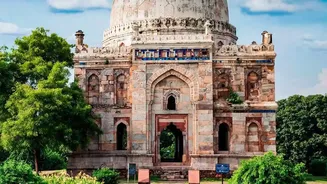
A quintessential Delhi experience, Lodhi Gardens is a 90-acre expanse that effortlessly blends history with pristine landscaping. As you walk its paths, you journey back to the 15th and 16th centuries, the era of the Sayyid and Lodi dynasties. The garden
is home to the striking tombs of Mohammed Shah and Sikandar Lodi, whose imposing structures stand as powerful remnants of a bygone era. The Bara Gumbad, believed to be a gateway, and the adjacent mosque are architectural marvels from 1494. Opposite it, the Sheesh Gumbad or 'glass dome' hints at a past of reflective glory. Originally landscaped by the British in 1936, the park is a favourite for morning walkers, history enthusiasts, and anyone seeking a moment of peace amidst the city's chaos.
Sunder Nursery: A Mughal Paradise Reborn
Adjacent to Humayun's Tomb, Sunder Nursery has been spectacularly transformed from a 20th-century plant nursery into a 90-acre heritage park. A meticulous restoration project by the Aga Khan Trust for Culture has revived this 16th-century garden, originally known as Azim Bagh. Today, it's a UNESCO World Heritage site featuring 15 heritage monuments, lush lawns, and flowing water channels inspired by Mughal garden concepts. The central vista follows the path of the historic Grand Trunk Road. As Delhi's first arboretum, it boasts over 300 tree types and has become a haven for over 80 species of birds. A walk here is a lesson in conservation and a visual delight, where restored tombs like the Sunder Burj stand amidst vibrant flower beds and serene water bodies.
Mehrauli Archaeological Park: A Walk Through a Thousand Years
For those who prefer their history a little wilder, the Mehrauli Archaeological Park offers a 200-acre landscape dotted with ruins spanning nearly a thousand years. Unlike the manicured lawns of other parks, Mehrauli feels like a journey of discovery. Winding paths lead you through dense foliage to uncover hidden tombs, mosques, and step-wells. Key monuments include the tomb of Ghiyas-ud-din Balban, the Jamali Kamali Mosque and Tomb, and Rajon ki Baoli, an ornate step-well. The park is a testament to Delhi's continuous history, with structures from the Delhi Sultanate, Mughal, and even British periods scattered across its grounds. It's a vast, atmospheric space where every ruin tells a story of the many cities that have risen and fallen here.
The Garden of Five Senses: A Modern Sensory Escape
A more contemporary addition to Delhi's green map, the Garden of Five Senses is a 20-acre park designed to stimulate sight, sound, smell, touch, and taste. Inaugurated in 2003, it's a departure from the purely historical parks, blending nature with art. Here you’ll find sections like the Khas Bagh, inspired by Mughal gardens, with flowing water channels and fragrant flowers. The Neel Bagh features a tranquil pool of water lilies, while hundreds of ceramic wind chimes create a soothing soundscape. The park is also dotted with over 25 sculptures and murals, making it a dynamic public art space. A walk here is a modern-day exploration of landscape design, art, and the simple pleasure of engaging with nature on every level.