





India's Orbital Computing Leap
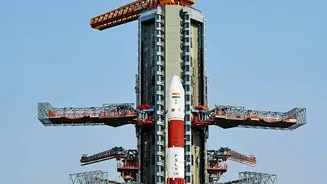
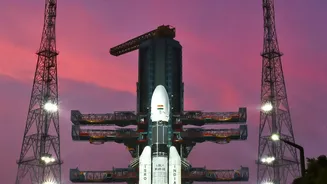
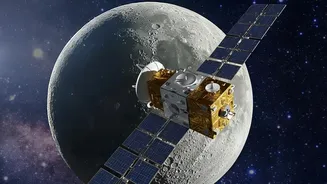
On October 1, 2026, a SpaceX Falcon 9 rocket is scheduled to carry a unique payload into orbit: an orbital computing satellite from Hyderabad-based startup TakeMe2Space. Dubbed MOI-1A, this sub-50 kg spacecraft is designed to test a radical idea: processing
vast amounts of Earth-observation data using AI, directly in orbit. Traditionally, satellites collect terabytes of imagery and beam it all back to Earth for analysis, a process that consumes enormous time and bandwidth. MOI-1A, equipped with powerful Nvidia processors, aims to cut out the middleman. It will analyse data as it's collected, sending back only the finished insights. This isn't the first such effort from India. Startups like Pixxel, in partnership with Sarvam AI, are also developing satellites with onboard GPUs to create 'sovereign AI' capabilities in orbit, independent of foreign ground infrastructure. These missions represent a pivotal step, moving from simply observing the planet to understanding it in real-time, from space itself.
The Case for Data Centres in Space
These Indian satellites are part of a much bigger global trend pointing towards a fascinating solution for a very terrestrial problem. Data centres, the backbone of our digital world, have a voracious appetite. They consume staggering amounts of electricity and water for cooling, often straining local grids and resources. A single large facility can use as much power as a small city and millions of gallons of water daily. The rise of AI has only intensified this demand. Proponents of space-based data centres argue that orbit offers the perfect escape. In space, there is access to near-constant, unfiltered solar power. And instead of water-guzzling cooling systems, servers could radiate their heat into the near-absolute zero temperatures of the vacuum. This could dramatically reduce the environmental footprint of our data infrastructure, which currently accounts for a significant portion of global energy consumption. Beyond environmental benefits, orbital facilities could also offer enhanced security, safe from terrestrial physical threats.
Cosmic Hurdles and Practical Realities
Despite the compelling vision, moving data centres off-planet is fraught with challenges. The first is cost. While reusable rockets from companies like SpaceX are dramatically lowering the price of admission to space, launching the sheer mass of servers, solar arrays, and radiators required for a large-scale data centre remains incredibly expensive. One analysis suggests that even with optimistic cost reductions, orbital data centres would still carry a significant price premium over their terrestrial counterparts for the next decade. Then there's the harsh environment. Space is awash with radiation that can flip bits in computer memory—a minor glitch on Earth could be a catastrophic error in a sensitive calculation in orbit. Hardware must be specially 'hardened' or built with redundancy, adding complexity and cost. Cooling isn't as simple as opening a window, either; without air for convection, heat must be managed through large, complex radiator systems. Finally, there's the problem of maintenance. If a server rack fails on Earth, a technician can swap it out. In orbit, that's not an option, meaning systems must be built to last or be entirely disposable.
The New Global Grid
India is not alone in this ambition. A host of international companies, from tech giants to nimble startups, are racing to build the first true orbital data centres. Google is reportedly working on 'Project Suncatcher', an initiative to test AI infrastructure in space, with a prototype satellite launched on October 1, 2026. Startups like Starcloud, Aetherflux, and Orbital are also developing platforms, with some already having tested AI models in orbit. The strategic implications are enormous. The nation or company that controls the next generation of data infrastructure could define the future of the internet, global communications, and national security. For now, the focus is less on replacing terrestrial data centres entirely and more on creating a complementary layer for specific tasks. This could include processing satellite data in orbit, as Indian startups are pioneering, or handling sensitive sovereign data that must not cross physical borders. The goal is to create a hybrid system, using space for the tasks it's best suited for, while keeping latency-sensitive applications closer to home on Earth.