






The Challenge of Lunar Living
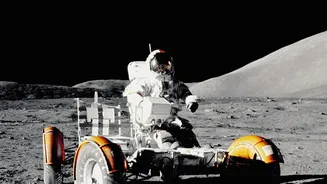
Establishing a long-term presence on the Moon, a key goal of NASA's Artemis program, is an immense logistical challenge. One of the biggest hurdles is the supply of breathable air. Transporting oxygen from Earth is incredibly expensive and limits the duration
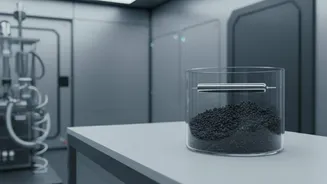
and scope of missions. The solution lies in 'living off the land,' a concept known as In-Situ Resource Utilization (ISRU). The lunar surface, while appearing barren, is a treasure trove of resources. The fine, grey dust covering the Moon, called regolith, is made up of about 45% oxygen by weight. However, this oxygen is chemically locked away inside minerals like silicon oxide and iron oxide, making it unusable in its natural state. The challenge for scientists has been to develop a reliable and efficient method to unlock it.
A Fiery, Revolutionary Solution
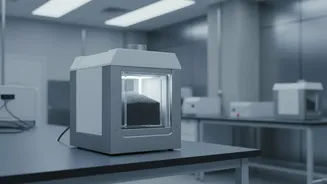
Scientists at NASA's Johnson Space Center in Houston have successfully tackled this problem with an experiment called the Carbothermal Reduction Demonstration, or CaRD. In a groundbreaking test, they were able to extract oxygen from simulated lunar soil for the first time in a vacuum environment, mimicking the conditions on the Moon. The process, known as carbothermal reduction, involves heating the regolith to extreme temperatures—around 1,700°C—until it melts. For the demonstration, the team used a powerful laser to simulate heat from a solar concentrator, essentially a giant magnifying glass for sunlight. This intense heat, applied within a specially designed reactor, breaks the strong chemical bonds of the oxides in the soil, releasing carbon monoxide gas. This gas is the critical first product from which pure, breathable oxygen can then be separated.
From Dust to Breathable Air
The successful CaRD test was conducted inside a 15-foot spherical vacuum chamber aptly named the 'Dirty Thermal Vacuum Chamber,' which allows for realistic testing with messy materials like regolith simulant. Inside the chamber, a device called the Mass Spectrometer Observing Lunar Operations (MSolo) detected the carbon monoxide, confirming that the solar-powered chemical reaction had worked as planned. This achievement is a major milestone, proving that the technology is robust enough to potentially operate on the lunar surface. Aaron Paz, a NASA senior engineer and the CaRD project manager, noted that this technology has the potential to produce several times its own weight in oxygen per year on the Moon. This would be a game-changer, providing a steady, reliable source of breathable air for astronauts.
Powering the Artemis Generation
The ability to generate oxygen on-site has profound implications for the future of space exploration. Beyond providing life support, oxygen is also a key component of rocket propellant. Liquid oxygen makes up a significant portion of the propellant needed for landers and ascent vehicles. Producing it on the Moon would dramatically reduce the mass that needs to be launched from Earth, slashing mission costs and enabling longer, more ambitious journeys. This breakthrough directly supports NASA’s Artemis missions, which aim to land the first woman and first person of colour on the Moon and build a sustainable lunar base. Technology like the CaRD reactor could become an integral part of a lunar economy, supporting not just NASA astronauts but also commercial partners. It moves humanity from being temporary visitors on the Moon to becoming long-term residents, paving the way for eventual missions to Mars and beyond.