



The Taurid Meteor Showers: A Double Feature
November is a fantastic month for meteor lovers, kicking off with two overlapping showers: the Southern and Northern Taurids. The Southern Taurids peak around November 4-5, followed by the Northern Taurids on November 11-12. While not a dense shower—expect
about 5-10 meteors per hour when they overlap—the Taurids are famous for producing incredibly bright and slow-moving fireballs. In 2026, viewing conditions are excellent. The new moon on November 9 means moonlight won't wash out the show, giving you a great chance to spot these spectacular meteors. For the best views, look toward the constellation Taurus after midnight.
The Leonids Meteor Shower: A Swift Spectacle
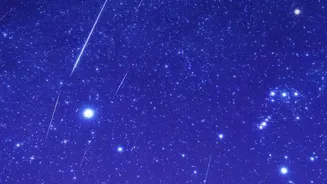
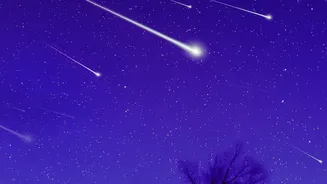
The month's main event is the Leonid meteor shower, which peaks on the night of November 17-18. Known for its exceptionally fast and bright meteors, the shower can produce 10-15 shooting stars per hour under ideal dark-sky conditions. These meteors often leave glowing trails that linger for a few moments after they streak by. The radiant, or point of origin, is the constellation Leo, which rises in the east after midnight. Happily, the moon sets early in the evening during the 2026 peak, ensuring dark skies for the prime viewing window between midnight and dawn.
Planetary Parade: A Morning Gathering
Look to the pre-dawn sky in mid-to-late November for a beautiful alignment of planets. Bright Venus will be a brilliant 'morning star', while Mars and Jupiter will appear very close together, looking like a bright double star. The duo makes its closest approach on November 16. Lower toward the horizon, you may also spot Mercury. While Saturn will be visible in the evening, this morning gathering in the east is a must-see. On November 25, Uranus reaches opposition, making it visible all night long and its brightest for the year, though you'll need a telescope to spot the tiny blue-green dot.
Step 1: Get the Right Gear (It's Simpler Than You Think)
The single most important accessory for night sky photography is a tripod. To capture faint starlight, your phone needs to hold perfectly still for several seconds, something human hands just can't do. A basic smartphone tripod with a clamp is inexpensive and makes a world of difference. To avoid shaking the phone when you take the shot, use the camera's self-timer (a 3rd delay works well) or a Bluetooth remote. Many smartphone headphones with volume buttons can also act as a remote shutter release.
Step 2: Master Your Camera's Pro Mode
Automatic settings won't cut it for the stars. Switch your phone's camera to 'Pro' or 'Manual' mode. If your phone has a dedicated 'Night' or 'Astrophotography' mode (like Google's Pixel phones), use that. Otherwise, you'll need to adjust three key settings. First, set your focus to infinity (often shown as a mountain icon); autofocus will fail in the dark. Second, set the ISO, which controls light sensitivity, to a range between 800 and 3200. Finally, set your shutter speed (exposure time) to between 10 and 30 seconds. A longer shutter lets in more light, but going past 30 seconds may cause stars to look like streaks due to the Earth's rotation. Also, be sure to shoot in RAW (sometimes called DNG or ProRAW) format if available, as it captures more data for editing later.
Step 3: Location, Location, Location
Your biggest enemy is light pollution. To get truly great shots, you need to get away from city lights. A rural area, a large park, or a beach will provide a much darker canvas. Even a short drive out of town can dramatically improve your results. Use a light pollution map app to find the darkest spot near you. The phase of the moon is also crucial. The best time for astrophotography is during the week around the new moon—in November 2026, that's on November 9. A bright moon can wash out all but the brightest stars and planets.