


What Is a Planetary Alignment?
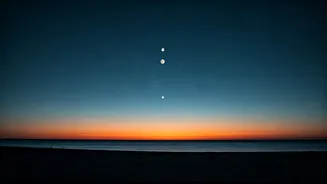
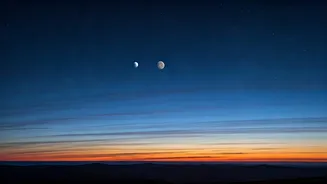
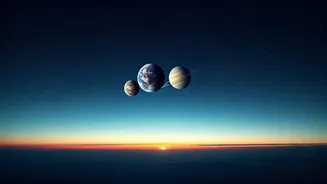
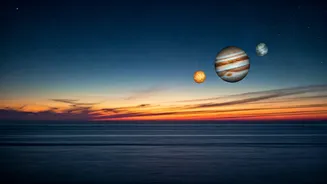
First, let's clear up what a planetary alignment, or conjunction, actually is. The planets aren’t physically close to each other in space—in fact, they remain millions of kilometres apart. What we’re seeing is a beautiful illusion of perspective. From
our vantage point on Earth, these planets appear to cluster together in a small patch of sky as their orbits bring them into the same line of sight. Think of it like seeing two distant mountains line up perfectly from a specific spot on a road. This celestial gathering is a temporary and dynamic event, a cosmic ballet that we are lucky enough to witness.
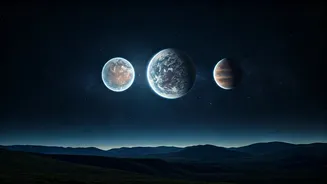
Meet the Celestial Trio
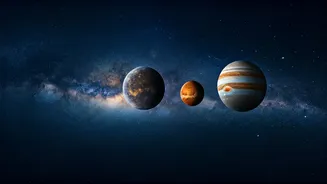
This particular lineup features three fascinating planets. The brightest of the trio is Venus. Often called the 'Evening Star' or 'Morning Star', Venus is so brilliant it’s impossible to miss. It will be the most dazzling point of light in the twilight sky. Next up is Jupiter, the king of the planets. While not as blindingly bright as Venus, Jupiter is still one of the brightest objects in our night sky, appearing as a steady, commanding light. The real prize of this celestial hunt is Mercury. The smallest planet in our solar system always stays close to the Sun, making it notoriously difficult to spot in the glare of twilight. Seeing it is a true accomplishment for any stargazer.
When and Where to Look
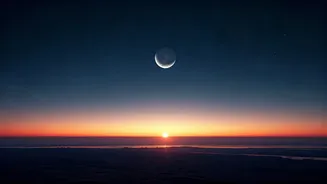
The key to seeing this planetary trio is timing and direction. You need to look towards the western horizon. The best viewing window begins about 30 to 45 minutes after the sun has completely set. This is a delicate balance. Too early, and the sky will be too bright to see the fainter planets. Too late, and the planets themselves will have dipped below the horizon. This celestial show is a brief performance, lasting perhaps only an hour, so you need to be ready. Find a location with an unobstructed view of the western horizon—a rooftop, a park, or a hilltop away from tall buildings and trees is ideal.
Your Step-by-Step Viewing Guide
You don't need a fancy telescope to enjoy this sight, but a pair of binoculars will certainly enhance the view, possibly even revealing Jupiter's largest moons. Here’s a simple plan for success:
1. **Check the sunset time:** Know exactly when the sun sets in your city.
2. **Get into position:** Be at your viewing spot about 20 minutes after sunset.
3. **Find Venus:** Scan the western sky. The brightest 'star' you see will be Venus. You can't miss it.
4. **Locate Jupiter:** Jupiter will be nearby, appearing as another bright, but less intense, point of light.
5. **Hunt for Mercury:** This is the challenge. Mercury will be the faintest of the three and closest to the horizon. Look for a small, star-like point in the fading glow of sunset, likely just below or to the side of the brighter Venus.
6. **Use an app:** If you're struggling, a stargazing app on your phone (like Stellarium or SkyView) can be a huge help. Simply point your phone at the sky, and the app will identify the planets for you.
Why This View Is So Special
While alignments of two planets are relatively common, having three naked-eye planets clustered together is a less frequent and more captivating sight. The challenge and reward of spotting elusive Mercury adds a special thrill to the experience. It’s a wonderful reminder of the vast, clockwork-like mechanics of our solar system. These are not just distant lights; they are worlds, each with its own character, moving in a cosmic dance that has been unfolding for billions of years. Taking a moment to watch them align connects us to this grander cosmic story.