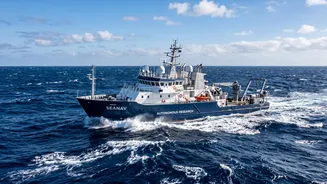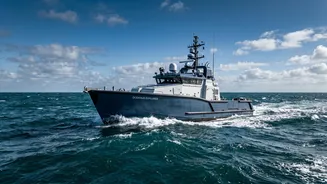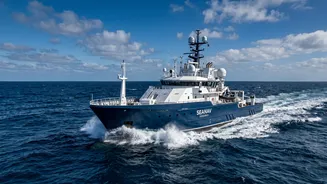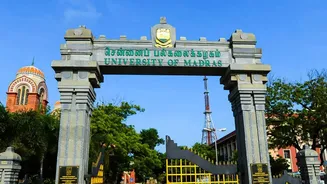




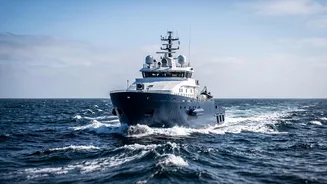
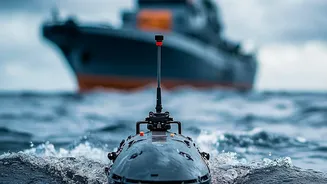
A team at the Indian Institute of Technology Madras is charting a new course for global shipping. They've developed SeaNav, a high-tech simulator designed to test and train the AI brains behind self-driving ships in a safe, virtual environment.
What is SeaNav?
SeaNav
is a real-time digital twin platform developed by the Department of Ocean Engineering at IIT Madras. Think of it as an incredibly sophisticated video game for artificial intelligence. It creates a high-fidelity virtual maritime world where autonomous navigation systems can be tested, validated, and trained without the enormous cost and risk of real-world trials. Testing these systems on the open ocean is expensive, complex, and potentially hazardous. SeaNav provides a safe and scalable sandbox to work out the kinks before a single robotic ship leaves port.
A Digital Twin of the High Seas
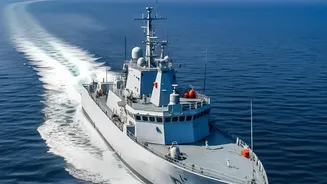
Built on the popular Unity3D engine, SeaNav isn't just a simple map. It simulates the complex physics of the ocean, including realistic waves, vessel movements, and various environmental conditions. To ensure its accuracy, the researchers calibrated the simulator using a benchmark model of a 320-meter-long tanker, making its virtual results closely reflect real-world commercial shipping operations. It can also model sensor limitations like noise and delays, training the AI to navigate effectively in fog, rain, and other low-visibility conditions. The system even includes a Virtual Reality (VR) interface, allowing human operators to experience the simulation from a ship's bridge.
Why Self-Driving Ships are the Future
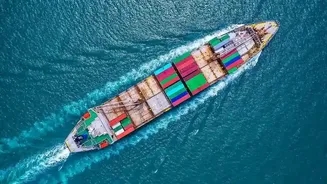
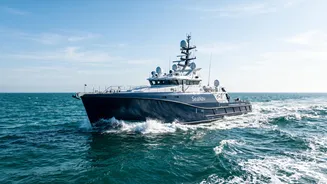
The global shipping industry carries over 80% of world trade, but it faces significant challenges. A very high percentage of maritime accidents are attributed to human error. Autonomous vessels promise a future with fewer collisions, lower operational costs, and increased fuel efficiency. By optimising routes and reducing crew requirements, these 'smart ships' can make shipping safer, cheaper, and greener, helping to lower carbon emissions. While the technology is still evolving, the potential to revolutionize logistics and trade is immense.
The IIT Madras Vision
The SeaNav project, led by researchers like Dr. Suresh Rajendran, is a major step forward for India's maritime ambitions. It aligns perfectly with national initiatives like the 'Sagarmala Programme' and 'Maritime India Vision 2030', which both emphasize the need for smart ports and digital technologies. The team at IIT Madras's Department of Ocean Engineering has a history of pioneering indigenous solutions, from creating cost-effective 'wavemakers' for structure testing to developing facilities for hydrodynamic research. According to Dr. Rajendran, the goal is to create an environment where both autonomous systems and human operators can be trained safely and efficiently before deployment.
Navigating the Challenges Ahead
Despite the promise, the path to fully autonomous shipping is not without obstacles. Significant hurdles remain in regulation, cybersecurity, and public acceptance. Current maritime laws are designed for ships with human crews, and new international frameworks are needed to govern unmanned vessels. The risk of cyberattacks is a major concern, as a hacked vessel could cause a major incident. SeaNav, however, plays a crucial role in overcoming these challenges. Beyond commercial shipping, its multi-vessel simulation capabilities have potential applications in coastal surveillance, search-and rescue operations, and maritime defence, enhancing safety at major Indian ports like Chennai, Mumbai, and Kochi.