



The Birth of an Imperial Capital
Kolkata’s journey to becoming the second city of the British Empire after London began when it was established as the capital of British India in 1772. Strategically located on the banks of the Hooghly River, it grew from a trading post of the East India Company
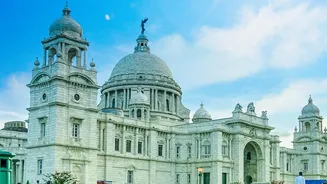
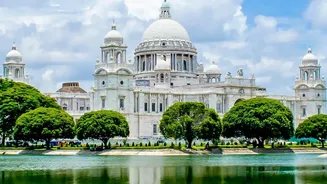
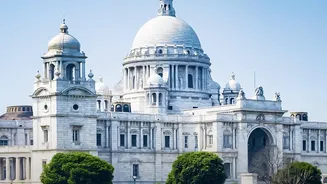
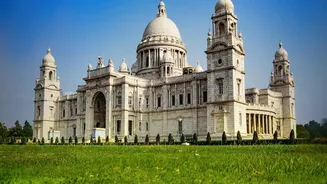
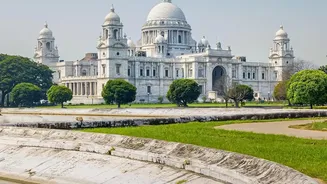
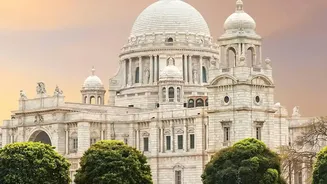
into a formidable hub of commerce, administration, and finance. This transformation was physically manifested in its architecture. The British sought to build a city that reflected their imperial power, resulting in a wave of construction featuring grand European designs. This ambition laid the foundation for the city’s iconic colonial aesthetic and its eventual nickname.
Dalhousie Square: The Heart of British India
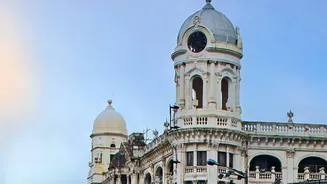
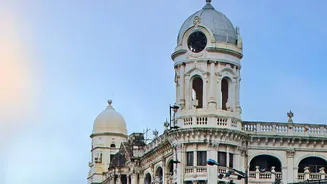
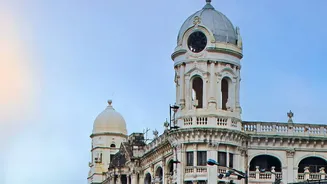
At the epicentre of this imperial project was Dalhousie Square, now known as Benoy-Badal-Dinesh Bagh or B.B.D. Bagh. This area was the undisputed political and financial nucleus of British India. It is here that the density of colonial architectural masterpieces is most striking. The square is dominated by the monumental Writers' Building, which served as the main administrative office. Surrounding it are other magnificent structures like the General Post Office with its imposing dome, the former Royal Insurance Building, and the Calcutta Stock Exchange, which together formed a district locally called 'Office Para'. This concentration of power and commerce in one grand square was the engine room of the British Raj.
Architecture that Echoed London
The nickname 'London of India' wasn't just about political status; it was a visual comparison. The buildings in and around B.B.D. Bagh showcased a mix of Neoclassical, Gothic Revival, and Victorian architectural styles that were popular in Britain. The Calcutta High Court, for example, resembles the 13th-century Cloth Hall in Ypres, Belgium, while St. John's Church was modelled after St. Martin-in-the-Fields in London's Trafalgar Square. These structures, with their Corinthian pillars, grand porticos, and stately facades, created a landscape so reminiscent of a European capital that the London comparison became inevitable. The city’s location on the Hooghly River also drew parallels with London on the Thames, reinforcing the connection between the two great trading riverbanks.
From Colonial Hub to Indian Bazaar
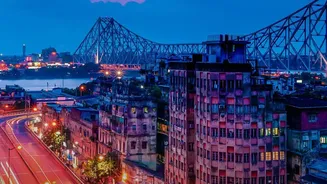
After India's independence and the shifting of the capital to Delhi in 1911, these commercial districts underwent a profound change. The once-exclusive European zones transformed into bustling hubs of Indian commerce. While many of the grand trading houses like Gillanders Arbuthnot adapted and survived, the streets around them evolved. Today, B.B.D. Bagh and adjacent areas like Burrabazar, one of India's largest wholesale markets, are a vibrant, chaotic mix of past and present. Imposing colonial buildings now serve as backdrops to a whirlwind of yellow taxis, street food vendors, and thousands of daily commuters, creating a uniquely Kolkatan blend of history and hustle.
A Heritage in the Balance
The preservation of this architectural heritage is a continuous challenge. While many buildings remain functional government offices, others have fallen into disrepair, threatened by age, neglect, and the pressures of a modern metropolis. However, a growing awareness has led to significant conservation efforts. Organisations like INTACH and the government have undertaken restoration projects for landmarks such as the Writers' Building and the Currency Building, which has been transformed into a museum. These efforts are crucial, as the buildings of Kolkata's old commercial districts are not just relics; they are living monuments that tell the story of a city shaped by empire, rebellion, and resilience.