




A Threat from 93 Million Miles Away
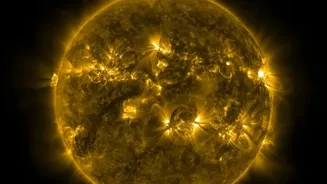
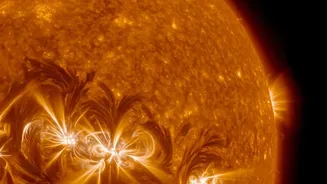
Our star is a dynamic and sometimes violent place. Occasionally, the Sun ejects a colossal bubble of magnetised plasma into space, known as a Coronal Mass Ejection (CME). These are not the instantaneous flashes of light called solar flares; a CME is like
a cannonball of solar material that can weigh billions of tons and travel at millions of kilometres per hour. While most CMEs miss our planet, those that are Earth-directed can take anywhere from one to four days to make the journey. When such a storm slams into Earth’s protective magnetic shield, the magnetosphere, it triggers a geomagnetic storm. This interaction is what creates beautiful auroras, but it also holds the potential for widespread technological disruption on the ground.
How a Solar Storm Becomes a Blackout
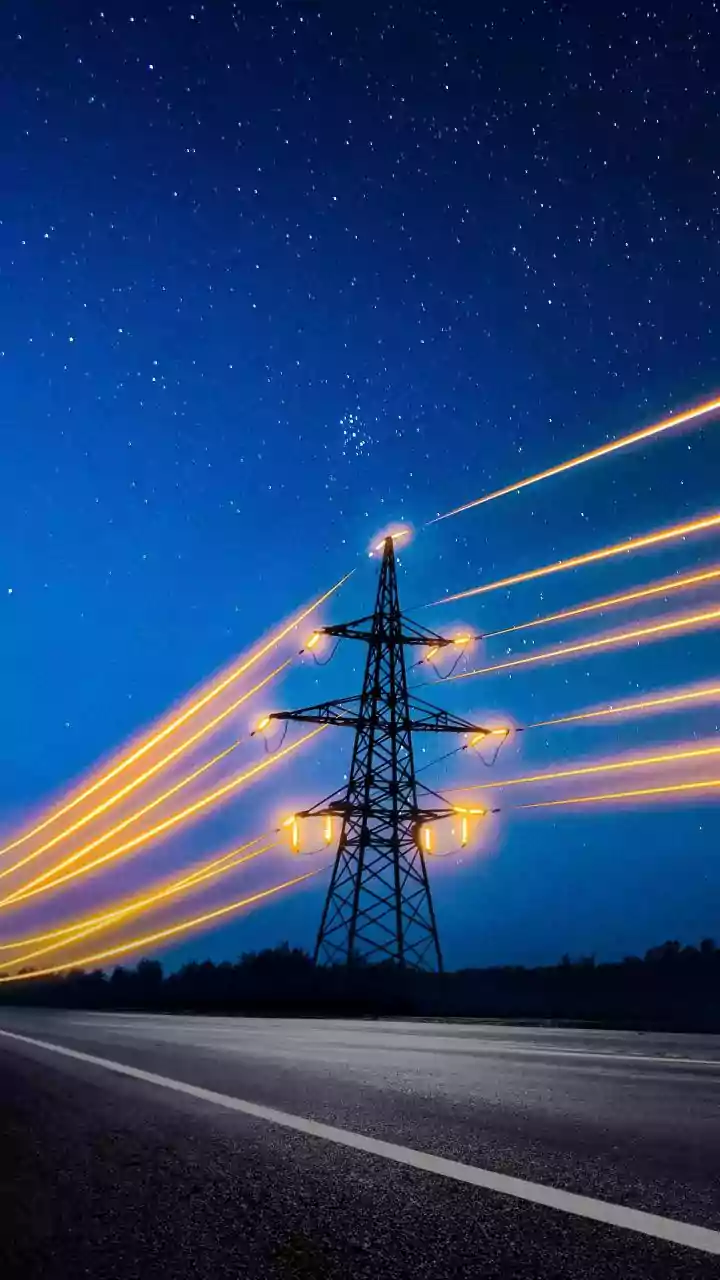
The danger to our power grids doesn't come directly from the CME itself, but from its effect on our planet's magnetic field. A powerful geomagnetic storm causes rapid magnetic field fluctuations, which in turn create something called geomagnetically induced currents (GICs) in the ground. These GICs seek out long, conductive pathways to travel through, and there are few better conductors than the sprawling high-voltage transmission lines that make up our national power grids. Electrical grids are designed to handle alternating current (AC), but GICs behave more like direct current (DC). This rogue DC-like current flows into the massive transformers at electrical substations, causing their magnetic cores to saturate and overheat. The result can be catastrophic: transformers can be permanently damaged, leading to cascading failures and widespread, long-lasting blackouts. The 1989 geomagnetic storm that left six million people in Quebec without power for nine hours is a stark reminder of this vulnerability.
Fighting Flares with Forecasting
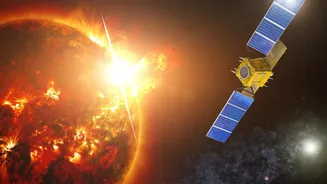
This is where modern science provides a crucial advantage. We can’t stop a CME, but we can see it coming. Space agencies like NASA and NOAA continuously monitor the Sun using a fleet of satellites. When these observatories spot an Earth-directed CME, sophisticated computer models spring into action. Physics-based simulation systems, such as the WSA-Enlil model used by forecasters, take data on the CME's size, speed, and direction to predict its path through the solar system. This provides an initial forecast, giving us a one-to-four-day heads-up that a storm is on its way. While this initial “Watch” provides valuable time for preparation, the most critical warning comes much later.
The Critical 60-Minute Warning
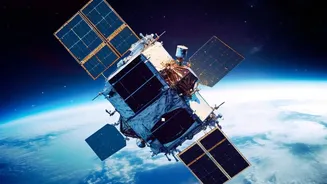
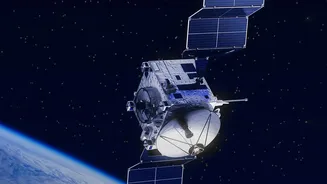
For high-confidence, actionable intelligence, grid operators rely on data from satellites positioned at a gravitationally stable point about 1.5 million kilometres from Earth. When the CME cloud speeds past a satellite like the Deep Space Climate Observatory (DSCOVR), its sensors take direct measurements of the solar wind's speed, density, and magnetic field orientation. This data is beamed to Earth, giving space weather forecasters and grid operators a final, high-accuracy warning with a lead time of about 15 to 60 minutes before impact. This short window is the vital lead time mentioned in the headline. AI-enhanced models are now improving the precision of these short-term forecasts, helping to pinpoint which specific regions of the planet will be most affected.
From Warning to Action
With a warning in hand, power utility companies are not helpless. That crucial lead time allows them to enact carefully planned safety protocols. Operators can take steps to reconfigure the grid to reduce stress on the system, such as altering power generation levels and rerouting power flows. They can postpone non-essential maintenance on critical equipment and bring additional generation capacity online to improve stability. In the face of a particularly severe storm prediction, they might even take the drastic but necessary step of temporarily taking the most vulnerable and expensive transformers offline to protect them from the destructive GICs. This proactive shutdown, while causing a controlled, temporary outage, is far preferable to the months or even years it could take to replace damaged custom-built transformers.