







The Reusability Revolution
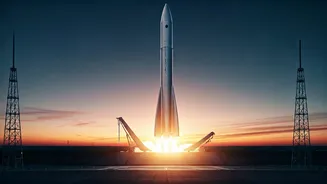
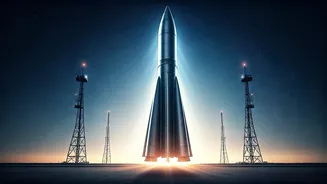
The single biggest driver of this new era is the development of reusable rockets, a technology pioneered and dominated by companies like SpaceX. [13] In the past, rockets were single-use machines, discarded after each mission. [4] This made space launches
incredibly expensive. To put it in perspective, NASA's Space Shuttle cost about $54,500 per kilogram to launch a payload into Low Earth Orbit (LEO). [5] Today, SpaceX's partially reusable Falcon 9 rocket has slashed that price to as low as $2,720 per kilogram, with the Falcon Heavy potentially lowering it to $1,400. [5, 19] This dramatic cost reduction, a drop of over 95% in some cases, is the economic engine making widespread space access possible. [5, 11] By recovering and relaunching the most expensive parts of the rocket, the barrier to entry for space has been fundamentally lowered. [4, 14]
India's Private Space Boom
This global trend has a powerful echo in India. Since the government opened the sector to private participation in 2020, a vibrant ecosystem of space-tech startups has emerged. [20, 28] Companies like Skyroot Aerospace and Agnikul Cosmos are at the forefront, developing their own launch vehicles. [3] Skyroot made history with Vikram-S, India's first privately built rocket, and became the nation's first space-tech unicorn in May 2026. [18, 24] Agnikul has focused on innovations like 3D-printed rocket engines to create customisable, low-cost launch vehicles. [3, 21] These companies are not just building rockets; they're creating a domestic, commercial launch industry that aims to compete on a global scale, leveraging India's talent pool and manufacturing advantages. [18, 27] The Indian government has actively supported this shift, creating IN-SPACe to facilitate collaboration and provide access to ISRO's world-class infrastructure. [18, 24]
More Than Just Rockets
Lower launch costs have catalysed a host of new business models in space. Accessibility isn't just about launching rockets; it's about what you can do once you're there. We are seeing the rapid growth of satellite constellations from companies like SpaceX (Starlink) and Amazon (Project Kuiper) to provide global high-speed internet. [2, 23] Other Indian startups like Pixxel are building constellations of hyperspectral imaging satellites to provide valuable data for agriculture, climate research, and more. [6, 17] Beyond communications and Earth observation, this accessibility is paving the way for ambitious new industries, including space tourism, in-orbit manufacturing of unique materials like pharmaceuticals, and even asteroid mining. [2, 12, 13] Companies like Blue Origin are not only developing reusable rockets but are also designing commercial space stations like Orbital Reef, envisioning a future where people live and work in space. [13, 29]
What 'Accessible' Really Means
Ultimately, making space more accessible means three things. First, it's cheaper. The cost to launch a satellite or experiment has fallen dramatically, opening the door for startups, universities, and smaller nations to participate in space. [11, 14] Second, it's faster and more frequent. Private companies are increasing launch rates, reducing the waiting time for a ride to orbit. [10, 27] Third, it's more diverse. Accessibility now extends to who can go to space, with companies like Blue Origin and Virgin Galactic pioneering space tourism and pushing the boundaries to include a wider range of people. [9, 30] This shift from a government-led to a commercial model fosters competition, which in turn drives further innovation and cost reduction, creating a virtuous cycle that will continue to open up the space frontier. [13]