




The Science Behind the Sparkle
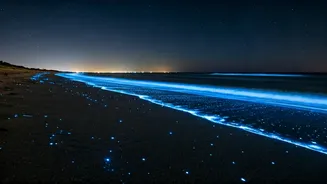
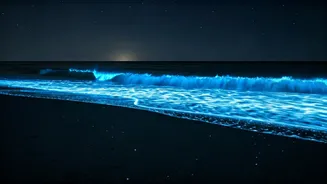
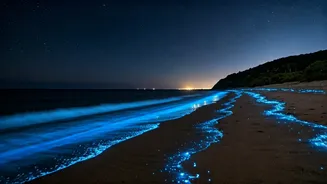
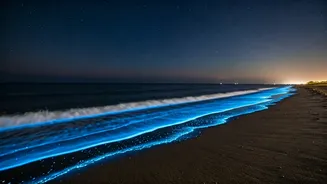
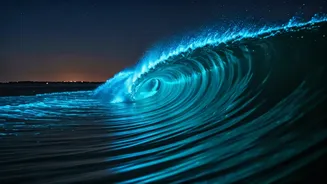
That ethereal glow, often called “sea sparkle,” is a form of bioluminescence. The culprit is a type of single-celled plankton called dinoflagellates, specifically a species named Noctiluca scintillans, which translates to “night light.” These microorganisms
float near the water's surface. When disturbed by the motion of the waves, a surfer’s board, or even your footsteps in the wet sand, they produce a flash of brilliant blue light as a defense mechanism. The chemical reaction inside their cells is designed to startle predators, but for human observers, it creates a breathtaking, otherworldly light show. Millions of them flashing in unison are what give the waves their signature shimmering, electric-blue appearance against the dark sea.
Where to Find This Magical Sight
While bioluminescence can occur in oceans worldwide, the coast of Karnataka has become a reliable hotspot. The phenomenon has been most frequently documented along the shores near the city of Udupi. Mattu Beach and Padukere Beach are two of the most popular locations where visitors have consistently reported seeing the glowing waves. These beaches, located on the Arabian Sea, offer long, quiet stretches of sand, making them ideal for a nighttime walk. The relative lack of light pollution in these specific areas is crucial, as the darker the surroundings, the more vibrant and dramatic the bioluminescence appears. Local fishermen have known about this “sea fire” for generations, but social media has recently brought global attention to this specific Indian coastline.
Timing Is Everything
Seeing the glow is not a year-round guarantee; it’s a seasonal event that requires planning. The best time to witness bioluminescence in Karnataka is typically after the monsoon season, from late September through December. During this period, the water conditions and concentration of Noctiluca scintillans are often optimal. For the best viewing experience, plan your visit during the new moon phase. A bright moon will wash out the faint light of the plankton, so the darker the night, the better the show. Aim to be at the beach a couple of hours after sunset, once the sky is completely dark. Check the local tide schedules as well; some observers report stronger displays during high tide as more plankton is washed ashore.
Tips for Capturing the Glow
Photographing bioluminescence is notoriously difficult but immensely rewarding. Your smartphone camera likely won't cut it. You’ll need a DSLR or mirrorless camera with manual controls. First, use a tripod; it’s non-negotiable for stability during long exposures. Set your camera to manual mode. Start with a wide aperture (f/2.8 or lower if possible) to let in maximum light, a high ISO (try 1600 to 3200), and a long shutter speed (start with 15-25 seconds). Use manual focus to set your lens to infinity, as autofocus will struggle in the dark. Take test shots and adjust your settings from there. Most importantly, remember to put the camera down. The glow is often more vivid and magical to the naked eye than any photo can capture, so be sure to soak in the experience technology-free.
A Responsible Visitor's Guide
This beautiful phenomenon is part of a fragile marine ecosystem. The recent surge in tourism to these beaches puts that ecosystem at risk. If you are fortunate enough to visit, practice responsible tourism. Carry out everything you bring in—leave no trace, especially plastic or other waste. Avoid using bright flashlights, as they ruin your night vision and can disrupt the natural environment. Keep noise to a minimum. While it may be tempting to splash and agitate the water to trigger the glow, do so gently and mindfully. Remember that an algal bloom of Noctiluca can sometimes be linked to environmental stressors like pollution, so appreciating and protecting these coastal areas is more important than ever.