








Why Sitting Creates Stiffness
Our bodies are designed for movement. When you sit for extended periods, certain muscles adapt by shortening and tightening while others become weak and underused. The primary culprits are the hip flexors at the front of your hips, which become short and tight,
and the glutes, which can become inactive. This imbalance pulls on the pelvis and can contribute to lower back pain. Meanwhile, a forward-hunching posture over a keyboard leads to a stiff upper back (thoracic spine) and rounded shoulders, which can cause neck and shoulder tension. Over time, this lack of movement reduces circulation and the elasticity of your fascia, the connective tissue that wraps around your muscles.
An Introduction to Foam Rolling
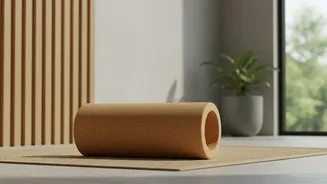
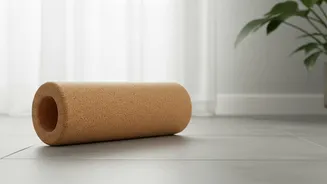
A foam roller is a simple, cylindrical tool used for self-massage, or more technically, self-myofascial release. By using your body weight to apply pressure to muscles, you can help release tension, break up knots, and improve blood flow. Think of it like a deep tissue massage you can give yourself at home. This process can alleviate muscle soreness, increase flexibility, and help restore muscles to their natural length, making it an excellent tool for anyone with a sedentary lifestyle. It helps prepare muscles for movement and can aid in recovery afterward.
Key Foam Rolling Exercises
When starting, go slowly and gently. Expect some discomfort, but not sharp pain. Roll slowly over the muscle and when you find a tender spot, hold the pressure for about 30 seconds while taking deep breaths. Do not roll directly over joints or your lower back. Upper Back (Thoracic Spine): Lie on your back with the foam roller positioned under your shoulder blades, perpendicular to your spine. Bend your knees with your feet flat on the floor and cross your arms over your chest. Lift your hips slightly off the ground and slowly roll up and down your mid to upper back. Glutes: Sit on the foam roller and cross one ankle over the opposite knee in a figure-four position. Lean your weight onto the hip of the crossed leg and roll gently over the glute muscle to release tension that contributes to back pain. Quads and Hip Flexors: Lie face down in a forearm plank position with the roller under the front of your thighs. Use your arms to roll your body forward and back, moving the roller from the bottom of your hips to just above your knees.
Unlocking Your Joints with Mobility Drills
While foam rolling addresses the muscles, mobility drills focus on improving the range of motion of your joints. Unlike static stretching where you hold a position, mobility work involves actively moving your joints through their full arcs of motion. For desk workers, this is crucial for counteracting the static postures that lock up the hips and spine. These drills help 'unglue' stiff joints, improve posture, and activate muscles that have been dormant from sitting.
Essential Mobility Drills for Your Day
These exercises require no equipment and can be done during a short break from your desk. Focus on controlled, smooth movements. Cat-Cow: Start on your hands and knees. As you inhale, drop your belly and look up, arching your back (Cow). As you exhale, round your spine toward the ceiling, tucking your chin to your chest (Cat). Repeat for 10-12 repetitions to gently mobilize the entire spine. Thoracic Spine Rotations: From a hands-and-knees position, place one hand behind your head. Rotate your elbow and upper body down toward the opposite wrist, then open up, rotating your elbow and chest toward the ceiling. This specifically targets the stiffness in your upper back. Perform 8-10 reps on each side. Kneeling Hip Flexor Stretch: Kneel on one knee, with the other foot flat on the floor in front of you. Gently tuck your tailbone and squeeze the glute of the kneeling leg to feel a stretch in the front of your hip. Hold for 30 seconds on each side.
Building a Consistent Routine
Consistency is more important than intensity. You don't need to spend an hour every day to feel the benefits. Aim to perform a short mobility routine daily, even for just five to ten minutes. This could be in the morning to start your day, as a midday break to reset your posture, or in the evening to unwind. Try foam rolling three times a week, either before a workout to warm up or after to aid recovery. By integrating these small, mindful movements into your week, you can actively combat the negative effects of a sedentary job and keep your body feeling more fluid and less restricted.