

The Glow That Hides the Cosmos
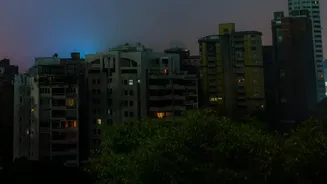
For anyone living in or near a major Indian city, the night sky is often a blank canvas, washed out by a phenomenon known as light pollution. The excessive and misdirected artificial light from streetlights, buildings, and advertisements creates a bright
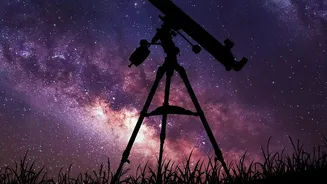
haze, or 'skyglow,' that obscures all but the brightest celestial objects. While our ancestors navigated by the stars, a 2016 study found that over a third of the world's population can no longer see the Milky Way. This makes spotting dimmer constellations and distant planets a frustrating, often impossible task for the unaided eye. Even powerful telescopes can struggle as the skyglow reduces the contrast needed to make objects stand out. But this doesn't mean urban astronomy is a lost cause.
Your Pocket Planetarium
This is where technology becomes your indispensable stargazing companion. Modern astronomy apps transform your smartphone into a powerful, portable planetarium. These applications use your phone's built-in sensors—like its GPS for location and its compass and gyroscope for orientation—to generate a real-time map of the sky exactly as it appears above you. By simply pointing your phone towards the heavens, the app can instantly identify what you're looking at, from constellations and satellites to the very planets you're hoping to find. They effectively place a digital overlay on the sky, telling you what's there even if you can't see it clearly.
The Magic Behind the Screen
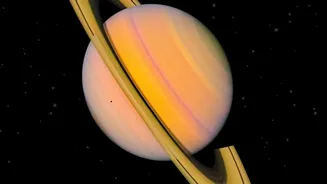
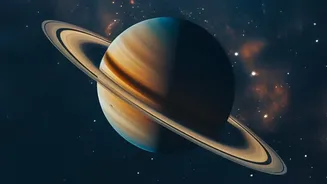
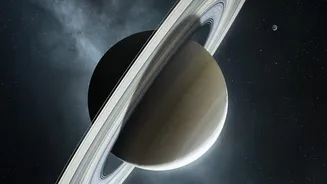
The secret weapon for many of these apps is Augmented Reality (AR). Instead of just showing you a star map, AR mode uses your phone's camera to display the actual sky and overlays labels, lines, and illustrations directly onto it. So, while an app can't make the sky physically darker, it solves the urban astronomer's biggest problem: knowing where to look. When searching for Saturn, for instance, the app won't magically make the planet brighter, but it will show a precise arrow or marker on your screen, guiding your eyes to the exact spot in the sky where Saturn is hiding amidst the glow. This removes the guesswork entirely, turning a frustrating search into a moment of discovery.
Top Apps for Urban Stargazers
Many excellent apps are available for both iOS and Android, often with free versions that are more than capable of finding planets. SkyView Lite is celebrated for its intuitive AR interface that makes identifying objects effortless. Star Walk 2 is another favourite, especially for beginners, thanks to its beautiful graphics and easy navigation. For those wanting a slightly more detailed experience, Stellarium Mobile is a fantastic choice, based on software used by amateur astronomers for decades. It offers a massive database but remains user-friendly, allowing you to search for a planet and follow an on-screen guide to its location.
Finding Saturn and Jupiter This Month
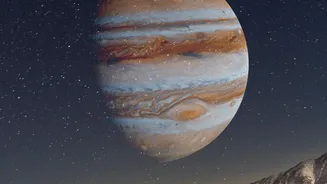
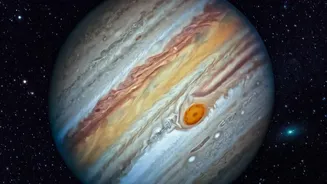
As of September 2026, both gas giants are putting on a show. Yellowish Saturn rises in the east shortly after sunset and is visible for most of the night. It will be the only bright 'star' in the southeast around 9:30-10 p.m. The much brighter Jupiter is a morning planet, rising in the east a few hours before sunrise. It will be an unmistakable, brilliant white object in the pre-dawn sky. Using an app, you can confirm their rise times for your specific location and get a live guide to pinpoint their positions, even if they appear as faint, star-like points from the city.
Tips for a Better Viewing Session
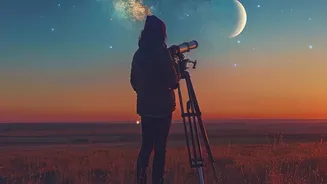
While an app is your primary tool, a few extra steps can significantly improve your urban stargazing. First, find the darkest spot you can access, like a park, rooftop, or even a balcony shielded from direct streetlights. Second, give your eyes at least 15-20 minutes to adapt to the darkness; avoid looking at your bright phone screen during this time (many apps have a red-light 'night mode' to help preserve your night vision). Finally, even a basic pair of binoculars can make a huge difference. They gather more light than your eyes, potentially revealing Saturn's elongated shape or even Jupiter's largest moons, turning a faint dot into a genuine planetary observation.