





The Power of a Short Workout
You don’t need an hour at the gym to see real benefits. Short bursts of high-intensity activity can burn more calories, boost your metabolism, and improve endurance. This approach, known as high-intensity interval training (HIIT), is perfect for a busy
travel schedule. A focused 20-minute session is enough to engage all major muscle groups, release mood-boosting endorphins, and help regulate your body clock, which can even help with jet lag. The key is consistency. Making this short routine a daily habit is more effective than sporadic, longer workouts.
The 5-Minute Warm-Up
Warming up is crucial to prevent injury and prepare your body for exercise. It increases blood flow to your muscles and raises their temperature, improving flexibility and efficiency. Spend about five minutes on dynamic stretches, which involve continuous movement. This gradually raises your heart rate and readies your joints for the workout ahead. Since you're in a small space, focus on movements you can do on the spot. Try 30 seconds of each: jumping jacks, high knees (marching in place if you need to be quiet), butt kicks, arm circles (forward and backward), and torso twists. This will get your body primed and ready without needing much room.
The 12-Minute Full-Body Circuit
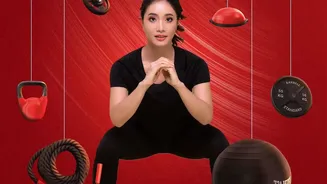
This circuit is designed to work your entire body using just your bodyweight. Perform each of the following four exercises for 45 seconds, followed by 15 seconds of rest. Complete the entire circuit three times. This efficient format keeps your heart rate up and delivers a comprehensive workout in just 12 minutes.1. Bodyweight Squats: This fundamental move strengthens your quads, hamstrings, glutes, and core. Keep your chest up and back straight as you lower your hips as if sitting in a chair.2. Push-ups: A classic full-body exercise that targets your chest, arms, and core. If a standard push-up is too difficult, you can modify it by placing your knees on the floor or performing them with your hands on the edge of the bed for an incline.3. Alternating Lunges: Lunges are excellent for building leg strength and improving balance. Step one foot forward and lower your hips until both knees are bent at a 90-degree angle, then return to the start and switch legs.4. Plank: The plank is the ultimate core-strengthening exercise. Hold your body in a straight line from head to heels, engaging your abdominal muscles. Avoid letting your hips sag or rise too high.
Mastering The Moves
Proper form is more important than the number of reps you do. For squats, ensure your weight is in your heels and your knees track in line with your toes without extending past them. When doing lunges, your front knee should be aligned over your ankle, and your back knee should point down towards the floor. For push-ups, keep your body in a straight, solid line from your head to your heels to engage your core effectively; don't let your hips sag. You can also make exercises more challenging as you get stronger. Try holding a filled water bottle for added weight during squats and lunges, or slow down the movement to increase time under tension.
The 3-Minute Cool-Down
A cool-down is just as important as a warm-up. It allows your heart rate and blood pressure to return to normal gradually and helps reduce muscle stiffness by stretching the muscles while they are still warm. Hold each of the following static stretches for 30 seconds, focusing on the muscles you just worked. Don't bounce; just hold the stretch at a point of mild tension, not pain. Try a quadriceps stretch (holding your ankle and pulling your heel towards your glute), a hamstring stretch (sitting on the floor and reaching for your toes), a chest stretch (clasping hands behind your back), and a child's pose to release your back.