






The Sun's Approaching Fever Pitch
The sun operates on an approximately 11-year cycle, moving from a quiet phase (solar minimum) to a turbulent one (solar maximum). We are currently in Solar Cycle 25, which began in late 2019. Initial forecasts predicted a mild cycle, but the sun has ramped
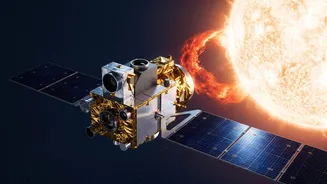
up its activity far more quickly and intensely than expected. While the exact peak is a moment that can only be confirmed in hindsight, scientific bodies like NOAA and NASA have indicated that the solar maximum is occurring between late 2024 and early 2026. During this period, the sun’s surface is rife with sunspots, which are magnetic hotspots that can erupt, launching powerful solar flares and colossal clouds of charged particles, known as coronal mass ejections (CMEs), into space.
Why This Peak Is Different
Not all solar maximums are created equal. Solar Cycle 25 is already proving to be stronger than its predecessor, Solar Cycle 24. The concern isn't just about the number of solar flares but their intensity. X-class flares, the most powerful category, can trigger significant space weather events when directed at Earth. In early 2026, the sun unleashed a barrage of intense flares, including the strongest of the year, prompting warnings from agencies like the Indian Space Research Organisation (ISRO). This heightened activity, arriving sooner and stronger than predicted, coincides with our society's deepest-ever dependence on space-based technology, creating a perfect storm of risk.
Satellites: Our Fragile Digital Lifelines
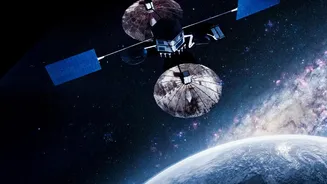
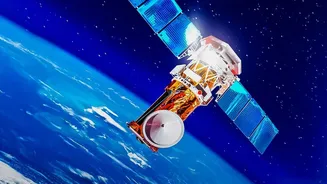
Modern life in India runs on satellites. They are fundamental to GPS navigation for ride-sharing and logistics, banking transactions, weather forecasting by the India Meteorological Department, and television broadcasts. Even our military and disaster management services depend on this orbital infrastructure. However, these high-tech assets are incredibly vulnerable to solar storms. There are four main threats: increased atmospheric drag, radiation damage, spacecraft charging, and communication disruption. A severe storm can heat Earth's upper atmosphere, causing it to expand. This increases drag on satellites in low-Earth orbit, causing them to lose altitude and potentially fall out of the sky—a fate that befell dozens of Starlink satellites in 2022. High-energy particles can also fry sensitive electronics, degrade solar panels, and cause 'phantom commands' that send a satellite spinning out of control.
The Race for a Better Shield
The urgency in the headline refers to the gap between our current satellite technology and the growing threat. Most satellites have some level of shielding, but it is often heavy, expensive, and not designed to withstand a worst-case solar event. A direct hit from a storm on the scale of the 1859 Carrington Event could disable hundreds or even thousands of satellites. This has sparked a race for innovation. Researchers are developing new, lightweight shielding materials that offer better protection without adding prohibitive weight. These include tailored metal matrix composites and even novel, flexible materials that can be 3D-printed directly onto electronic components. The goal is to retrofit existing designs and build new satellites that can weather the sun's fury, but deploying these solutions across thousands of assets takes time.
The Indian Context and Global Preparedness
For India, the stakes are enormous. ISRO operates a large fleet of over 50 satellites for communication, navigation (NavIC), and Earth observation, all of which are at risk. The agency actively monitors space weather and, with instruments on its Aditya-L1 solar observatory, is working to better understand and predict these events. During the solar flares in early 2026, ISRO confirmed it was closely tracking all its assets and preparing contingency plans for any disruptions. This preparation is key. While the most intense phase of a solar maximum lasts for a couple of years, damaging storms can occur even as the cycle wanes. Better forecasting provides crucial lead time for satellite operators to power down sensitive components, reorient spacecraft, or perform manoeuvres to mitigate damage, protecting the digital infrastructure that powers our nation.