






The Bite-Sized Revolution
First, let's unpack 'micro-learning.' Forget clearing your schedule for a three-hour lecture. Micro-learning is an educational strategy that breaks down complex subjects into small, focused, and manageable chunks. Think of it as the Duolingo model applied
to everything else. Instead of trying to master the entirety of Python in one weekend, you learn a single concept, like a 'for loop,' in a five-to-ten-minute session. This approach is designed for the modern learner who juggles a full-time job, family, and a dozen other commitments. By delivering information in brief, targeted bursts, it lowers the barrier to entry and makes the initial learning curve feel less like a cliff and more like a gentle slope. The goal isn't mastery in a day; it's consistent, incremental progress that builds momentum and, more importantly, a daily habit.
Where Artificial Intelligence Fits In
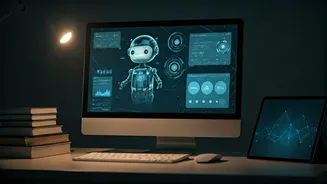
The 'AI' part of the equation is what elevates this from a simple flashcard system to a personalized educational tool. Traditional online courses offer a one-size-fits-all curriculum. You progress from lesson A to B to C, regardless of your background or how quickly you grasp the material. AI changes that. An AI-driven micro-learning platform acts like a personal tutor. It observes your performance, identifies your weaknesses, and adapts the curriculum in real time. Are you struggling with JavaScript functions but breezing through HTML? The AI will serve you more function-related exercises and quizzes, while accelerating you through the topics you've already mastered. It uses techniques like spaced repetition—re-introducing concepts at the perfect interval to move them from short-term to long-term memory. This personalization ensures that your brief daily modules are spent as efficiently as possible, focusing precisely on what you need to learn next.
The Psychology of Daily Learning
The power of this method lies in its alignment with human psychology. Committing to a short, daily module feels achievable, which dramatically reduces procrastination. This consistency helps form a learning habit. Just as you might check your email or scroll social media, you can complete a quick coding lesson. This process taps into the brain's reward system, providing a small sense of accomplishment each day that encourages you to return the next. Furthermore, by learning in short bursts, you avoid cognitive overload—that feeling of being overwhelmed when your brain is saturated with too much new information. A daily, focused lesson is more likely to be retained than a marathon session crammed into a Sunday afternoon. It’s a sustainable pace that prioritizes comprehension and retention over speed, making it an ideal fit for complex, abstract skills like programming.
A Starting Point, Not a Finish Line
So, can you become a senior software engineer at Google using only a micro-learning app? It’s important to set realistic expectations. AI-powered micro-learning is an incredibly powerful tool for building foundational knowledge, exploring a new language, or keeping your existing skills sharp. It excels at teaching syntax, core concepts, and algorithmic thinking in a structured way. However, it’s not a direct replacement for the deep, project-based learning offered by intensive bootcamps or a computer science degree. Professional software development requires more than just knowing concepts; it involves collaboration, debugging large-scale systems, and architecting complex applications. Think of micro-learning as the perfect on-ramp. It can take you from zero to confidently writing your first scripts and understanding the fundamentals. From there, you'll be far better equipped to tackle larger personal projects or more advanced, formal training.