

Start with Subtraction, Not Addition
Before you buy anything new, the most impactful first step is often to declutter. A cluttered space creates visual noise and can increase stress, making it difficult to relax. Start small to avoid feeling overwhelmed: tackle one corner, one shelf, or one category
of items at a time. Create distinct piles for items to keep, donate, sell, or discard. This process isn’t about sterile minimalism, but about making intentional choices. By removing what no longer serves a purpose, you create physical and mental breathing room, allowing the pieces you love to truly shine and improving the overall flow and function of the space.
Master the Mood with Layered Lighting
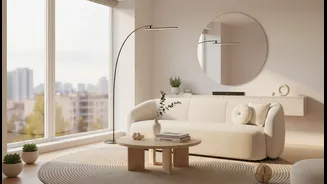
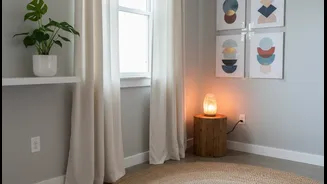
Lighting is one of the most powerful and often overlooked tools for shaping a room's atmosphere. A single, harsh overhead fixture can make a space feel flat and uninviting. The key is layered lighting, combining different sources to create a flexible and warm environment. Aim for three types: ambient (overall illumination), task (for specific activities like reading), and accent (to highlight art or architectural features). Warm-toned light, with its yellowish hue, promotes relaxation and is ideal for living rooms and bedrooms. Swapping a dated fixture, adding a floor lamp to a dark corner, or placing a small lamp on a side table are all simple changes that offer immense returns in ambiance and comfort.
Introduce Softer Textures and Textiles
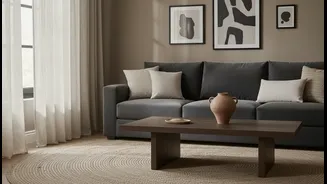
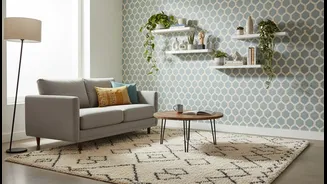
A room without varied textures can feel cold and one-dimensional. Textiles are the finishing touch that brings warmth, character, and physical comfort to a space. Think about how you can soften hard surfaces. A plush rug can transform a cold floor, heavy curtains can insulate against sound and drafts, and a collection of pillows can make a sofa infinitely more inviting. You don’t need to reupholster furniture; a simple throw blanket draped over an armchair or new cushion covers can instantly change the feel. Mixing different materials like velvet, linen, wool, and cotton adds depth and makes the room more engaging to the touch.
Rethink Your Furniture Layout
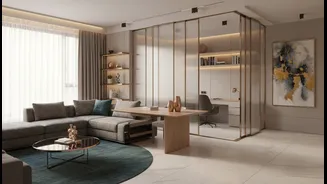
How your furniture is arranged has a massive impact on how a room feels and functions. Too often, we push everything against the walls, which can create a static, impersonal feeling. Experiment with your layout to improve traffic flow and create more intimate zones. Try pulling your sofa away from the wall to create a pathway behind it, or angle armchairs toward each other to encourage conversation. The goal is to create a layout that feels natural and makes movement easy. This costs nothing but time and can completely transform your perception of the space, making it feel larger and more welcoming.
Engage the Other Senses
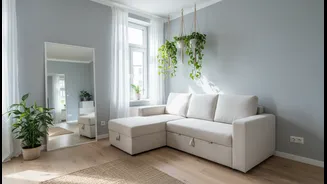
Comfort is a multi-sensory experience. Once you've addressed the visual elements, consider sound and scent. Heavy textiles like curtains and rugs can help absorb sound, reducing echo and creating a calmer acoustic environment. The gentle sound of a small water feature or a curated playlist can also mask unpleasant background noise. Scent is also deeply tied to our sense of comfort and memory. A subtle reed diffuser with a calming scent like lavender or sandalwood, or even the simple act of bringing in fresh flowers or a few houseplants, can complete the transformation. Plants not only improve air quality but also add a touch of life and nature, which has a proven calming effect.