




The Grand Ambition: A Lunar Souvenir
Chandrayaan-4 is India's first lunar sample-return mission, a sophisticated endeavor to collect up to 3 kg of rock and soil from the Moon's south pole region and transport it back for scientific study. Approved in September 2024 with a launch target of 2028,
the mission is a monumental leap from Chandrayaan-3, which was a one-way trip. Bringing samples home means mastering a series of firsts for India: launching from the lunar surface, docking two spacecraft in lunar orbit, and safely re-entering Earth's atmosphere with the precious cargo. Success would place India in an elite club of nations—joining the United States, the former Soviet Union, and China—that have accomplished this feat.
Why Taking Off From the Moon Is So Hard
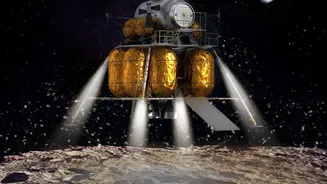
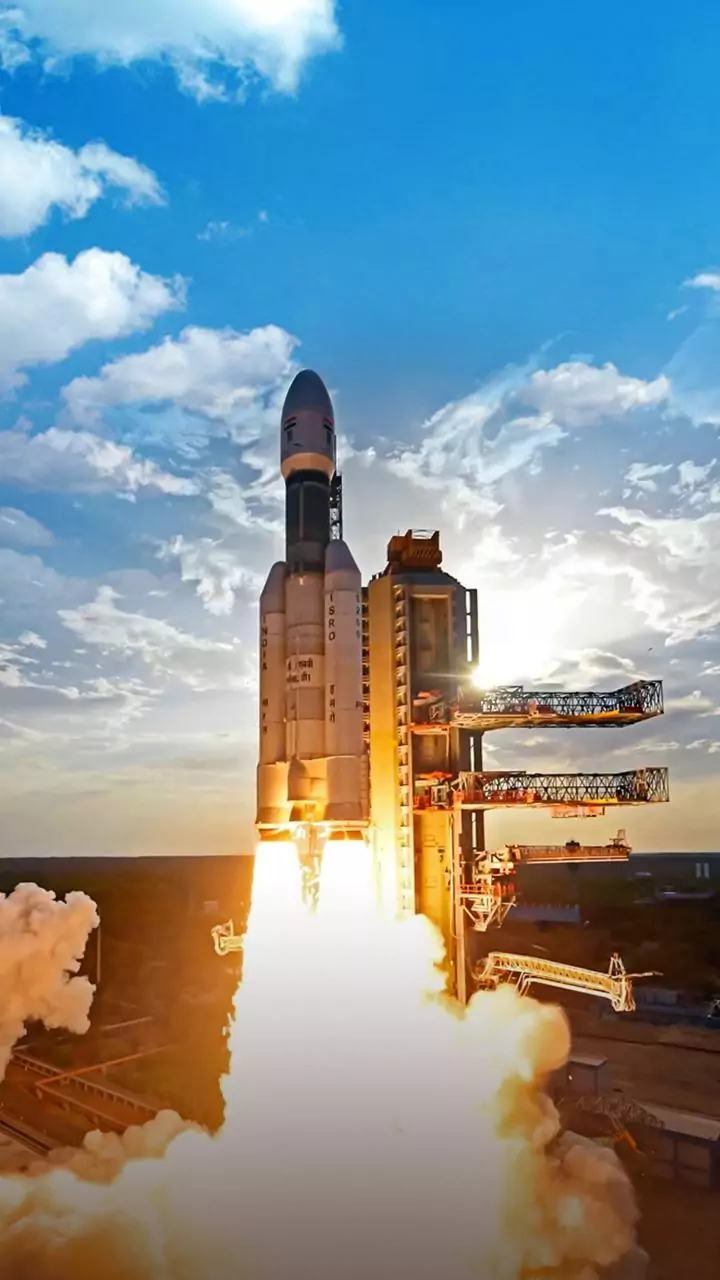
Launching a rocket from Earth is a well-understood process involving massive launchpads, support towers, and ground control. The Moon offers none of these luxuries. A lunar takeoff is essentially a launch in the wild, without a prepared surface or supporting infrastructure. Key challenges include the lack of a GPS system for navigation, the abrasive and pervasive lunar dust that can damage systems, and the need for the entire operation to be fully autonomous. The lander itself must serve as a stable launchpad for the ascent vehicle, a task that requires incredible precision and reliability in an environment where there is no room for error.
ISRO’s Ingenious Multi-Module Plan
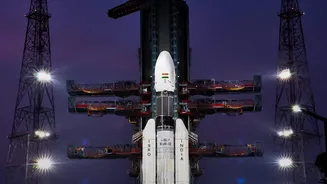
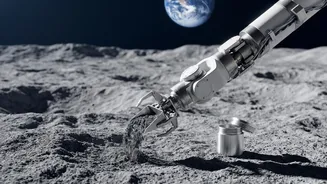
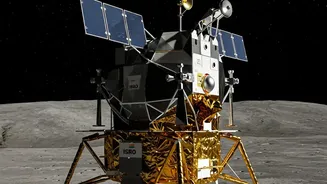
The entire Chandrayaan-4 mission is too heavy to be launched by a single LVM3 rocket. To solve this, ISRO has devised a complex five-module architecture requiring two separate launches. The mission's components include a Propulsion Module, a Descender Module (the lander), an Ascender Module, a Transfer Module, and a Re-entry Module. The plan is to first launch and assemble some of these modules in Earth's orbit—a crucial docking maneuver that ISRO has already successfully tested with its SpaDeX mission. Once the combined spacecraft reaches lunar orbit, the Descender will land on the surface. After a robotic arm and drill collect samples and place them inside the Ascender, the real challenge begins.
The Ascender: A Rocket Atop a Lander
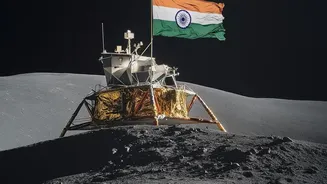
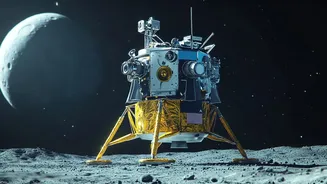
The core of the lunar takeoff strategy revolves around the Ascender Module. This vehicle is designed to sit on top of the Descender Module, which effectively becomes its launch platform. After the samples are secured, the Ascender will fire its engine to lift off directly from the lander, leaving it behind on the lunar surface. This miniature rocket must then autonomously navigate its way into a precise lunar orbit. This is a critical, high-stakes maneuver that India has never attempted before. The ascent is just the first step of the return journey, as another complex task awaits it in orbit.
A Cosmic Ballet: Docking in Lunar Orbit
Once in orbit, the Ascender, carrying the lunar samples, must perform a delicate cosmic ballet: it needs to rendezvous and dock with the Transfer Module, which will have been waiting patiently in lunar orbit. This docking is the second of two such maneuvers critical to the mission, the first having occurred in Earth orbit. During this process, the sample container will be automatically transferred from the Ascender to the Re-entry Module, which is attached to the Transfer Module. With the precious cargo secured, the Transfer Module will fire its engines to begin the long journey back to Earth, where the Re-entry Module will detach and navigate a fiery descent to deliver its priceless scientific payload.