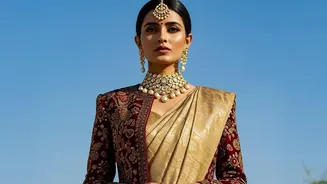


The quintessential Indian bride, once defined by the sheer weight of her opulent lehenga, is undergoing a transformation. In 2026, luxury is no longer measured in kilos but in comfort, personality, and practicality. So, what's behind this shift?
The End of the 20-Kilo Lehenga
For decades,
the unspoken rule in Indian bridal fashion was simple: heavier meant richer. Lavish lehengas, often weighing between 10 to 20 kilograms and layered with dense zardozi, zari, and stonework, were symbols of status and tradition. While visually stunning, these garments came at a cost beyond their price tag. Brides often found themselves exhausted before the main rituals began, struggling with limited movement during long ceremonies and unable to dance freely at their own celebrations. This has sparked a rebellion against bridal couture that feels more like beautiful armour than a celebratory outfit, paving the way for a new philosophy where comfort is the ultimate luxury.
A New Bridal Mindset: Comfort and Conscience
The modern bride, particularly from the Millennial and Gen Z generations, is approaching her wedding with a different set of priorities. Comfort, ease of movement, and the ability to genuinely enjoy the festivities are now non-negotiable. This shift is driven by a desire for personal expression over performative tradition. Brides want to feel like themselves, not just a symbol. Furthermore, there is a growing consciousness around sustainability. The idea of spending a fortune on a garment worn for only a few hours seems increasingly wasteful. Today's brides are making a different calculation, opting for outfits they can restyle and re-wear for other occasions, making it a smarter, more sustainable investment.
The Rise of Lightweight Luxe Fabrics
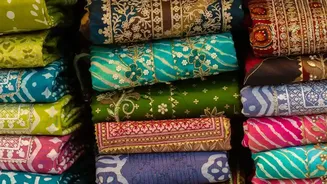
This new bridal vision is being brought to life by a generation of 'wonder' fabrics that offer grandeur without the weight. Organza is a leading choice, prized for its crisp, airy texture that creates volume and a dreamy, ethereal silhouette perfect for daytime or destination weddings. Georgette offers a soft, fluid drape that moves beautifully, making it ideal for sangeet nights and receptions. Similarly, chiffon, net, and tissue silks provide grace and radiance, allowing designers to create layered, opulent looks that remain breathable and easy to carry. These textiles prove that luxury now comes from the fabric's quality and finish, not its sheer weight.
Designers Championing the Shift
India's top designers are embracing this evolution. While couturiers like Sabyasachi Mukherjee and Manish Malhotra are known for their maximalist creations, many labels are now focusing on what's being called 'weightless luxury'. Designers are innovating with intelligent construction, focusing on threadwork and delicate sequins over dense, heavy embellishments. Labels are reviving traditional handcrafts like Chikankari and Gota Patti but on lighter bases, preserving heritage while adapting to modern needs. This approach is about thoughtful design, where the richness is in the craftsmanship and intricate detailing, not just the mass of adornment. The focus is on creating heirloom pieces that are also wearable.
Beyond the Wedding Day: The Power of Rewearing
Perhaps the most significant advantage of this trend is reusability. A lightweight lehenga isn't destined to be packed away forever. The skirt can be paired with a simple crop top or even a crisp white shirt for a contemporary fusion look at a friend's wedding. The intricately embroidered blouse becomes a statement piece to be worn with a plain saree or tailored trousers. The dupatta can be styled as a cape or draped over a simple suit, instantly elevating a more casual outfit. This versatility transforms a bridal purchase into a core part of a festive wardrobe, offering value and style long after the wedding day has passed.