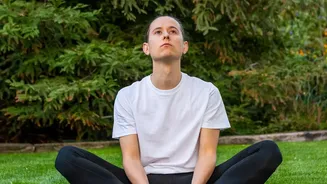








The Morning Ignition: Awaken with Yoga
Starting your day with yoga is a powerful way to awaken your body and mind. Even a short 15-minute session can stimulate circulation, increase energy levels, and sharpen mental focus for the day ahead. Unlike the jarring buzz of an alarm clock, a morning
yoga practice allows for a gentle transition from rest to activity, reducing stiffness and preparing your muscles for the day's tasks. Poses like Sun Salutations (Surya Namaskar), Cat-Cow, and gentle backbends like Cobra pose help warm up the spine and get your blood pumping. This practice also encourages mindfulness, allowing you to set a positive and calm tone before the demands of work and life begin to pull for your attention.
A Simple Morning Energy Sequence
You don't need a long or complicated routine to reap the benefits. Try this simple sequence to get started: 1. Wide-Legged Child's Pose: Begin by kneeling, bringing your big toes to touch and knees wide. Fold forward to stretch your back and hips. Hold for five deep breaths.2. Cat-Cow Stretch (Marjaryasana-Bitilasana): Move to a tabletop position. Inhale to arch your back and look up (Cow), and exhale to round your spine and tuck your chin (Cat). Repeat for 5-7 rounds to awaken the spine.3. Downward-Facing Dog (Adho Mukha Svanasana): From tabletop, lift your hips up and back. Gently pedal your feet to stretch your hamstrings and calves.4. Low Lunge: Step one foot forward between your hands, keeping your knee over your ankle. This stretches the hips and thighs. Hold for a few breaths and repeat on the other side.5. Mountain Pose (Tadasana): Stand tall with your feet grounded, arms at your sides. Feel the energy you've created, ready to carry it into your day.
The Evening Unwind: The Case for Calm
Just as a morning routine sets you up for success, an evening ritual is crucial for unwinding and preparing for restorative sleep. After a long day of work, commuting, and other stressors, your body and mind need a clear signal that it's time to shift from a state of 'doing' to a state of 'being'. A consistent evening routine activates the parasympathetic nervous system, also known as the 'rest-and-digest' mode. This helps to lower levels of the stress hormone cortisol, calm racing thoughts, and release physical tension held in the body, particularly in the shoulders, neck, and hips. By creating a buffer between your busy day and bedtime, you can significantly improve your ability to fall asleep and enhance the overall quality of your rest.
Crafting Your Perfect Bedtime Ritual
Your evening routine should be a personal menu of calming activities. Aim for a 30-60 minute wind-down period. A key element is to dim the lights and avoid screens, as the blue light from phones and TVs can interfere with the production of melatonin, the hormone that tells your body it's time to sleep. Consider incorporating gentle stretches or restorative yoga poses like Legs-Up-The-Wall. Another powerful tool is pranayama, or controlled breathing. Techniques like Alternate Nostril Breathing (Nadi Shodhana) or the 4-7-8 breath are known to calm the nervous system. Other options include taking a warm bath, journaling to clear your mind, listening to soothing music, or reading a physical book.
The Synergy: How Morning and Evening Routines Work Together
Pairing an energising morning with a relaxing evening creates a harmonious balance that supports your body's natural circadian rhythm. The morning yoga practice provides the 'Yang'—active, warming, and structured energy to propel you through the day. The evening routine provides the 'Yin'—calm, cooling, and restorative energy to help you recover. This bookended approach helps regulate your internal clock, making it easier to feel alert in the morning and sleepy at night. Some practitioners find that a combination of both—a vibrant session at sunrise and a tranquil one before bed—leads to a profound shift in their physical and mental state, offering steady energy by day and deep calm by night. The consistency of the routine is what ultimately builds a foundation for long-term health and well-being.