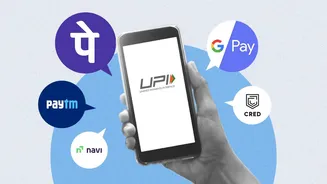





The Big Question: Are UPI Payments Still Free?
Yes, for almost everyone. The government and the National Payments Corporation of India (NPCI) have been clear: customers will not be charged for making UPI payments. The new changes, effective October 15, 2026, are aimed at the backend of the payments system
and do not affect the everyday user experience. If you use UPI to pay friends, family, or your local kirana store for small purchases, you can continue to do so without any fees. All person-to-person (P2P) transfers remain completely free, regardless of the amount.
So, What Is Actually Changing on October 15?
The change introduces a Merchant Discount Rate (MDR) of 0.4% on specific person-to-merchant (P2M) UPI transactions above ₹2,000. This is not a fee for the customer. It's a charge that the merchant’s bank pays to other players in the payment ecosystem to cover processing costs. The MDR is capped at a maximum of ₹300 per transaction, meaning for payments of ₹75,000 or more, the fee will not exceed this amount. Think of it as an operational cost for businesses, similar to fees they might pay for card machines. The government has also advised that merchants should not pass this cost on to customers.
Understanding the 'Merchant' in Merchant Discount Rate
This fee only applies to certain merchant transactions. The vast majority of UPI payments will remain outside this new framework. According to government estimates, approximately 96% of all merchant transactions will not be affected, as they are either below the ₹2,000 threshold or involve small merchants who are exempt. Small merchants who receive up to ₹1 lakh per month through qualifying UPI QR payments will not have to pay any MDR on transactions they receive. The rule is designed to ensure the long-term financial health of the UPI ecosystem without burdening consumers or small businesses.
What About Wallet Payments?
The confusion around UPI charges often stems from a specific type of transaction: payments made via Prepaid Payment Instruments (PPIs), such as digital wallets. Previous circulars from NPCI have introduced an interchange fee on PPI-based UPI merchant transactions over ₹2,000. The latest MDR rule from October 15 seems to streamline this for merchants. For you, the user, the distinction is important. Paying directly from your bank account via UPI is the most common method and remains free. Using a wallet balance for a large merchant payment is where these backend fees come into play, but again, the charge is for the merchant, not you.
What Stays Exactly the Same for You
To put it simply, here is a list of what does NOT change: - Person-to-Person (P2P) payments: Sending money to friends and family is still completely free, no matter the amount. - Small merchant payments: Any payment you make to a merchant for an amount up to ₹2,000 remains free of any MDR. - Payments to small vendors: Small businesses with limited monthly UPI transactions are exempt from the new charges, so your payments to them are unaffected. - Bank-to-bank transfers: The core function of UPI—transferring money directly from your bank account—is unchanged and free for personal use. - No hidden customer fees: UPI apps are prohibited from adding platform fees or hidden charges to your payments because of this framework.
The Bottom Line for Everyday Users
The introduction of MDR is about creating a sustainable revenue model for the banks and payment service providers that run the UPI infrastructure, not about charging users. While the headlines might sound alarming, the reality is that India's digital payment revolution continues with the customer at its center. For your daily transactions, it’s business as usual. You can continue to scan and pay with the same ease and confidence as before. The changes are happening behind the scenes, ensuring the system that powers your payments remains robust and reliable for years to come. There is no need to split payments or change your behaviour; your free UPI experience is secure.