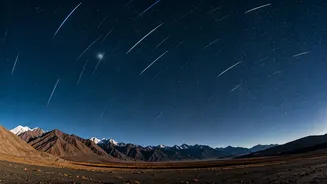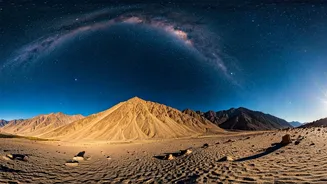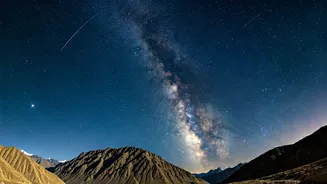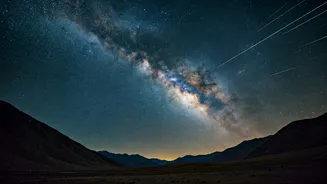


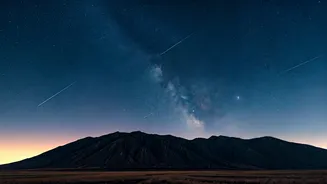
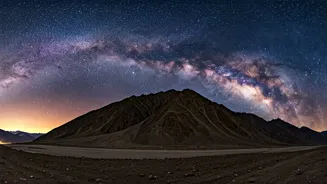
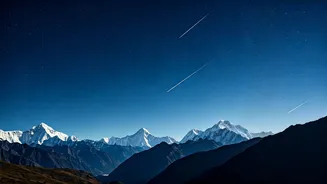


A Celestial River of Light
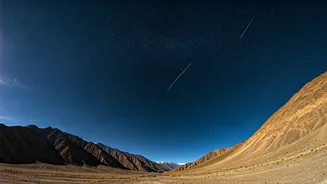
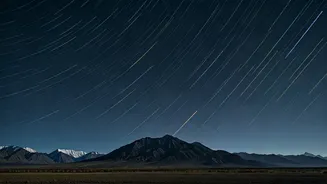
The Southern Delta Aquariids are an annual meteor shower active from mid-July to late August. At its most basic, a meteor shower happens when Earth passes through a trail of debris left behind by a comet. As these tiny particles of rock and dust, known
as meteoroids, hit our atmosphere at high speed, they burn up, creating the fleeting streaks of light we call 'shooting stars'. The parent body responsible for the Delta Aquariids is widely believed to be Comet 96P/Machholz, which orbits the sun every five years or so. The dust from this comet, shed thousands of years ago, creates a reliable and beautiful celestial event.
The Perfect Storm for Stargazing
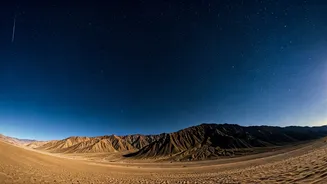
So, why does Ladakh offer such a breathtaking view? The region is a stargazer's dream for several key reasons. Firstly, its high altitude, with many areas over 3,000 metres, means the atmosphere is thinner, resulting in less distortion and clearer skies. Secondly, Ladakh is a rain-shadow region, leading to a dry climate with very few clouds to block the view. Most importantly, its remote location and low population density mean there is minimal light pollution. This profound darkness allows even the fainter meteors, which make up much of the Delta Aquariids, to shine through. The shower's faint nature makes a dark sky absolutely essential for a good viewing experience.
Hanle: India's Dark Sky Sanctuary
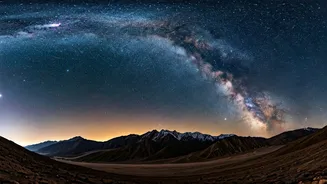
Within Ladakh, the village of Hanle in the Changthang region stands out. Situated at an altitude of about 4,500 metres, it is home to the Indian Astronomical Observatory. In December 2022, a 22-kilometre radius around Hanle was officially designated as India's first Dark Sky Reserve. This designation aims to protect the area's pristine skies from artificial light, promoting astro-tourism and preserving the site for scientific research. For visitors, this means an unparalleled opportunity to see the cosmos, including the Milky Way stretching across the sky, with stunning clarity. The community-led efforts include training locals as astronomy guides and managing lighting to maintain the natural darkness.
How to Watch the Delta Aquariids
The Delta Aquariids typically peak around July 29-30. While the shower is best viewed from the Southern Hemisphere, it is still very visible from northern latitudes like Ladakh's. The best time to watch is after midnight and before dawn, when the shower's radiant point—the spot in the constellation Aquarius from which the meteors appear to originate—is highest in the sky. No special equipment is needed; the naked eye is best as it allows you to see a wider patch of sky. Find a comfortable spot, perhaps a reclining chair or a blanket on the ground, and give your eyes about 30 minutes to fully adjust to the darkness. Be sure to dress warmly, as nights in Ladakh are cold even in summer. Patience is key, as you might see nothing for a few minutes and then several meteors in quick succession. It's worth noting that the 2026 peak will coincide with a bright moon, which will wash out fainter meteors. For the best views in 2026, it is recommended to watch in the moon-free mornings in the week before the peak, from around July 21 to July 26.