







The Carrier: Your Pet’s Safe Space
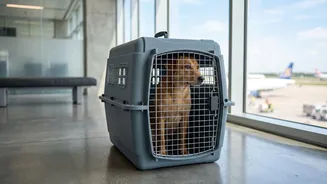
The single most important piece of gear is the travel carrier. It’s not just a box; it’s your pet’s safe zone during a potentially stressful experience. For air travel, you'll need an IATA (International Air Transport Association) approved carrier. These
have specific requirements for size, ventilation, strength, and locking mechanisms to ensure your pet is secure. Whether hard-sided or soft, the carrier must be large enough for your pet to stand up, turn around, and lie down comfortably. For in-cabin air travel in India, airlines like Air India specify dimensions for soft carriers that can fit under the seat. To reduce anxiety, buy the crate well in advance and help your pet get used to it. Leave it open in your living room with a favourite blanket or toy inside, turning it into a familiar den rather than a scary cage.
Planning Breaks and In-Transit Comfort
Road trips are a popular choice for pet parents in India as they offer flexibility. The key is to plan frequent stops. A good rule of thumb is to take a break every two to three hours for a short walk, a toilet break, and a chance to drink water. Never leave your pet unattended in a parked car, as temperatures inside a vehicle can become dangerously high within minutes, especially in the Indian climate. When it comes to meals, feed your pet a light meal a few hours before you start the journey to help prevent motion sickness. Avoid feeding a large meal right before you leave. Keeping familiar items like a favourite toy or an old T-shirt with your scent in their carrier can also significantly reduce anxiety. For train journeys, you are responsible for providing food and water, which can be challenging if your pet is in the separate luggage van. This is a major reason why booking a full first-class AC coupe or cabin is the preferred and safer option.
Domestic Travel: Airline and Railway Rules
Navigating domestic travel rules in India requires booking in advance and having the right paperwork. For air travel, airlines like Air India allow small pets (usually up to 10 kg including the carrier) to fly in the cabin with you, while larger pets must travel as checked baggage or cargo. You must book their spot at least 48 hours in advance and provide a 'fit-to-travel' health certificate from a vet, along with up-to-date vaccination records. For train travel, Indian Railways has strict rules. Pets are only allowed inside the passenger area if you book an entire First Class AC coupe (2-berth) or cabin (4-berth). Otherwise, they must travel in a designated 'dog box' in the brake van or luggage compartment, an option most pet parents avoid. To book your pet on a train, you need to present a health and vaccination certificate from your vet at the luggage office before departure.
Going Global: A World of Paperwork
International pet travel is significantly more complex and requires planning months in advance. Nearly every country requires your pet to have an ISO-compliant 15-digit microchip implanted before their rabies vaccination. Most destinations, including the US, UK, and EU, also require a Rabies Titer Test (RNATT), which is a blood test to confirm the vaccine was effective. This test has to be done at an approved lab well after vaccination, and there is often a mandatory waiting period of several months before travel is permitted. You will also need an international health certificate issued by a vet, an import permit for the destination country, and potentially a No Objection Certificate (NOC) from India's Animal Quarantine and Certification Service (AQCS). Some countries like Australia have extremely strict rules, including mandatory quarantine upon arrival, making the process take over six months. Due to the complexity, many owners use professional pet relocation services for international moves.
Final Checklist Before You Go
Before you walk out the door, run through a final checklist. First, visit your veterinarian to get all necessary health certificates and ensure vaccinations are current. Second, pack a dedicated travel kit for your pet. This should include their regular food, water, bowls, a leash, poop bags, any daily medications, and a basic first-aid kit. Make sure their collar has an ID tag with your current mobile number clearly visible. Finally, on the day of travel, give your pet some exercise before containing them in the carrier. A tired pet is often a calmer traveller. Try to remain calm yourself; pets are perceptive and can pick up on your stress, which can make them more anxious. With all your documents in order and your pet's comfort secured, you're ready for a shared adventure.