

The Spectacular Perseid Meteor Shower
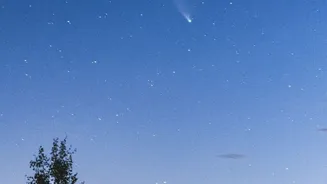
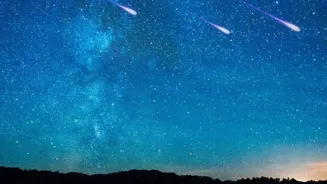
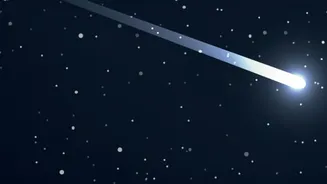
Arguably the best celestial event of the month, the Perseid meteor shower is one of the most beloved of the year. It's famous for producing a high number of bright, fast meteors, often leaving persistent trails across the sky. The shower is active from
mid-July to late August, but its peak in 2026 is a can't-miss event. The peak occurs on the night of August 12-13. This year is especially fantastic for viewing because the peak coincides with a New Moon, meaning the sky will be perfectly dark and free of moonlight, allowing even faint meteors to shine. For the best experience, find a location away from city lights after midnight. Lie back on a blanket or reclining chair, let your eyes adjust for about 20 minutes, and look up. The meteors can appear anywhere in the sky, though they will seem to radiate from the constellation Perseus in the northeast.
The Easy-to-Spot Summer Triangle
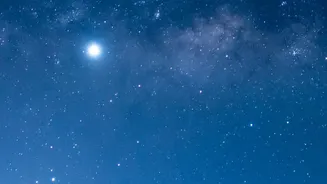
The Summer Triangle isn't a constellation, but an asterism—a simple, recognizable pattern of stars. It's one of the first and easiest patterns for beginners to learn. Look high overhead after sunset to find three of the brightest stars in the night sky: Vega, Deneb, and Altair. Vega, in the constellation Lyra, is the brightest of the three and will be almost directly overhead from mid-northern latitudes. To its east is Deneb, the tail of Cygnus the Swan, and to the south is Altair, the head of Aquila the Eagle. These three stars form a massive triangle that remains visible all night long. Once you've found it, you can use it as a celestial signpost to navigate to other constellations and even see the faint, hazy band of our own Milky Way galaxy running right through it on a dark night.
Brilliant Venus in the Evening
Planets are fantastic targets because they are bright and don't twinkle as much as stars. This August, Venus is the undeniable star of the evening sky. Look to the western sky shortly after sunset, and you'll see an intensely bright point of light. That's Venus. The planet reaches its greatest eastern elongation on August 15, meaning it will be at its highest point above the horizon in the evening, making it incredibly easy to observe. You won't need any special equipment to see it; its brightness makes it stand out even in twilight. On August 15, the crescent Moon will appear near Venus, creating a beautiful pairing in the sky.
Saturn, the Ringed Jewel
While Venus dominates the evening, Saturn offers another planetary treat for those who stay up a bit later. The famous ringed planet rises in the east in the evening and will be visible for most of the night. All through August, Saturn will be a steady, yellowish point of light. By the end of the month, it will be rising around sunset. While you can easily spot it with the naked eye, even a basic pair of binoculars might reveal that it's not perfectly round—a hint of its magnificent rings. A small telescope will provide a much clearer view of the rings, an unforgettable sight for any new stargazer.
The Teapot and the Milky Way
For those with access to darker skies away from urban light pollution, August is the prime time to hunt for the core of the Milky Way. Our galaxy appears as a luminous, hazy band stretching across the sky, and its brightest, densest part is located in the south. A great guidepost for this region is the constellation Sagittarius, which contains a popular asterism known as 'the Teapot'. Look for a pattern of stars in the southern sky that resembles a teapot, complete with a handle, lid, and spout. From the spout, you can imagine steam rising—this 'steam' is actually the star-rich centre of our galaxy. Binoculars will reveal a breathtaking number of stars and faint smudges that are actually distant star clusters and nebulae.