



A Partnership Reaching for the Stars
The India-US space relationship has transformed dramatically in recent years. What began as cautious cooperation has blossomed into a deep, multi-faceted alliance. Key agreements like the U.S.-India initiative on Critical and Emerging Technology (iCET)
and India's decision to join the Artemis Accords have cemented this bond. These frameworks go beyond mere statements, creating concrete pathways for collaboration in everything from human spaceflight to advanced satellite technology. Initiatives like iCET are designed to build technology value chains and support co-development, bringing together governments, businesses, and academic institutions from both nations. India's signing of the Artemis Accords, a set of principles for peaceful and transparent lunar exploration, marked a significant strategic shift, aligning it with a U.S.-led coalition of space-faring nations. This alignment signals a departure from India's traditional stance of non-alignment in space, positioning it as a key partner in shaping global space governance.
NISAR: A Jewel in the Crown
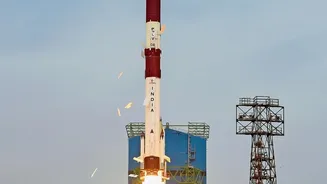
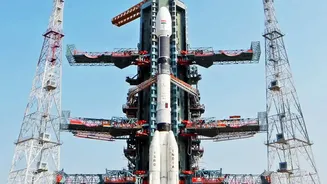
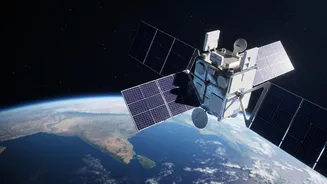
Perhaps the most tangible symbol of this partnership is the NASA-ISRO Synthetic Aperture Radar (NISAR) satellite. Launched in July 2025, this sophisticated Earth observation satellite is the first of its kind, using dual-frequency L-band and S-band radars to map our planet with unprecedented detail. ISRO developed the S-band radar while NASA provided the L-band system, making it a truly joint effort. NISAR circles the globe every 12 days, monitoring changes in Earth's land and ice surfaces. This data is crucial for understanding ecosystem disturbances, managing natural hazards like earthquakes and landslides, and tracking the effects of climate change. The mission showcases how the two countries' technological strengths can be combined to address global challenges, with benefits extending far beyond their own borders.
The Strategic Dimension: A Counterbalance in the Cosmos
The deepening space ties are not happening in a vacuum. A significant driver for both Washington and New Delhi is the rise of China as a major space power. The U.S.-India collaboration is increasingly seen as a strategic effort to counterbalance China's growing influence in the region and in space. As Beijing strengthens its own space program and partnerships, including with Pakistan, India's alignment with the U.S. becomes a crucial element of its foreign policy and national security. This geopolitical context elevates the partnership beyond purely scientific or commercial interests. It is a strategic move by the world's two largest democracies to ensure that the development and use of space technologies are guided by shared values of openness and respect for international norms.
Beyond Governments: The Rise of Private Enterprise
A pivotal shift in this relationship is the growing role of the private sector. India has actively worked to open its space sector, which has led to an explosion of startups—growing from just one in 2014 to over 200 today. Policies like the Indian Space Policy 2023 and the liberalisation of Foreign Direct Investment (FDI) rules have created a fertile ground for these companies. This has enabled new avenues for collaboration between Indian and American private space firms, ranging from satellite manufacturing to launch services. The goal is to move beyond government-to-government projects and foster a robust commercial ecosystem. This shift helps U.S. companies diversify supply chains while giving Indian startups access to capital, technology, and a global market, with ambitions to grow the bilateral geospatial trade to $10 billion by 2030.
The Future: A Moon Base and Human Spaceflight
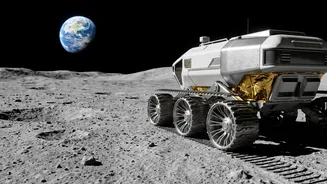
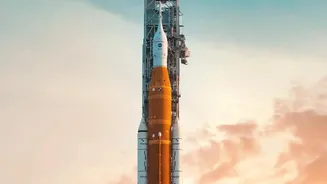
The future of the partnership looks even more ambitious. India is set to send an astronaut to the International Space Station (ISS) in a joint effort with NASA and Axiom Space, marking a milestone in human spaceflight cooperation. Looking further, NASA has formally invited ISRO to participate in its ambitious Moon Base program, an effort to build a permanent human outpost on the lunar surface. This invitation, extended during the U.S.-India Civil Space Joint Working Group meeting in August 2026, builds upon the foundation of the Artemis Accords. Collaboration could involve Indian contributions in robotics, scientific instruments, and even heavy-lift launch vehicles. This deepens interoperability and positions India not just as a collaborator, but as a key player in the future of sustained human presence beyond Earth.