







An Urban Oasis on the Aravalli Ridge
Spanning over 780 acres in South Delhi, Sanjay Van is a notified reserve forest that serves as one of the city's most vital green lungs. It is a critical part of the South-Central Ridge, the northernmost extension of the ancient Aravalli hills. The area,
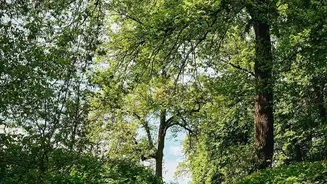
once degraded, has been the subject of significant restoration efforts by the Delhi Development Authority (DDA) and citizen groups, transforming it into a thriving woodland. The forest's landscape features a mix of native trees, rocky paths, and gentle slopes, offering a wilder feel than a manicured city park. It's a popular spot for morning walkers, cyclists, and anyone seeking a break from urban life.
Navigating the Trails
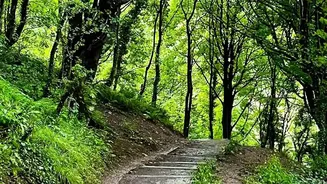
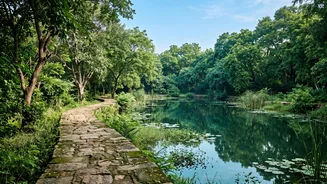
Sanjay Van is crisscrossed by numerous unpaved dirt trails and wider paths suitable for walking, jogging, and cycling. The trails are largely unmarked and can be confusing for first-time visitors, so it's wise to stick to the more frequented routes initially. The paths wind through dense woods, offering a serene experience filled with the sounds of nature. Some trails lead to water bodies like the restored Neela Hauz Lake, which is a hotspot for bird activity. Others climb gentle inclines, providing elevated views of the forest canopy. For those interested in history, trails near the Mehrauli side lead to the unguarded ramparts of Lal Kot, Delhi’s first fortified city, dating back to the 11th century.
A Paradise for Birdwatchers
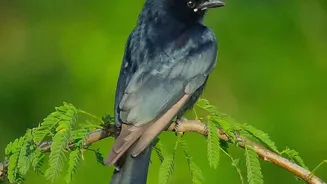
The forest is a celebrated destination for birding, with records of over 220 species of birds. Its diverse habitats support a rich variety of resident and migratory birds. Visitors can easily spot Indian Peafowl, Rose-ringed Parakeets, and Jungle Babblers. With a keen eye and a pair of binoculars, one might also see the Eurasian Golden Oriole, Purple Sunbird, and even raptors like the Crested Honey Buzzard. The area around Neela Hauz is particularly rewarding for spotting water-associated birds. The forest’s quiet and dense foliage makes it a crucial refuge for birdlife, with sightings of the Indian Paradise Flycatcher being a special treat for patient observers.
Whispers of History
Beyond its natural beauty, Sanjay Van is steeped in history. The most significant historical feature is the ruins of Lal Kot, built in the 11th century and later expanded by Prithviraj Chauhan. Visitors can climb these ancient walls for a stunning view over the forest canopy toward the Qutub Minar. The forest also contains several Sufi shrines, adding a spiritual dimension to the landscape. These historical elements are scattered throughout the woods, offering a sense of discovery for those who venture off the main paths. While online stories have created a haunted reputation for the area, there is no evidence to support these tales, and the real concerns are practical, like navigating the trails before dark.
Planning Your Visit: Practical Tips
Sanjay Van is open from sunrise to sunset, and entry is free. The best times to visit are early in the morning or late afternoon, when the temperature is cooler and wildlife is more active. There are several entry points, with the most convenient being near the Qutub Institutional Area and the Neela Hauz bridge in Vasant Kunj. The nearest metro stations are Qutub Minar on the Yellow Line and R.K. Puram on the Magenta Line, from where you can take an auto-rickshaw. It is essential to wear comfortable walking shoes and full-length clothing. Since there are no shops inside, carry your own water and snacks. While the main trails are generally considered safe during the day due to regular foot traffic, it is advisable to go with company and avoid staying after dark as the paths are poorly lit and signposted.