




The Great Washout
Heavy rain acts as a natural scrubber for the atmosphere. As raindrops fall, they collide with and capture airborne particles like dust, soot, and pollen. This process, known as wet deposition or scavenging, physically washes pollutants out of the air.
Rain can also dissolve some gaseous pollutants, such as sulfur dioxide and nitrogen oxides. The more intense the rainfall, the more effective this cleansing process is. This is why the air quality index (AQI) often drops significantly during and immediately after a strong shower, leaving the air feeling noticeably fresher.
The Calm Before the Smog
The end of the monsoon season marks a critical shift in weather patterns that unfortunately sets the stage for pollution to make a comeback. As the monsoon withdraws, wind speeds tend to drop. Strong winds are crucial for dispersing pollutants, carrying them away from their source. When the air becomes calm and stagnant, emissions from traffic, industry, and other sources have nowhere to go. They begin to accumulate near the ground, and the air quality starts to decline, often within 48 hours of the last rainfall.
The Temperature Inversion Trap
A key meteorological phenomenon in the post-monsoon and winter period is the temperature inversion. Normally, air is warmer near the ground and gets cooler with altitude, allowing warm, polluted air to rise and disperse. However, on cooler nights, the ground loses heat rapidly, chilling the air closest to it. A layer of warmer air then settles above this cool layer, acting like a lid. This inversion traps the cold, dense air—and all the pollutants within it—close to the surface. The unique geography of the Indo-Gangetic plains, bounded by mountains, can further intensify this 'bowl' effect, preventing pollutants from escaping.
Humidity's Hazy Role
While rain cleans the air, the high humidity that lingers post-monsoon can actually worsen pollution. Moisture in the air doesn't wash away pollutants on its own. Instead, airborne particles can absorb this moisture, becoming larger and heavier, which can affect how they are measured and how they behave in the atmosphere. High humidity also accelerates the chemical reactions that form secondary pollutants. For instance, it can play a role in converting gaseous pollutants into tiny particulate matter, contributing to the formation of smog and haze. This is why humid but rainless days can often feel particularly hazy and oppressive.
The Return of Polluters
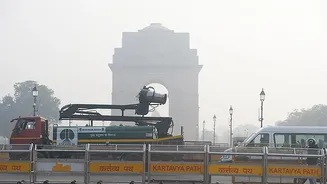
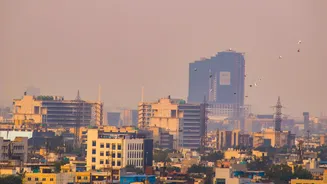
Ultimately, the air can only stay as clean as the emissions we put into it. As soon as the rain stops, pollution sources resume their regular output. Vehicular traffic, industrial processes, construction dust, and household emissions quickly begin to replenish the pollutants that the rain washed away. Compounding this is a major seasonal event: post-monsoon crop residue burning in agricultural states like Punjab and Haryana. Wind patterns during this time often carry smoke from these fires across the Indo-Gangetic plain, leading to a sharp and severe spike in particulate matter (PM2.5) concentrations in cities like Delhi. This influx of smoke, trapped by the calm, inverted atmospheric conditions, is a primary driver of the region's infamous winter air pollution crisis.