



From Government Monopoly to Market Enabler
For decades, the Indian Space Research Organisation (ISRO) was the sole custodian of India's space ambitions. From launching satellites to exploring the moon and Mars, ISRO did it all. But a fundamental change is underway. The organisation is transitioning
from being the primary doer to a crucial enabler for a burgeoning private space industry. This strategic pivot is driven by two key entities. NewSpace India Limited (NSIL), ISRO's commercial arm, is tasked with marketing space products, managing satellite launch contracts, and transferring ISRO's proven technologies to private companies. This allows the private sector to build upon decades of public research. Complementing NSIL is the Indian National Space Promotion and Authorization Center (IN-SPACe), an autonomous body created to promote, guide, and authorise the activities of private space companies. Together, they are laying the groundwork for a fivefold expansion of India's space economy, which is projected to grow from around $8 billion today to $44 billion by 2033.
The Rise of India's Private Space Startups
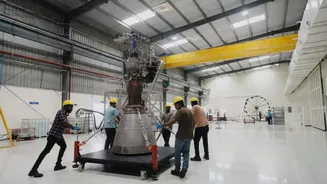
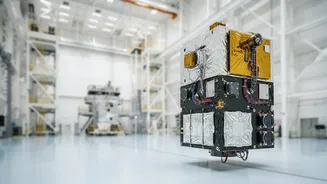
The government's policy shift has ignited a startup boom. Since the sector was opened up in 2020, over 200 space-tech startups have emerged, attracting significant investor confidence. Companies like Skyroot Aerospace, Agnikul Cosmos, and Pixxel are becoming household names. Skyroot made history with the launch of Vikram-S, India's first privately developed rocket, and its successful orbital launch of Vikram-1 has further boosted the sector. Agnikul Cosmos is pioneering 3D-printed rocket engines, operating from its own private launchpad. Meanwhile, Pixxel is deploying a constellation of hyperspectral satellites that can monitor everything from crop health to environmental pollution in incredible detail. This isn't just about building hardware; it's about creating a competitive, commercially viable industry that is moving the global narrative about India from a 'low-cost alternative' to a 'high-performance innovator'.
The New-Age Job Market Takes Flight
This commercial expansion is creating a diverse array of new-age careers that go far beyond the traditional image of a rocket scientist. The growth of private firms is creating thousands of high-skilled jobs in aerospace engineering, satellite design, and data analytics. Roles in launch vehicle development, such as propulsion engineers and avionics specialists, are in high demand at startups like Skyroot and Agnikul. Satellite technology companies like Pixxel and Dhruva Space are hiring systems engineers, software developers, and RF communications experts. Perhaps the biggest growth area is in downstream applications. Remote Sensing and GIS Experts are needed to turn the vast amount of data from satellites into actionable insights for agriculture, urban planning, and climate monitoring. As the sector matures, entirely new roles are emerging, including space lawyers to navigate complex international treaties and licensing, and policy analysts to shape the evolving regulatory landscape.
Beyond Engineering: A Wider Universe of Roles
The ripple effect of the space economy extends well beyond pure engineering. As startups scale up, they require professionals in functions that are crucial for any growing business. Programme managers, supply chain specialists, and finance professionals are needed to manage complex projects and secure funding. Marketing and business development experts are essential for winning international launch contracts and selling satellite data services. These private companies are also creating a demand for skilled technicians, including CNC machinists and avionics technicians, who form the backbone of the manufacturing ecosystem. Furthermore, this expansion creates opportunities for experienced veterans. Scientists and engineers leaving ISRO can now lend their expertise to the private sector, mentoring a new generation and strengthening the entire ecosystem. This creates a healthy cycle of knowledge transfer that benefits both the public and private sectors.