



The Cosmic Canvas
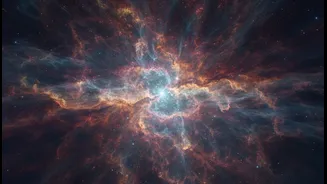
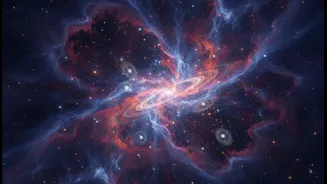
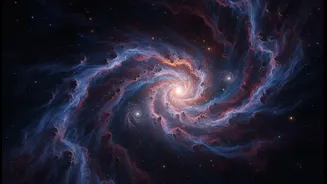
These celestial clouds are known to astronomers as nebulae, a Latin word for 'clouds'. They are enormous formations of gas and dust, sometimes stretching hundreds of light-years across. Far from being empty, these nebulae are fundamental building blocks
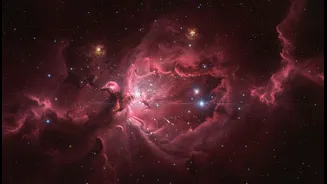
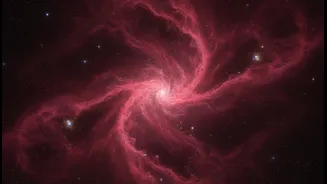
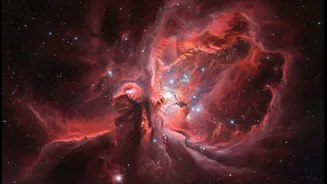
of the universe, containing the raw materials from which stars and planetary systems are born. They come in various forms, but the ones that glow with that iconic red hue are called emission nebulae. Famous examples include the Orion Nebula and the North America Nebula, which are active sites of star formation.
The Science of Red
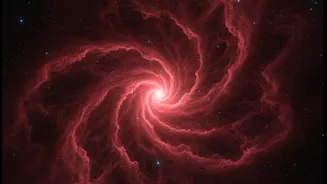
So, why red? The color is a direct result of their chemical composition and the processes happening within them. These nebulae are overwhelmingly composed of hydrogen, the most abundant element in the universe. Typically, a cluster of young, hot stars is nestled within or near the nebula. These stars blast out immense amounts of high-energy ultraviolet radiation. This energy is powerful enough to strip electrons from the hydrogen atoms in the surrounding gas, a process called ionization. As the electrons and atoms inevitably recombine, they release energy in the form of light. Hydrogen atoms specifically emit light at a distinct, deep-red wavelength known as 'Hydrogen-alpha' or H-alpha. This specific emission gives these star-forming regions their signature crimson glow.
Clues from the Crimson Haze
The brilliant red light of an emission nebula is a giant cosmic signpost that reads: 'Stars are born here'. The H-alpha emission is a direct indicator of active star formation. By studying these regions, astronomers can get a front-row seat to the entire stellar life cycle. The intense radiation from massive newborn stars carves out cavities and intricate shapes in the gas, creating stunning structures like the famous 'Pillars of Creation' within the Eagle Nebula. The presence and intensity of this red light help scientists pinpoint where the youngest stars are, many still wrapped in the dusty cocoons from which they formed. In one region called LH 95, researchers recently identified thousands of stars that are fully formed but have not yet ignited nuclear fusion in their cores.
Reading the Cosmic Rainbow
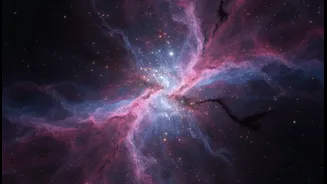
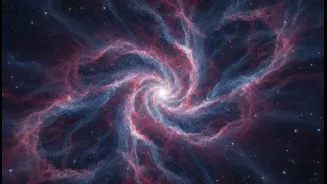
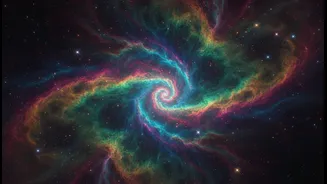
While red is the dominant color due to the abundance of hydrogen, it's not the only one. Other elements within the nebula, like oxygen and sulfur, can be ionized as well, producing vibrant blue and green hues. By using special filters on telescopes like the Hubble and the James Webb Space Telescope, astronomers can isolate the light emitted by different elements. This allows them to map the chemical composition, temperature, and density of the nebula with incredible precision. Each color tells a part of the story; for instance, green light often indicates the presence of oxygen. This technique turns a beautiful image into a detailed diagnostic chart, revealing the complex interplay of forces that shape galaxies.