





What Exactly Was Tested?
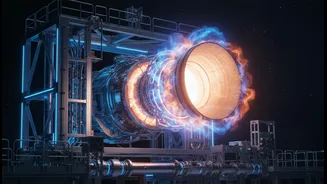
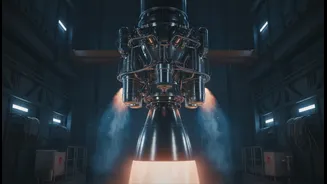
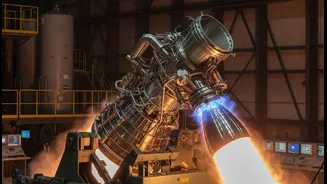
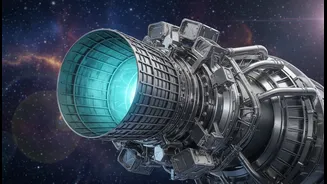
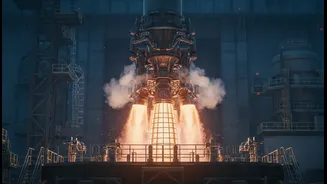
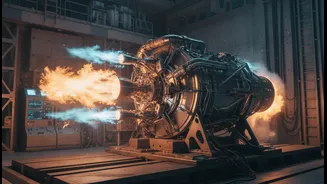
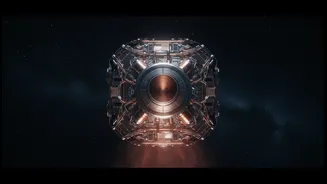
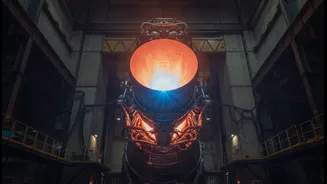
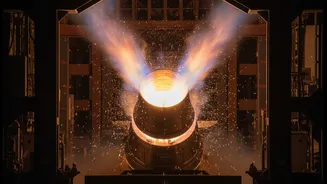
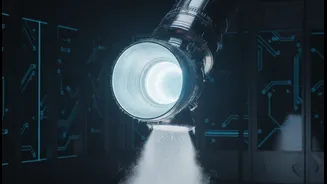
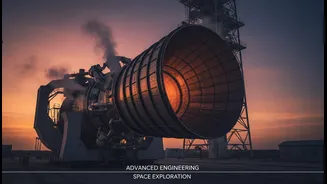
On June 24, 2026, at its Propulsion Complex in Mahendragiri, Tamil Nadu, ISRO successfully conducted a 'hot test' on a crucial component called a power-head. Think of a rocket engine's power-head as its heart. It contains the incredibly complex turbopumps
and systems that force fuel and oxidiser into the combustion chamber under immense pressure. This test deliberately excluded the final combustion chamber to focus entirely on the 'heart', pushing it to generate forces equivalent to 175 tonnes of thrust. This represents 88% of the engine's full design capacity, a major jump from previous tests at lower levels. The successful trial confirmed that the machinery can withstand the extreme internal forces needed for a real flight.
The Game-Changing SCE-200 Engine
This power-head belongs to the SE-2000 engine (also known as SCE-200), a powerhouse that will redefine India's launch capabilities. Unlike ISRO's previous cryogenic engines that use super-cooled liquid hydrogen, this is a semi-cryogenic engine. It uses liquid oxygen as the oxidiser but pairs it with a highly refined, rocket-grade kerosene (dubbed 'Isrosene'). This change is significant. Kerosene is denser and doesn't need to be stored at the brutal -253°C temperatures that liquid hydrogen demands. This makes the rocket easier to handle, more cost-effective, and capable of generating more thrust, joining the ranks of only a few space-faring nations with this technology.
More Power for Bigger Ambitions
The immediate impact of this new engine will be on India's workhorse rocket, the LVM3 (Launch Vehicle Mark-3). The new semi-cryogenic stage, the SC120, is being developed to replace the LVM3's current liquid core stage. This upgrade is expected to substantially boost the rocket's lifting power. With the SE-2000, the LVM3 will be able to carry heavier satellites into geostationary orbit, a critical ability for communication and navigation satellites. This added muscle is not just for satellites; it's essential for the future of the Gaganyaan human spaceflight mission, which will use a human-rated version of the LVM3, and for launching heavy modules for the planned Bharatiya Antariksh Station.
A Boost for 'Atmanirbhar' Space Tech
Mastering semi-cryogenic technology is a massive step forward for India's goal of self-reliance, or 'Atmanirbhar Bharat', in space. For years, developing this powerful engine class has been a key strategic priority. Success reduces India's dependence on foreign launch providers for heavy payloads and strengthens its sovereign capabilities. The engine has been designed and developed indigenously, a testament to the growing maturity of India's aerospace ecosystem. This achievement provides the confidence needed to proceed towards a full-thrust demonstration at 200 tonnes, bringing the entire programme closer to completion and operational flight.
The Commercial and Future Angle
Beyond national pride, this engine has serious commercial implications. A more powerful and cost-efficient LVM3 makes ISRO a stronger competitor in the multi-billion dollar global satellite launch market. Cheaper, more powerful launches can attract international customers, bringing in revenue and bolstering India's reputation as a reliable space power. Furthermore, the SE-2000 isn't just an upgrade; it's a foundational technology for India's Next Generation Launch Vehicle (NGLV). This future family of rockets, envisioned to be reusable and even more powerful, will rely on this engine technology to send astronauts to the moon by 2040 and establish a permanent presence in space.