




The Price Divide: Farm to Factory
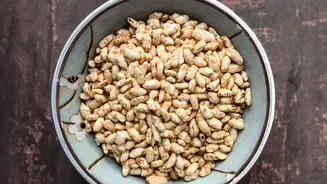
The most significant factor driving the cost difference starts at the source. Rice is one of the most widely cultivated crops in India, making it abundant and relatively inexpensive. Puffed rice, known regionally as muri, mamra, or pori, is made by heating
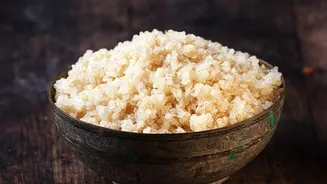
parboiled rice kernels until they expand. The traditional process involves hot sand frying, which is a low-cost, albeit laborious, method. In contrast, quinoa is primarily grown in the Andean region of South America. While its cultivation is spreading, it is not as widespread in India, making the raw material inherently more expensive due to import costs and smaller-scale local farming. The process to puff quinoa is also more complex, often requiring industrial machinery that uses high pressure and precise temperatures to gelatinize the starch and pop the seeds. This more intensive manufacturing process adds to the final cost for consumers.
A Nutritional Showdown
This is where quinoa begins to justify its premium price. Nutritionally, it stands significantly ahead of puffed rice. A cup of cooked quinoa offers about twice the protein and over ten times the fibre of a similar portion of white rice. Quinoa is a 'complete protein', meaning it contains all nine essential amino acids, which is rare for a plant-based food. Puffed rice, being made from refined white rice, is primarily a source of simple carbohydrates that provide quick energy but lack substantial nutrients. Quinoa also boasts a much richer mineral profile, containing significantly more magnesium, iron, potassium, and zinc than rice. For instance, a single serving of puffed quinoa can provide over 25% of the daily recommended iron intake.
Impact on Blood Sugar
For those managing blood sugar levels, the difference is stark. Puffed rice has a high glycemic index (GI), meaning it can cause a rapid spike in blood sugar. Quinoa, on the other hand, has a low-to-medium GI of around 53. Its higher content of protein and fibre slows down the absorption of carbohydrates into the bloodstream, leading to a more gradual rise in blood sugar. This makes puffed quinoa a more suitable option for sustained energy and better appetite control, helping you feel fuller for longer without the subsequent 'sugar crash'.
Texture, Taste, and Use in the Kitchen
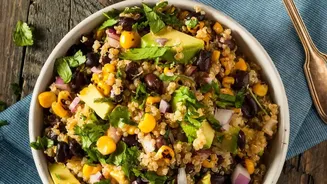
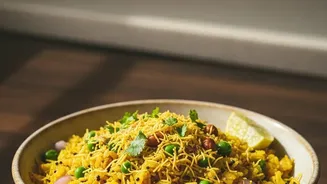
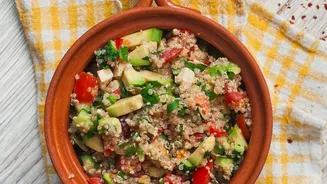
Puffed rice is famously light and airy, with a neutral taste that makes it an excellent base for snacks like bhel puri or as a simple, low-calorie munch. It readily absorbs the flavours of spices and chutneys it's mixed with. Puffed quinoa offers a different experience. It has a nuttier flavour and a denser, crunchier texture. Because it is more robust, it holds its crunch better when mixed with wet ingredients, making it a popular addition to granola, yogurt bowls, energy bars, and salads. While puffed rice is often a carrier for other flavours, puffed quinoa can be a flavourful and textural component in its own right.
The Verdict: Which Puff is for You?
The choice between puffed quinoa and puffed rice ultimately comes down to your priorities. If you are looking for an inexpensive, low-calorie, and light snack that serves as a versatile base for various preparations, traditional puffed rice is an unbeatable classic. It is easily digestible and provides a quick source of energy. However, if your focus is on nutritional value and you are willing to invest more, puffed quinoa is the clear winner. It offers superior protein, fibre, and mineral content, making it a more satiating and nutrient-dense option that supports stable blood sugar. It is particularly beneficial for those following a plant-based diet or anyone looking to boost their intake of essential nutrients.