








The Core Projection: Creation vs. Elimination
According to a Gartner report released in November 2026, artificial intelligence is expected to create 10.6 million jobs worldwide while eliminating 8.9 million by 2030. This results in a net gain of 1.7 million roles. This projection counters the narrative
of a 'job apocalypse', suggesting a period of intense transformation rather than outright replacement. The real story isn't about mass unemployment, but a massive shift in how work is done. Gartner estimates that while a maximum of 1.8% of workers will see their jobs eliminated due to AI, a much larger group—over 20% of the global workforce—will have their roles redesigned, changing their day-to-day tasks and responsibilities. Another immediate effect is 'deferred hiring', where companies are pausing the creation of new roles until the productivity gains from AI are better understood.
Where Will Jobs Be Lost?
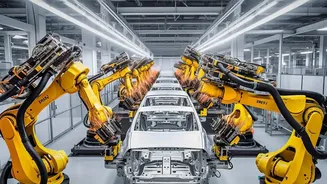
The jobs most at risk are those characterized by routine, repetitive tasks. Think data entry, basic processing, and other administrative functions where AI can perform the work faster and with fewer errors. Gartner's analysis points to the public sector and asset-intensive industries like manufacturing as areas that will see significant job displacement, even as they also create new roles. For example, the public sector is forecast to lose 900,000 jobs while gaining 400,000, resulting in a net loss. This highlights that the impact of AI will be unevenly distributed across different sectors of the economy. However, the firm stresses that this is not about replacing labour wholesale, but about using technology to reinvent business operations.
The Engine of Job Creation: Augmentation and New Roles
So, where do the new jobs come from? The growth is driven by two main forces: augmentation and the creation of entirely new roles. Augmentation is where AI tools help professionals do their existing jobs better, faster, and more effectively, rather than replacing them. A financial analyst might use AI to generate an initial report, freeing them up to focus on interpreting the findings and advising stakeholders. The largest net gain in jobs is predicted for the technology sector itself, which is expected to add a net 1.5 million roles. While traditional programmer roles might decline, demand is surging for AI engineers, data scientists, and specialists who can build, manage, and ensure the ethical governance of AI systems. Entirely new job families are emerging, such as AI training specialists, prompt engineers, and AI integration consultants, who will be essential for helping organisations adapt.
The Indian Context: Opportunity and Urgency
For India, with its large, young population and booming tech sector, this forecast presents both a challenge and an immense opportunity. The country's Global Capability Centres (GCCs) are already a massive source of high-skill employment, and they are rapidly hiring for AI-specific roles. However, reports indicate that India faces a significant shortage of professionals with the right data science and AI skills. The key to navigating this transition is a national focus on upskilling and reskilling. The demand is shifting from task-based work to a 'skills-first' approach. Future-proof careers will rely on a blend of hard AI skills—like machine learning and data analytics—and uniquely human soft skills, such as critical thinking, creativity, and complex problem-solving, which AI cannot replicate.