




The Sun's Violent Outbursts
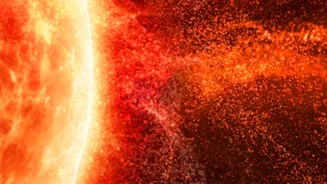
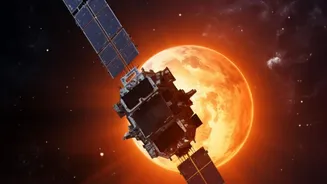
Our sun is not always the calm, steady presence it appears to be. It is a dynamic star that goes through cycles of activity. Sometimes, it releases enormous bursts of energy, plasma, and magnetic fields into space. These events are known as Coronal Mass
Ejections (CMEs). A CME is essentially a giant cloud of charged particles, weighing billions of tons, hurled into space at speeds that can exceed 2,000 kilometres per second. While solar flares are intense bursts of radiation, CMEs are massive expulsions of matter and are the primary drivers of what we call space weather. When one of these storms is aimed at Earth, it can have significant consequences for our technology-dependent society.
Satellites in the Firing Line
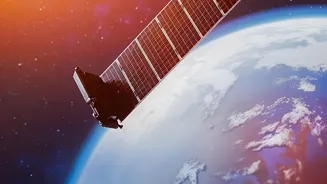
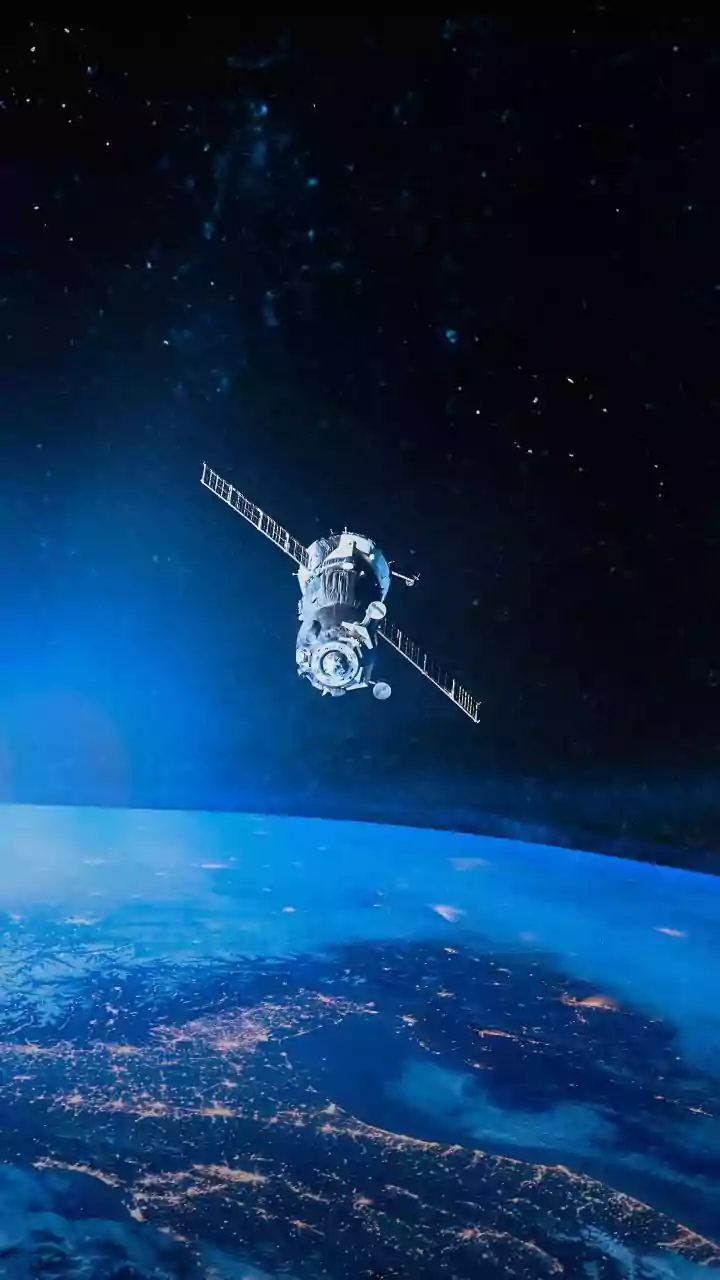
Communication satellites orbiting Earth are particularly vulnerable to these solar tantrums. The danger comes in several forms. Firstly, the high-energy particles within a CME can penetrate a satellite's shielding and damage its sensitive electronics, causing malfunctions or permanent failure. Secondly, when a CME interacts with Earth's magnetic field, it can cause the upper atmosphere to heat up and expand. This increases atmospheric drag on satellites in low-Earth orbit, slowing them down and potentially causing them to fall out of orbit prematurely, as happened to a batch of Starlink satellites in 2022. The storm can also disrupt the radio signals used for GPS and communications, leading to inaccurate navigation and blackouts.
Earth's Watchful Eyes
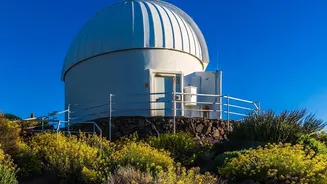
Fortunately, we are not blind to these incoming threats. A global network of ground-based and space-based observatories acts as our early warning system. Agencies like the USA's National Oceanic and Atmospheric Administration (NOAA) and the Indian Space Research Organisation (ISRO) constantly monitor the sun. Ground-based solar telescopes provide detailed views of the sun's surface, tracking sunspots and magnetic activity that often precede an eruption. In India, ISRO works with institutes like the Aryabhatta Research Institute of Observational Sciences (ARIES) to combine data from ground observatories with space missions. These Earth-bound eyes are a critical first line of defence in space weather forecasting.
From Sun to Earth: The Warning System
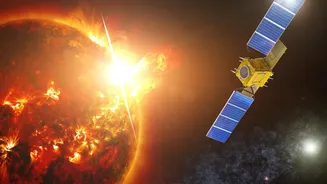
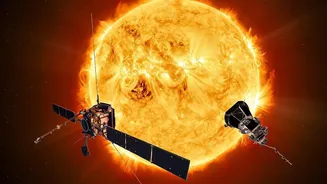
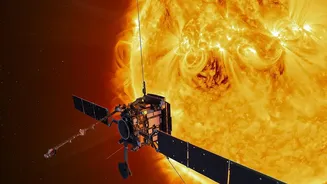
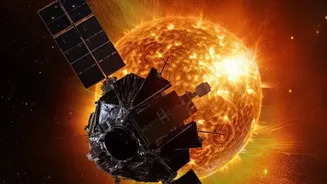
The warning process is a race against time. The light from a solar flare reaches Earth in about eight minutes, but the charged particles of a CME travel much slower. The fastest CMEs can reach us in 15 to 18 hours, while slower ones may take several days. Space-based observatories like NASA's Solar and Heliospheric Observatory (SOHO) and India's Aditya-L1 satellite, positioned 1.5 million kilometres from Earth, provide the most crucial warnings. By observing a CME as it leaves the sun, scientists can model its trajectory, speed, and intensity to predict if and when it will impact Earth. Aditya-L1, for instance, can provide a warning of about 30 to 60 minutes for hostile solar wind conditions. This gives satellite operators, power grid managers, and airlines precious time to prepare.
Taking Action to Mitigate Damage
An early warning allows for a range of protective measures. Satellite operators can put their spacecraft into a 'safe mode,' shutting down non-essential and sensitive systems to prevent electrical damage. They can also command satellites to adjust their orbits to minimise the effects of increased atmospheric drag. For vital services like aviation, airlines can reroute flights away from polar regions, where the effects of geomagnetic storms are strongest and can disrupt communication and navigation systems. Power grid operators can take steps to protect their transformers from the damaging electrical currents that geomagnetic storms can induce in long transmission lines, preventing widespread blackouts like the one that struck Quebec in 1989.