



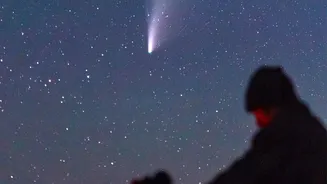

Look up, India! The crisp October air brings clear nights and a celestial calendar packed with wonders. This month, the gas giants Saturn and Jupiter command the night sky, while shooting stars from a famous comet provide a dazzling finale.
Saturn’s Opposition: A Ring-Side Seat
October kicks
off with a spectacular show from the jewel of our solar system. On October 4, Saturn reaches opposition, an astronomical event where Earth passes directly between the ringed planet and the Sun. This alignment means Saturn will be at its closest and brightest for the entire year, making it a prime target for skywatchers. It will be visible all night long, rising in the east around sunset and setting in the west as the sun rises. To find it, look for a bright, steady, yellowish point of light in the constellation Cetus. While you can easily spot Saturn with the naked eye, even a small telescope will reveal its magnificent rings, which are tilted favorably for viewing this year.
Jupiter Plays Hide-and-Seek with the Moon
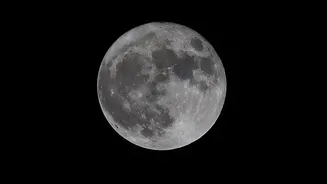
While Saturn dominates the start of the month, Jupiter offers a truly rare spectacle on the morning of October 6. The king of planets, already a brilliant fixture in the pre-dawn sky, will participate in a lunar occultation. This means the waning crescent Moon will pass directly in front of Jupiter, temporarily hiding it from view. The event will be visible in the early hours before sunrise. Watching a planet disappear and then reappear from behind the lunar limb is a dramatic and memorable sight. Even without a telescope, you'll see the Moon and Jupiter in a stunningly close pairing in the eastern sky.
The Orionids: Halley’s Comet Legacy
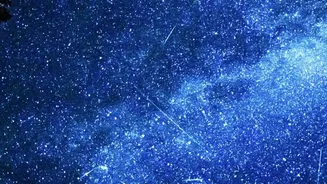
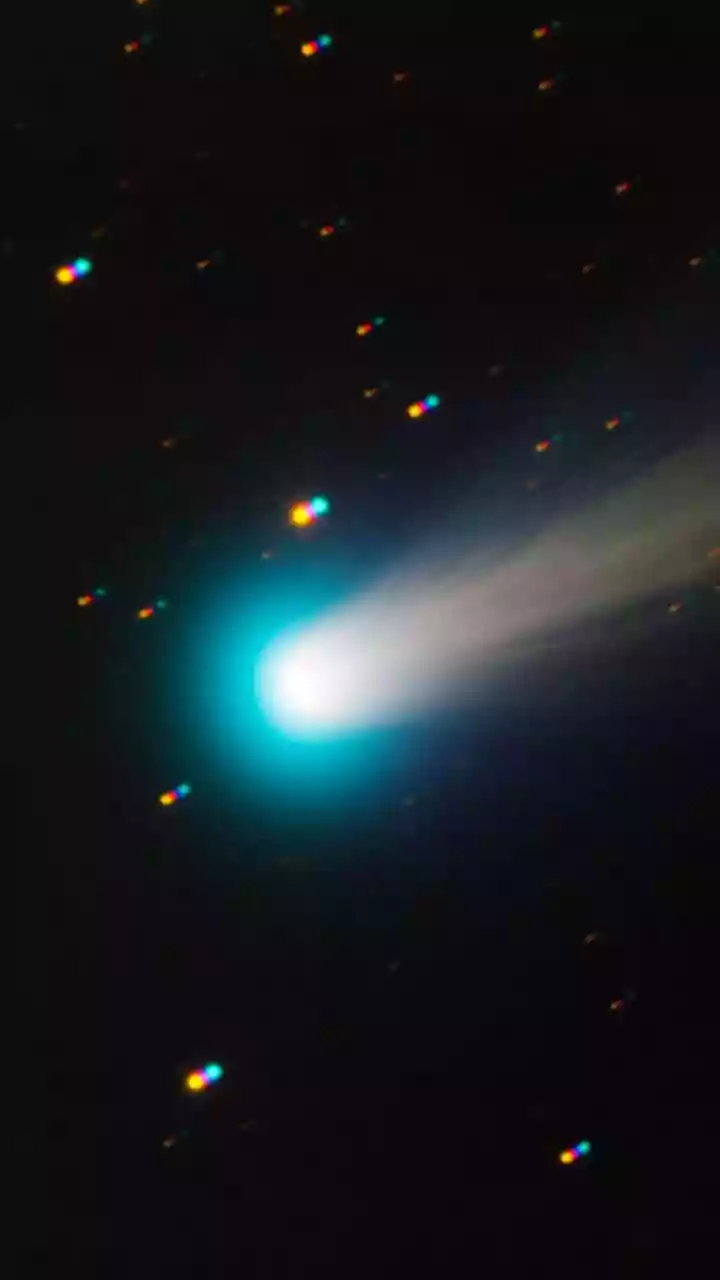
October’s main event for meteor lovers is the Orionid meteor shower, which peaks on the night of October 21-22. These shooting stars are actually tiny, fast-moving dust particles left behind by the famous Halley’s Comet. The shower is named for the constellation Orion the Hunter, as the meteors appear to radiate from a point near his club. In a dark, clear sky, you could see between 15 and 25 meteors per hour. This year, a bright waxing gibbous Moon will be in the sky during the evening, which could wash out some of the fainter meteors. For the best show, plan to watch in the pre-dawn hours after the Moon has set, which is typically after 2 or 3 a.m.
How to Watch the Meteor Shower
You don't need any special equipment to enjoy the Orionids. The most important thing is to find a viewing spot away from city lights. Give your eyes at least 20-30 minutes to fully adapt to the darkness. Lie on a blanket or a reclining chair and look up at as much of the sky as possible. While the meteors originate from Orion, they can appear anywhere in the sky, so you don't need to stare at one specific spot. Patience is key. The meteors often come in spurts, with quiet periods in between. So get comfortable, bring a warm drink, and enjoy the cosmic light show.
More October Sky Treats
The celestial action doesn't stop there. Earlier in the month, look for the Draconid meteor shower, a minor shower that peaks in the early evening of October 8-9. Because it happens close to the new moon, skies will be dark, offering a good chance to spot its slow-moving meteors. Later in the month, on October 27-28, the Moon will pass close to the beautiful Pleiades star cluster, also known as the Seven Sisters, creating a lovely photo opportunity.