





The First Hurdle: Coordination vs. Repetition
The biggest difference for a beginner lies in the initial type of coordination required. Dancing, even in its simplest forms like social ballroom or a high-energy bhangra class, demands immediate multi-limb coordination, rhythm, and spatial awareness.
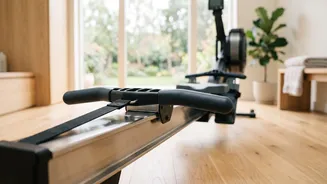
You are often learning to move your feet, arms, and hips in different ways simultaneously, all while trying to stay on beat. The first few classes can feel overwhelming as your brain works hard to build new neural pathways for these complex, multi-directional movements. In contrast, the initial challenge in rowing is mastering a single, repetitive motion. The rowing stroke is broken down into four distinct phases: the catch, the drive, the finish, and the recovery. The learning curve here is about perfecting this sequence so it becomes one fluid, powerful movement. While it takes time to get the technique right to prevent injury and be efficient, the motion itself is linear and consistent. Most beginners can learn the basic sequence in a few sessions.
Physical Demands for Day One
Both activities are physically demanding, but they tax the body in different ways. A beginner dance class will likely challenge your balance, agility, and muscular endurance in ways you're not used to. You might feel soreness in your calves, feet, and stabiliser muscles in your hips and core as they work to control turns and shifts in weight. The fatigue is often both mental and physical, stemming from the high level of concentration needed to learn new steps. Rowing is renowned for being a total-body workout, engaging approximately 86% of your muscles with every stroke. The power is primarily generated by the legs (about 60%), with the core and upper body playing crucial supporting roles. For a beginner, the initial feeling is one of immense cardiovascular effort. The learning focus is on endurance and power application within a fixed motion, which can feel intensely tiring even in short 15-20 minute sessions.
The Path to Competence and 'Feeling Good'
In dancing, the moment of 'getting it' often comes when you stop consciously thinking about the steps and start feeling the music. For many social dance styles, reaching a basic level of comfort where you can enjoy yourself on a dance floor might take a few months of weekly classes. Competence is less about perfect technique and more about flow, timing, and the ability to recover from a mistake without stopping. For rowing, competence is measured by technique and efficiency. The 'aha!' moment happens when the stroke sequence clicks and you feel the powerful connection of driving with your legs through the machine. Because the motion is repeatable, progress can be tracked precisely through metrics like split time (pace per 500m) and stroke rate. Most beginners start to feel comfortable and develop consistent form within 4-6 weeks of regular practice. This makes progress feel tangible and data-driven.
Mind and Social Connection
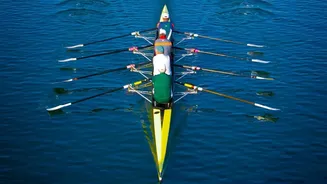
Beyond the physical, the mental and social aspects differ greatly. Dancing is often an inherently social activity. Partner dances like salsa or swing require communication and connection with another person, while group classes create a shared sense of energy and community. Mentally, dancing is a constant exercise in memory and adaptation, as you learn and recall complex choreographies. Rowing can be either a solitary, meditative practice or a team sport. On an indoor rower, you can zone out and focus on your own rhythm and power, making it a great mental escape. On the water, however, it transforms into the ultimate team sport, where synchronicity with your crewmates is paramount for speed and stability. This provides flexibility depending on whether you seek a solo workout or a team dynamic.