




Why Icy Moons Are Hot Targets
When we think of the search for alien life, the rocky, rust-colored plains of Mars often come to mind. Yet, some of the most compelling targets in our solar system are not dry and dusty, but frigid and encased in ice. Jupiter's moon Europa and Saturn's
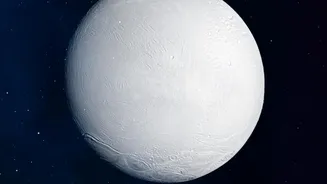
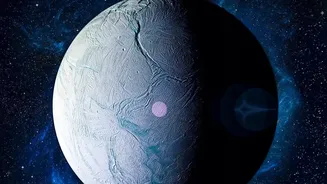
moon Enceladus are at the top of every astrobiologist's list. The reason is simple: both are strongly believed to harbor vast liquid water oceans beneath their frozen shells. This water is kept from freezing by heat generated from the immense gravitational pull of their giant host planets, a process known as tidal heating. Liquid water, a source of energy, and the right chemical ingredients are the three pillars for life as we know it. Evidence suggests these ocean worlds might have all three, making them prime candidates for hosting habitable environments.
Europa: Jupiter's Water World
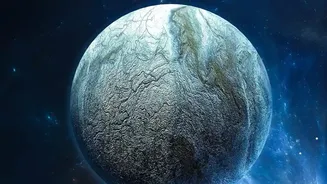
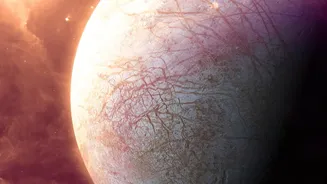
Europa is slightly smaller than Earth's moon but is thought to hold a global ocean with twice the amount of water as all of Earth's oceans combined. To investigate this promising world, NASA's Europa Clipper spacecraft is currently on a multi-year journey to the Jovian system, expected to arrive in 2030. Once there, it will perform dozens of close flybys, swooping as low as 25 kilometers above the surface. Its key instrument is the Radar for Europa Assessment and Sounding: Ocean to Near-surface (REASON). This sophisticated ice-penetrating radar will be our eyes, peering deep beneath the ice to confirm the ocean's existence, measure the thickness of the ice shell, and search for pockets of liquid water that might be trapped within the crust—potential habitats that could be more easily accessible. Europe's JUICE mission is also en route and will conduct flybys with its own radar instrument.
Enceladus: Saturn's Geyser Moon
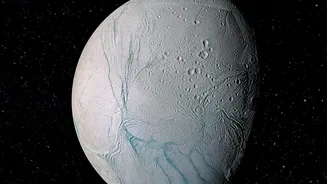
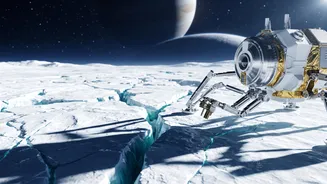
While Europa is a primary target, Saturn's tiny moon Enceladus has a flair for the dramatic that makes it impossible to ignore. In 2005, the Cassini spacecraft discovered enormous plumes of water vapor and ice particles erupting from fissures near its south pole, nicknamed 'tiger stripes'. These geysers are essentially a free sample, blasting material from the subsurface ocean directly into space. Analysis of this material showed it contains salts and organic molecules, key building blocks for life. Currently, there is no dedicated mission on its way to Enceladus, but it is a top priority for future exploration by both NASA and the European Space Agency. Mission concepts like the Enceladus Orbilander are being studied, which would one day land on the moon's surface to analyze fresh material from the plumes.
How Radar Pierces the Veil
So how exactly do you see through kilometers of solid ice from space? Ice-penetrating radar works by sending radio waves downward from a spacecraft. While ice is solid, it's largely transparent to these radio frequencies. The waves travel through the ice until they hit something different—such as the rocky seafloor, a pocket of liquid water, or even just a layer of ice with different properties. When the signal hits one of these boundaries, part of it reflects back to the spacecraft's antenna. By measuring how long it takes for these echoes to return and how strong they are, scientists can create a detailed 2D map of the ice shell's internal structure. A very strong, flat reflection is the tell-tale sign of a large body of liquid water, which is exactly what researchers hope to find.
The Search for Biosignatures
It is important to remember that these missions are not looking for complex organisms. Instead, the search is focused on 'biosignatures'—substances or patterns that provide evidence of life. This could include specific types of amino acids or fatty acids, which are components of proteins and cell membranes on Earth. Recent NASA experiments have shown that if such biosignatures were brought to the surface on Europa or Enceladus, they could survive near the surface despite the harsh radiation, meaning a lander wouldn't have to dig too deep to find them. Finding these chemical clues wouldn't be definitive proof of life, but it would be one of the most profound discoveries in human history, suggesting that the spark of life is not unique to our planet.