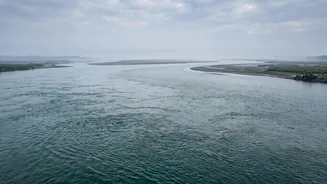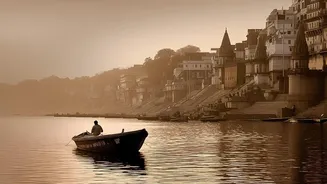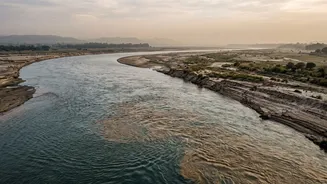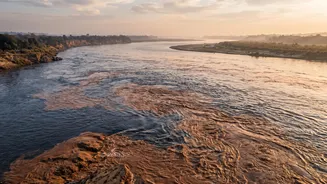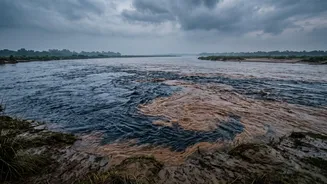



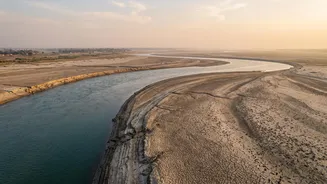
A landmark 30-year treaty governing one of South Asia’s most vital shared resources, the Ganges river, is set to expire on December 12, 2026. This raises urgent questions for both India and Bangladesh about water security and diplomatic ties.
What is the 1996 Ganges Water Treaty?
Signed in
December 1996 by then-Prime Ministers H.D. Deve Gowda of India and Sheikh Hasina of Bangladesh, the treaty was a diplomatic milestone. It ended decades of dispute over the sharing of the Ganges' water, particularly during the critical dry season from January 1 to May 31. The agreement lays out a complex 10-day rotational formula for sharing the water measured at the Farakka Barrage in West Bengal, located about 20 kilometres upstream from the Bangladeshi border. The core objective was to balance India's need to divert water to the Hooghly River to keep the Kolkata Port navigable with Bangladesh's requirements for agriculture, fisheries, and environmental stability.
The Farakka Barrage: A Point of Contention
At the heart of the issue is the Farakka Barrage, commissioned by India in 1975. Its purpose was to divert water into the Bhagirathi-Hooghly river system to flush out silt and maintain the navigability of the Kolkata Port. However, for downstream Bangladesh, the barrage's operation has had severe consequences. It has been blamed for reducing river flow, which in turn increases salinity in the southwestern parts of the country, harms fisheries, disrupts agriculture, and contributes to the desertification of a once-fertile delta. These environmental impacts affect the livelihoods of millions of people who depend on the river, known as the Padma in Bangladesh.
Why Renewal Isn't a Simple Formality
Three decades after the treaty was signed, the context has dramatically changed. Climate change is a major factor, with Himalayan glaciers melting at an accelerated rate and monsoon patterns becoming more erratic. This has led to forecasts of more extreme events—harsher floods during the monsoon and potentially reduced flows during the dry winter season. Both countries have larger populations and increased water demands for agriculture and industry. Furthermore, the broader hydro-diplomatic relationship is complicated by other unresolved issues, most notably the stalled agreement over the Teesta River, another of the 54 rivers the neighbours share.
The Stakes for Both Nations
For Bangladesh, a renewed and fair agreement is a matter of ecological and economic survival. The government has formed a technical committee and expressed its desire for a new deal that considers its longterm national interests and possibly includes a guarantee clause for water flow, which was absent in the 1996 pact. For India, the treaty's renewal is a test of its 'Neighbourhood First' policy. A failure to secure an agreement could strain relations with a key regional partner. Domestically, India also faces pressure from states like Bihar, which has raised its own concerns about water availability and siltation caused by the Farakka Barrage.
What Happens Next?
The 1996 treaty does not have an automatic extension clause, meaning inaction will lead to its lapse. Both governments have established mechanisms for discussion, primarily through the Joint Rivers Commission (JRC), but formal highlevel negotiations are yet to yield a concrete outcome. Bangladesh has indicated it has been ready for talks, while India's Ministry of External Affairs maintains that structured mechanisms are in place for discussion. With the December 12 deadline looming, the options include renewing the existing treaty, negotiating a new one with updated terms, or facing a diplomatic vacuum that could escalate tensions over water sharing just as the lean season begins.