





An Alarming Overlap on the Map
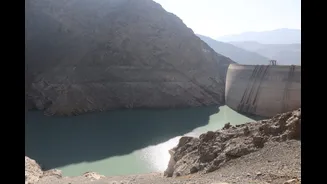
Recent analysis by water security and military experts has highlighted a curious and troubling geographic correlation in Iran: the country’s vast network of dams and water reservoirs often appears to be in close proximity to suspected underground missile
facilities. Specialists noticed that the locations of several missile-related sites, some of which were targeted in recent US and Israeli airstrikes, closely mirror the map of Iran’s 533 dams. This has led to speculation that the placement is not coincidental. While experts caution that correlation does not equal causation, the pattern is strong enough to prompt serious questions about military strategy and the potential risks imposed on the civilian population. The theory is that these dams could provide a consistent and independent source of water and electricity for Iran's sprawling underground 'missile cities', allowing them to operate even if the national grid is disrupted.
The Doctrine of Civilian Shielding
The placement of military assets near civilian sites is not a new or isolated tactic for Iran's Islamic Revolutionary Guard Corps (IRGC). Leaked internal directives have revealed a structured doctrine of using civilian locations to conceal, support, and facilitate missile operations. This strategy involves embedding military activity within everyday geography, using sites like industrial sheds, sports complexes, and warehouses to hide launchers and conduct preparations. The goal is to make missile units harder to detect and distinguish from their surroundings. This documented practice of 'human shielding' deliberately transfers the risk of conflict onto the civilian population. By embedding military assets in non-military spaces, these locations can become legitimate military targets under the laws of war, removing the protection they would otherwise have.
A Dual Threat to Public Safety
The proximity of missile bases to reservoirs presents a twofold danger. The first and most obvious is the risk of a direct or accidental strike. An attack on a missile facility could easily damage a nearby dam, leading to catastrophic flooding and the loss of a critical water source for millions of people. During recent conflicts, water infrastructure in Iran and neighboring countries has already been damaged, highlighting the vulnerability of these essential systems. The second threat is environmental contamination. Military bases are notorious for polluting surrounding soil and water sources with hazardous materials, particularly 'forever chemicals' known as PFAS, which are used in firefighting foams. A leak, spill, or strike could release toxic propellants and chemicals into a reservoir, poisoning the water supply for a major population center with substances linked to cancer and other serious health issues.
A Calculated Risk from Tehran
From the Iranian regime's perspective, this strategy is a calculated risk. Facing adversaries with superior conventional military power, the IRGC has developed an offensive doctrine rooted in asymmetric warfare and causing maximum disruption. By dispersing and hiding its most valuable assets among the civilian population, it aims to ensure the survivability of its retaliatory capabilities. The regime seems to operate under the assumption that its enemies would be hesitant to strike targets where the risk of mass civilian casualties or an environmental disaster is high. However, this strategy also reveals a chilling disregard for its own people, who are effectively being used as pawns in a grand strategic gamble. The government has done little to prepare its populace for conflict, such as building bomb shelters, further suggesting that civilian welfare is a low priority in its military calculus.