








From Selling Sights to Building Futures
Traditionally, India's tourism strategy revolved around 'destination marketing'. This approach successfully put places like the Taj Mahal, the backwaters of Kerala, and the palaces of Rajasthan on the global map. The primary goal was to increase footfall
and foreign exchange earnings. While this model brought in revenue, its benefits were often concentrated in well-established tourist hubs, leaving many other regions and communities behind. The old model treated tourism as a product to be sold, focusing heavily on advertising campaigns abroad and developing infrastructure around a few key sites. This often led to a trickle-down economic effect that wasn't always sufficient to create widespread, sustainable employment at the grassroots level.
The New Blueprint: People as the Priority
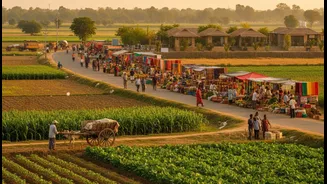
The government is now championing a new vision where tourism is explicitly treated as a powerful engine for job creation and socio-economic development. This represents a fundamental shift from destination marketing to what can be called 'destination management and development'. The focus is no longer just on attracting visitors, but on how tourism can be harnessed to create sustainable livelihoods for local communities. Schemes like the revamped Swadesh Darshan 2.0 embody this change. Instead of funding tourist circuits, the scheme now adopts a destination-centric approach, aiming for the holistic development of locations with a strong emphasis on community participation, sustainability, and empowering local economies. The goal is to make tourism a pro-poor, community-based enterprise that generates employment directly within local populations.
How Livelihood-Centric Tourism Works
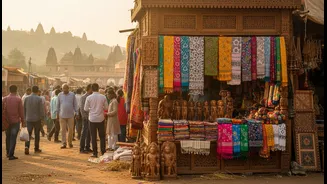
In practice, this new approach involves several key initiatives. There is a major push for skill development programs in hospitality, tour guiding, and handicrafts to equip the local workforce for tourism-related jobs. The government is also promoting niche tourism sectors that are inherently community-focused, such as eco-tourism, rural tourism, spiritual tourism, and wellness tourism. Financial support through MUDRA loans for setting up homestays and incentives for small and medium-sized businesses in the sector are crucial components. This strategy aims to create a diverse range of jobs—from guides and homestay owners to artisans and transport providers—and ensure that the economic benefits of tourism are retained locally, fostering a powerful multiplier effect.
Challenges and the Road Ahead
This ambitious pivot is not without its challenges. A key concern is ensuring that the jobs created are of high quality and not just seasonal or low-paying. There is also the significant task of developing infrastructure, such as roads and connectivity, in lesser-known regions to make them accessible without harming their ecological or cultural integrity. Preventing 'overtourism' in newly developed areas is another critical challenge that requires careful planning and regulation to protect both the environment and the quality of life for residents. Successfully moving tourism to the concurrent list to improve Centre-State coordination and securing adequate funding are also seen as vital steps to unlock the sector's full potential.