








The Science of Natural Air-Conditioning
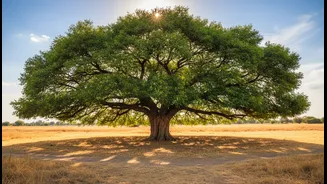
The cooling effect under a neem tree isn't just a feeling; it's science. Unlike a simple awning or roof, which just blocks sunlight, a living tree actively cools its surroundings. Through a process called evapotranspiration, trees release water vapor
from their leaves, which lowers the surrounding air temperature. The dense, wide canopy of the neem tree (Azadirachta indica) is particularly effective, creating a microclimate beneath its branches that can be several degrees cooler than the ambient temperature. Research shows this natural cooling mechanism is a powerful tool against the urban heat island effect, where concrete and asphalt trap and radiate heat, making cities significantly warmer. The shade from a neem is a living, breathing cooling system.
More Than Just Cool Air
The genius of the neem tree extends far beyond its shade. For centuries, it has been known as the ‘village pharmacy’. Every part of the tree, from its leaves and bark to its seeds, has a purpose. The leaves contain compounds that act as a natural insect repellent, which is why you'll find fewer mosquitoes bothering you under its canopy. This is a benefit an electric fan can't offer. Furthermore, the tree is a cornerstone of Ayurvedic medicine, with its components used in preparations for skin conditions, dental hygiene, and boosting immunity. Its leaves enrich the soil when they fall, and its oil is a potent natural pesticide, protecting crops without harmful chemicals.
A Deeply Rooted Cultural Icon
In India, the neem tree is not just a plant; it is woven into the cultural and spiritual fabric of the nation. In many villages, the neem tree is the heart of the community, a gathering place for social activities and a spot for quiet contemplation. It is considered sacred in Hindu traditions, associated with goddesses and used in rituals like Ugadi and Gudi Padwa to signify protection and purification. Its Sanskrit name, 'Nimba', translates to 'bestower of good health', while the Vedas called it ‘Sarva Roga Nivarini’, or 'the curer of all ailments'. This deep-seated trust isn't just folklore; it's the result of generations observing and benefiting from the tree's remarkable properties.
Ancient Wisdom for Modern Problems
As our cities grow hotter and concerns about climate change and energy consumption mount, the neem tree offers a solution that is both ancient and futuristic. While air conditioners pump hot air out into the street and consume enormous amounts of electricity, contributing to the very problem they're meant to solve, the neem tree works in harmony with the environment. It sequesters carbon, purifies the air by absorbing pollutants, improves soil fertility, and provides a habitat for birds and insects. It is a resilient, drought-tolerant species that can thrive in poor soil, making it ideal for urban greening projects aimed at making our cities more liveable. Planting neem is a direct investment in community well-being and environmental health.
The Ultimate Sustainable Flex
Choosing neem shade is, in essence, a statement. It’s a preference for a holistic, multi-benefit solution over a single-use, high-cost appliance. An AC unit requires purchase, installation, maintenance, and a constant supply of electricity. A neem tree, once established, provides free cooling, purifies the air, repels pests, offers medicinal benefits, and improves the local ecosystem for decades, if not centuries. It is a self-repairing, carbon-capturing, life-supporting system. In a world increasingly focused on sustainability and mindful consumption, appreciating the profound, practical elegance of a neem tree isn’t just about staying cool. It's about being cool—a practical flex that demonstrates an understanding of both tradition and a sustainable future.