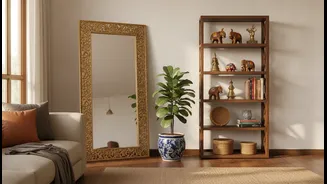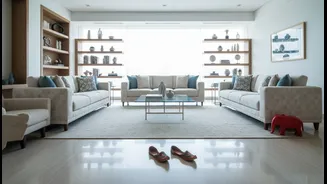









The Myth of the All-White Sofa
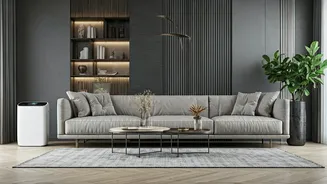
In the showroom, an all-white or light beige sofa looks like the height of sophistication. It’s placed in a vast, dust-free environment under perfect lighting. The reality in an Indian home is quite different. Between the daily dust, the risk of chai
or curry spills, and children with creative hands, a light-coloured fabric sofa can become a source of constant anxiety. Instead of chasing this high-maintenance ideal, consider durable materials in more forgiving colours. Think leatherette, or tightly woven fabrics in shades of grey, deep blue, or even earthy tones like terracotta and olive green. If you love the light look, use it in smaller, easily washable items like cushion covers and throws.
The Illusion of Empty Surfaces
Showrooms showcase minimalist perfection with empty countertops and coffee tables holding nothing but a single, elegant vase. This simply isn’t the reality for most Indian households, which are vibrant, multi-functional spaces. Our surfaces hold everyday items: keys, mail, schoolbooks, the container of ghee that never gets put away, and the remote controls for three different devices. Instead of fighting the clutter, manage it. Use stylish trays or decorative boxes to corral smaller items. Invest in multi-functional furniture, like coffee tables with built-in storage drawers or ottomans that open up to hide away clutter. This way, your home looks tidy without erasing the signs of life.
The Problem with Delicate, Low-Slung Furniture
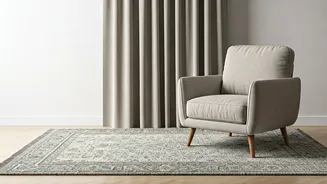
Ultra-modern, low-profile furniture looks chic and creates an illusion of space in a minimalist setting. However, it's not always practical for a multi-generational family. Elder members may find it difficult to get up from low sofas and chairs. Furthermore, very delicate or sharp-edged pieces might not be safe for households with young children running around. The solution is to find a middle ground. Opt for furniture with clean lines but at a standard, comfortable height. Choose pieces with rounded edges and sturdy construction. Solid woods like sheesham or mango are often more durable and better suited to the Indian climate than cheaper particle board, which can swell in humidity.
The Trouble with Impractical Flooring
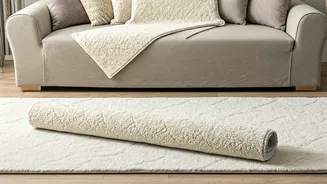
Lush, high-pile carpets look luxurious in a showroom but can be a nightmare to maintain in India. They trap dust, are difficult to clean, and can become damp and musty during the monsoon season. Similarly, certain types of light-coloured, porous tiles can stain easily. A more practical approach is to choose durable, easy-to-clean flooring like vitrified tiles, marble, or good quality laminate. To add warmth and texture, use smaller, washable cotton dhurries or jute rugs. These can be easily cleaned or changed with the seasons, allowing you to introduce colour and pattern without committing to high-maintenance carpeting.
Forgetting the Importance of Smart Storage
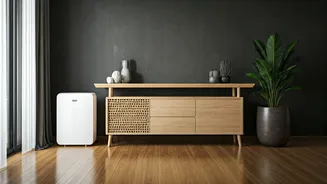
A common failing of showroom-inspired design is the severe lack of storage. Minimalism is often prioritised over the practical need to store things. Indian homes need ample storage for everything from seasonal clothing and extra bedding for guests to festival decorations and bulk grocery purchases. The key is to integrate storage seamlessly. Go vertical with floor-to-ceiling wardrobes to maximize space. Use the space under beds for drawers and opt for kitchen cabinetry that goes all the way to the ceiling. Well-planned, hidden storage is the true secret behind a home that looks uncluttered and serene but remains fully functional for the family living in it.