



Meet Your SCOBY: The Heart of Kombucha
The key to making kombucha is a SCOBY, which stands for Symbiotic Culture of Bacteria and Yeast. This gelatinous, pancake-shaped biofilm is a living colony of beneficial microorganisms. Often called the 'mother' or 'mushroom', a SCOBY is not actually
a mushroom but a cellulose mat that houses the bacteria and yeast needed for fermentation. These tiny powerhouses work together: the yeast consumes the sugar in your sweet tea, converting it into trace amounts of alcohol and carbon dioxide, while the bacteria then convert most of that alcohol into healthy organic acids. This process is what gives kombucha its signature tangy taste and creates an acidic environment that helps protect the brew from harmful microbes.
Gathering Your Brewing Essentials
Before you begin, you’ll need a few basic pieces of equipment. The most important is a large glass jar, typically around one gallon in size, as glass won't react with the acidic brew. You'll also need a piece of tightly woven cloth or a coffee filter and a rubber band to cover the jar. This allows the brew to breathe while keeping out dust and insects. Other essentials include a pot to brew the tea, a long spoon (preferably wooden or plastic), and some pressure-safe glass bottles for the final carbonation stage. When it comes to ingredients, you only need four: water, sugar, tea (black or green tea work best), and a SCOBY with at least one cup of strong starter tea from a previous batch. The starter tea is crucial for lowering the initial pH and ensuring a healthy fermentation.
The First Fermentation (F1): Making the Tea
The first fermentation, or F1, is where sweet tea becomes kombucha. Start by bringing about four cups of filtered water to a boil, then remove it from the heat. Dissolve one cup of plain cane sugar in the hot water, then steep about eight tea bags (or the equivalent loose-leaf tea) for 10-15 minutes. Once steeped, remove the tea bags and pour the sweet tea concentrate into your large glass jar. Top it up with about eight more cups of cool, filtered water. It is critical that the tea mixture is at room temperature (below 90°F or 32°C) before proceeding, as hot liquid can damage the live cultures in your SCOBY. Once cooled, gently add your SCOBY and the starter liquid. Cover the jar with your cloth and secure it with a rubber band. Place the jar in a warm, dark place away from direct sunlight for 7 to 14 days.
Tasting and Knowing When It's Ready
The length of your first fermentation depends on temperature and taste preference. Warmer environments will speed up the process. After about seven days, you can start tasting your brew. Gently push the SCOBY aside and take a small sample. If it's too sweet, let it ferment for a few more days. If it's turning too sour or vinegar-like for your liking, it's ready for the next step. The final product should have a pleasant balance of sweetness and tang. During this time, you may notice a new, thin layer of SCOBY forming on the surface, which is a great sign of a healthy brew.
The Second Fermentation (F2): Adding Fizz and Flavor
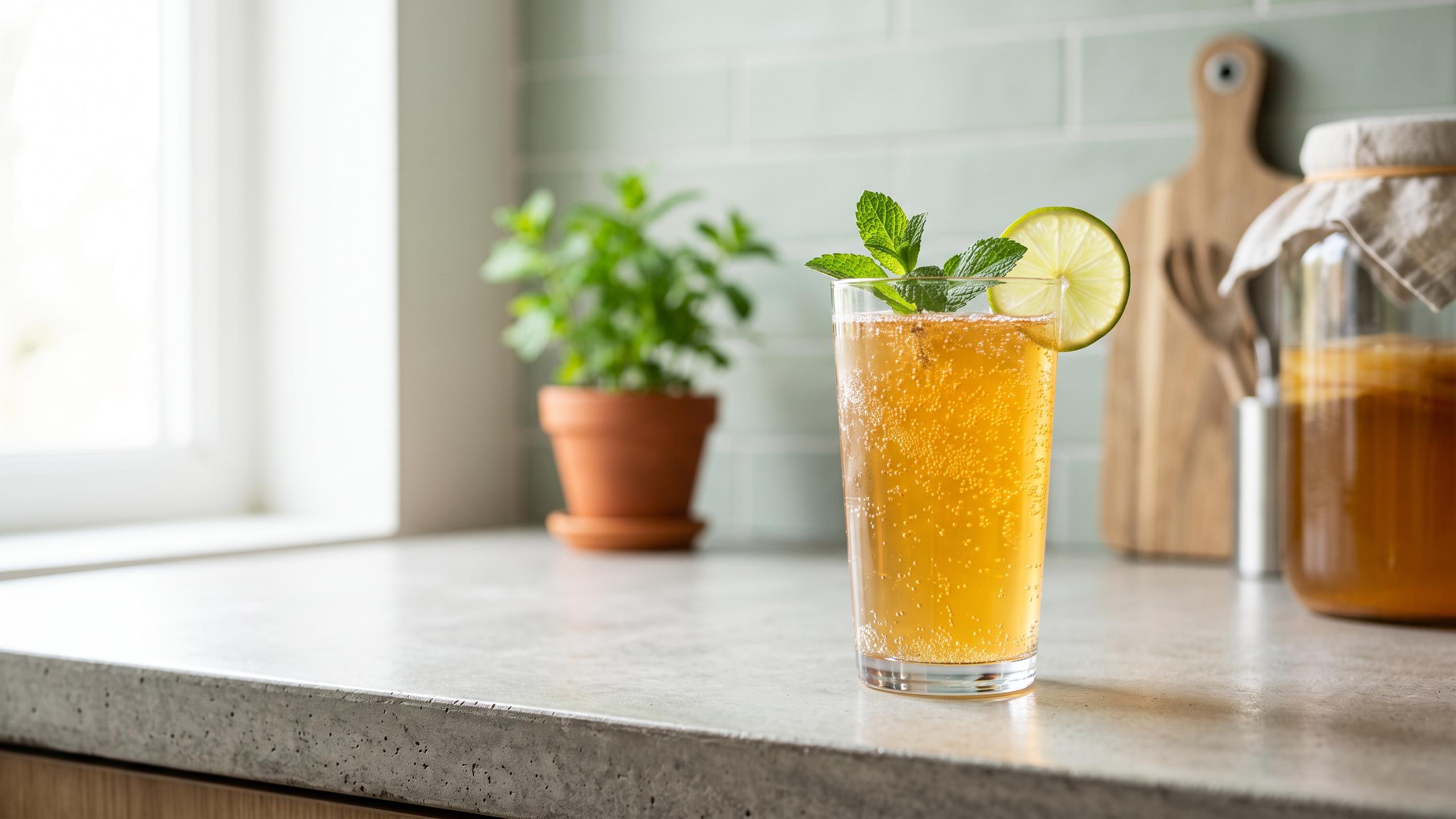
The second fermentation, or F2, is the exciting, creative part where you add carbonation and flavor. First, carefully remove the SCOBY along with about two cups of your freshly made kombucha—this will be the starter tea for your very next batch. Next, add your chosen flavorings to your pressure-safe bottles. This can be fruit juice, fresh or frozen fruit purée, or herbs and spices. For a good starting point, try a ratio of about 10-20% juice to 80-90% kombucha. Pour the finished kombucha from your F1 into the bottles, leaving an inch or two of headspace at the top. Seal the bottles tightly and let them sit at room temperature for another 2 to 5 days. 'Burp' the bottles once a day to release excess pressure and avoid explosions. Once you hear a satisfying hiss, your bubbly kombucha is ready for the fridge.
A Word on Safety and Probiotic Power
When prepared with good hygiene, homemade kombucha is very safe. The low pH created during fermentation naturally prevents the growth of most harmful bacteria. Always use clean hands and sterilized equipment. The main thing to watch for is mold on your SCOBY, which can appear as fuzzy, colorful spots. If you see mold, discard the entire batch and SCOBY and start fresh. As for its benefits, kombucha is rich in probiotics, the 'good' bacteria that support gut health, which can aid digestion and contribute to a balanced microbiome. It's a fantastic, low-sugar alternative to commercial sodas.