



From the Moon to Mars and Beyond
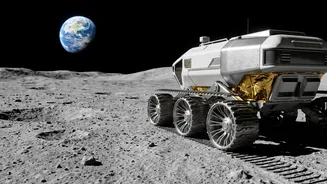
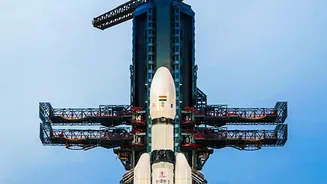
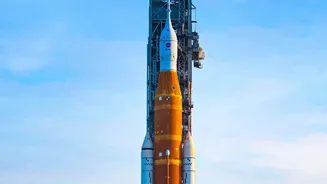
The most exciting frontier for enhanced collaboration lies in deep space exploration. With India now a signatory to the Artemis Accords, the framework is in place for a more profound partnership. Recently, NASA formally invited ISRO to participate in its
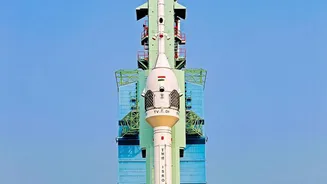
ambitious Moon Base program, which aims to establish a permanent human presence near the lunar south pole. This invitation is significant, aligning with India's own long-term goals of developing a moon base and sending astronauts to the lunar surface by the 2040s. Collaboration could see India contributing its famed cost-effective engineering and lunar science expertise, while gaining access to advanced US technology and sustained operational experience on the Moon. Beyond the Moon, a joint robotic mission to Mars or Venus is a logical next step. Combining ISRO's frugal innovation, demonstrated by its successful Mars Orbiter Mission, with NASA's extensive experience in planetary exploration could lead to groundbreaking science at a fraction of the traditional cost. Furthermore, a strategic framework for human spaceflight cooperation is already being developed, with plans for Indian astronauts to receive advanced training at NASA's Johnson Space Center for a potential joint mission to the International Space Station.
Securing the Final Frontier Together
As space becomes more crowded and contested, ensuring its safety and security is paramount. India and the US have already signed a bilateral Space Situational Awareness (SSA) arrangement, which lays the groundwork for more advanced cooperation. This agreement helps India monitor its space assets against threats like space debris and potential anti-satellite (ASAT) activities, giving it access to a wider network of sensors. The future of this partnership could involve operationalizing this data-sharing to create a common operating picture for the Indo-Pacific region. Both nations can jointly lead efforts in developing international norms for responsible behavior in space, from debris mitigation to traffic management. This is not just about safety; it is a strategic imperative. Deepening defence space cooperation through dialogues and joint exercises like the U.S. Space Command's Global Sentinel exercise strengthens the partnership as a bulwark for a free and open Indo-Pacific, extending shared principles from the seas to the stars.
Powering the Commercial Space Economy
The global space economy is booming, and collaboration between the Indian and American private sectors is a goldmine of opportunity. The U.S.-India initiative on Critical and Emerging Technology (iCET) has spurred efforts to expand commercial space partnerships. Recent trade missions have brought top American space companies to India to explore joint ventures and market access, focusing on areas like government procurement and foreign direct investment reforms. The future could see the creation of a dedicated 'space innovation bridge'—modelled on the successful INDUS-X defence platform—to directly connect startups, investors, and academic institutions from both countries. This could accelerate development in satellite technology, launch systems, and downstream applications that leverage data from missions like NISAR. For India’s burgeoning ecosystem of over 400 space startups, closer integration with the mature US market means access to capital, technology, and a global customer base. For US companies, India offers a high-talent, low-cost innovation hub.
Next-Generation Science and Technology
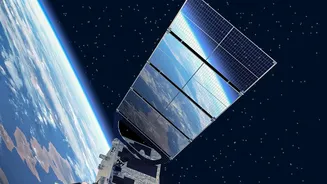
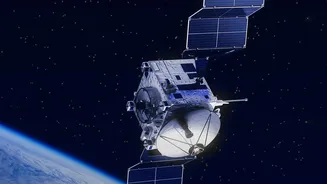
The foundation of the India-US space relationship is scientific curiosity, best exemplified by the NASA-ISRO Synthetic Aperture Radar (NISAR) mission. Launched in July 2025, this sophisticated Earth-observation satellite is already providing unprecedented data on climate change, natural hazards, and ecosystems. The next step is to expand upon this model. Future collaborations could focus on developing next-generation technologies. This includes joint research and development in areas like quantum communications for secure space-based networks, advanced propulsion systems to make deep space travel faster, and the complex challenges of planetary defence and asteroid resource utilisation. As both nations look towards a long-term presence beyond Earth, pooling intellectual and material resources in these cutting-edge fields will be critical. The recent India-US Civil Space Joint Working Group meeting already advanced discussions on expanding cooperation in Earth observation and open scientific data sharing, setting the stage for these future endeavours.