





From Dust to Air
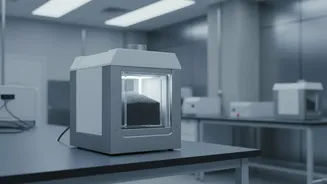
In a significant leap for future space exploration, NASA scientists have successfully extracted oxygen from a simulated version of lunar soil, also known as regolith. This breakthrough occurred not on the Moon itself, but in a specialized vacuum chamber
at NASA's Johnson Space Center in Houston that mimics the lunar environment. The project, called the Carbothermal Reduction Demonstration (CaRD), is a cornerstone of NASA's goal to use local resources to support long-term missions, a concept known as In-Situ Resource Utilization, or ISRU. By proving that vital resources can be harvested on-site, NASA is paving the way for a more sustainable and affordable human presence on the Moon and, eventually, Mars.
How It Works: Cooking the Moon
The lunar surface is rich in oxygen, which makes up about 45% of the regolith by weight. However, this oxygen is chemically bound to minerals like silicon and iron, so it can't be used directly. The CaRD experiment uses a process called carbothermal reduction to release it. In the Earth-based tests, scientists used a high-powered laser to heat the simulated moon dust to scorching temperatures inside a reactor. This intense heat, which could one day be provided by concentrated sunlight on the Moon, melts the regolith. The molten material then reacts with carbon, which pulls the oxygen atoms away from the minerals, creating carbon monoxide (CO) gas. This gas is collected, and the oxygen can then be separated, ready for use.
Why This Changes Everything
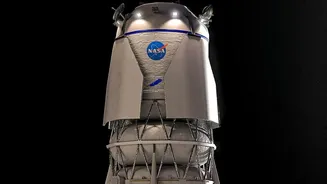
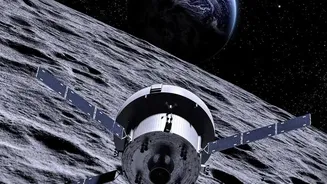
The ability to produce oxygen on the Moon is a game-changer for several reasons. Firstly, it dramatically reduces the amount of material that needs to be launched from Earth, which is incredibly expensive. Every kilogram sent to space comes with a hefty price tag, and oxygen is heavy. But it's not just for breathing. Oxygen is also a key component of rocket propellant, accounting for a large portion of its mass. Producing propellant on the Moon could essentially turn our natural satellite into a refueling station for deeper space missions. This capability is essential for fulfilling the ambitions of NASA's Artemis program, which aims to establish a permanent human outpost on the lunar surface.
The Bigger Picture for Artemis
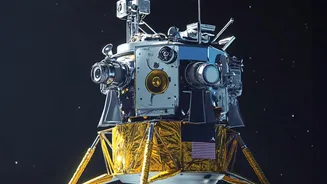
The Artemis program's vision extends far beyond short visits. NASA wants to build a sustainable base where astronauts can live and work for extended periods. This requires a steady supply of life support essentials. Living off the land, or ISRU, is the only practical way to achieve this. Technology like the CaRD reactor could potentially produce several times its own weight in oxygen per year, providing a reliable source for habitats and rovers. This reduces mission risk and dependency on Earth-based supply chains. Success in this area on the Moon also serves as a crucial trial run for future crewed missions to Mars, where the same principles of resource utilization will be even more critical for survival.
Next Steps and Challenges
While the successful lab demonstration is a massive milestone, the next challenge is to prove the technology can work in the harsh environment of the Moon. The equipment must be miniaturized, ruggedized, and capable of operating autonomously for long durations with minimal maintenance. Future missions will likely carry a scaled-up version of the reactor to the lunar surface for a real-world demonstration. Engineers also need to perfect the entire chain of operations, from robotic excavation of the regolith to the final storage of the purified oxygen. NASA is already exploring concepts like a Lunar South Pole Oxygen Pipeline (L-SPoP) to transport the gas from production sites to a future lunar base.